TIFAM issue 45 PDF

TIFAM 45 by TIFAM Company Limited by Guarantee...

TIFAM 45 by TIFAM Company Limited by Guarantee...

This issue finds us in a changed season. A quietness hangs in the air, a space shaped by the memory of George Shields and the enduring grace of Joan Kennedy-Kelly. We carry their presence still—a warmth that gathers near the…

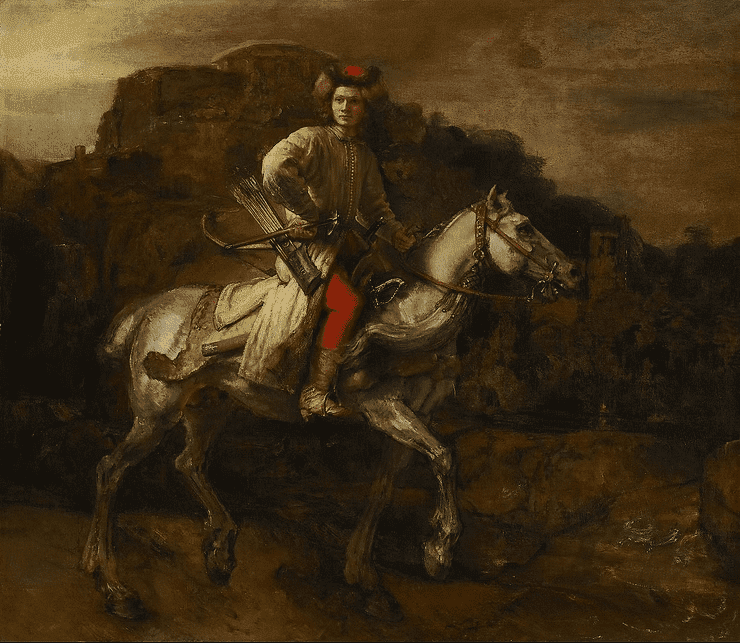
The Lisowczyks formed as a fierce body of Polish light cavalry, carrying the wild spirit of a mercenary host sustained through spoils of conquest. Brought together in 1607 as a soldierly confederation under the command of Aleksander Józef Lisowski, they drew their name from his—his legacy shaping their banner long after his death. Their allegiance lay with the Commonwealth, though coin never reached their hands; sustenance came through spoils alone. They struck into towns and villages across enemy lands, tearing through stone and spirit alike, burning, seizing, and destroying with furious purpose. Churches and monasteries yielded no sanctuary. Their passage carved terror into the lives of the innocent. In the Czech lands, long after the company ceased, mothers carried tales of Lisowszczyks to frighten children into obedience, casting them as creatures of fire and blood, unmatched in malice. Their vanishing defied a single date—by the mid-1620s, they drifted from the field, their once-unique imprint fading into the broader chaos of war.
In form and function, the Lisowczyks mirrored the shape of Polish cavalry from their day. Each unit bore the name of a banner, often numbering between one hundred and four hundred men. These banners gathered comrades—bannermen—and footsoldiers alike. Alongside them rode unattached servants, who, though second in status, frequently joined the fight. Yet a crucial difference marked them from the Polish standard: the Lisowczyks chose their own colonels from within their ranks.
They surged through Europe as the swiftest warriors of their time, rivalled only by the relentless Tartars. In one stretch of daylight, they could cover one hundred and sixty kilometres—four times the range of the most agile forces of the age.

This piece stands as the third in a quiet unfolding—a sequence of essays sparked by our recent gathering in the New Ross Library, where voices met to trace the long memory of the bow. The first emerged from our reflections…

A hush settles in, a quiet breath drifting through the vast expectant cinema as the first glint of dawn appears on screen and paints Panem in a fresh, solemn glow. The Hunger Games: Sunrise on the Reaping unfolds with solemn…

To draw the bow is to gather the world into your hands. Just before the first arrow flies, a hush settles—the kind that fills the chest with something heavier than air. The body enters its stance, feet firm, spine aligned,…

A single arrow, loosed beneath a moonless sky, carves a new reality from a father’s certainty, flinging it toward the unknown. 28 Years Later greets its audience with a scream: a fractured symphony of instinct and intention, of despair and…

“The qualities which make a good archer are the qualities which make a good man or woman,” wrote the Honourable Artillery Company’s H. Walrond in his 1894 Archery for Beginners. While penned across the water, the sentiment found its most…...

It started with a slip of the tongue, as the most troublesome truths often do. Myself and Andrew Wayland, we were in the main hall of the New Ross Library, the air thick with that familiar scent of paper and…

(AI and the Emergent Ritual of Archery in the Age of Symbiotic Agency) Matter and mind meet wherever a purpose touches a tool. Sensation flows outward through crafted form, and the world responds with patterns the nerves accept as their…...

Well now, dear readers—today I bring you something a touch off the beaten path. I’d been deep in the bones of a forthcoming book of essays when a strange thing happened: a piece arrived, unbidden, that took even me by…

A meditation on hurt, ritual, and the intimate violence of archery “Then the English archers stept forth one pace and let fly their arrows so wholly [together] and so thick, that it seemed snow. When the Genoways felt the arrows…...

“I do not fight because I seek glory. I fight because I must protect what is mine.”— Tigrevurmud Vorn, Lord Marksman and Vanadis There’s something curious about the quiet books that stick. They arrive without noise, sit down across from…...

“You walk and you walk and you carry what you can and you leave the rest behind.” It stays with you, that line, doesn’t it? Like the feel of a worn stone in your pocket, or the ache in your…...

Well archers, readers, today we embark on a journey of what if… It’s a heretical endeavour, filled with blasphemy and a provocation calculated—yes, calculated—to infuriate you. This is not a careless insult nor a drunken rant penned between ends. No,…...

There are mornings when the world feels like a screen that forgot to sleep—flickering, expectant, always asking. In such light, where every silence must be earned and every stillness risks interruption, the soul reaches for older shapes. Not solutions. Not…...

Portlaoise carries its soul just beneath the hedgerows, where boots sink slightly and tree roots knot like old thoughts. And tucked within that pulse, in Clonkeen Woods – where the canopy breaks into mottled shadow and the light stammers across…

The essay that follows—perhaps a touch long for an online piece—is, in truth, a chapter from The Arrow Knows No Master, a book I’ve been quietly shaping since February of last year. It’s composed of individual essays—mostly reflective, occasionally philosophical—on…

The story I’m about to tell you is not one that fits neatly into the grand histories of kings and battles, nor does it appear in the sweeping narratives of medieval glory or tragedy. It is a whisper at the…...

There’s a kind of hush in the troughlands of Fiorbhia Farm when the dew clings still to the grass, before the sun decides if it’ll bake or bless the day. And there I stood, half a ghost, half a child…...