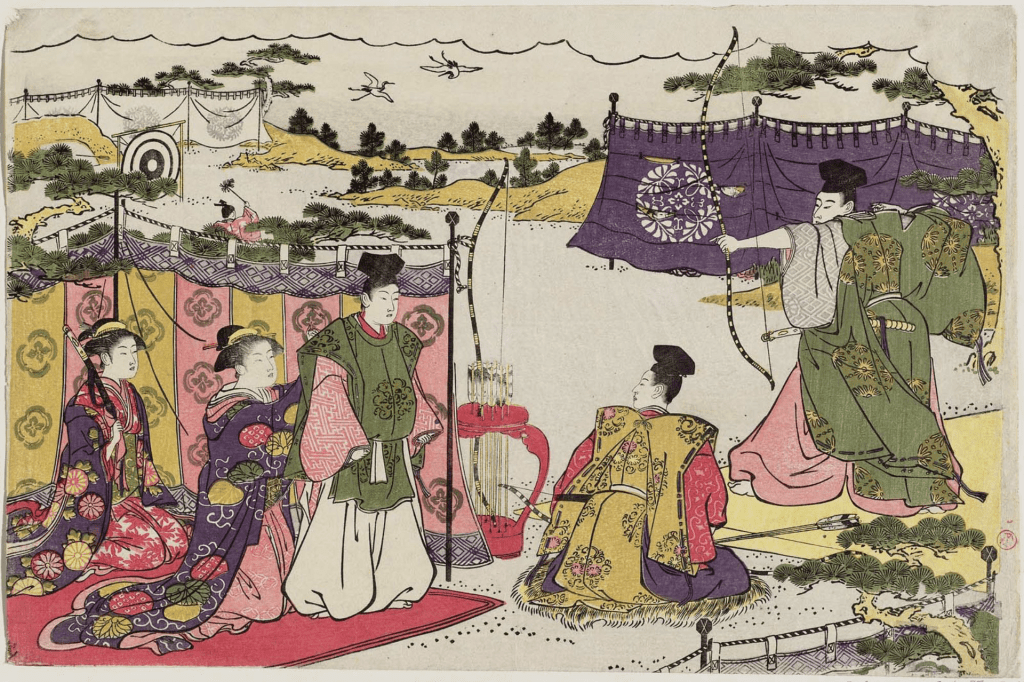
First Archery of the New Year by Torii Kiyonaga (1787)
Dear Readers, this article arose from a need of the spirit and from the shared curiosity of fellow archers who keep asking the same living questions. Two traditions—Japanese kyūdō and European field archery, especially clout—speak to each other through posture, breath, and release. I chose this topic because I share that hunger to understand the mechanism and to draw clear, practical conclusions. How does attention pass from heel to arrow without waste? How does form school judgment until judgment stands inside the body? How does a shot carry character into the air and return with news about the archer at the line? I offer a comparison shaped for usefulness and fidelity to both lineages, giving beginners, veterans, and any archer who pursues this mystery working answers to carry into the next session.
The day begins in the dōjō’s careful geometry. Light from high windows lays pale rectangles on the floor. Here, every shot starts when the feet accept the ground. Through ashibumi, the archer’s heels find their marks, toes fanning out, the body’s weight settling through the arches with a quiet authority that travels upward. The floor answers this pressure with a promise of stability. From this foundation, the posture of dōzukuri rises. The pelvis, spine, and shoulders align as a single instrument. A line of force seems to draw the crown of the head upward while another settles the sacrum, creating a column of calm readiness. Panic scatters; alignment gathers.
The yumi, a tall, asymmetrical crescent of bamboo and wood, enters the living system. The bow hand finds its place on the grip, pressure focused along the thumb mound. The string hand, protected by the yugake glove, settles into a shape that welcomes the coming load. Breath, rising from the hara, times every motion. A long inhalation opens the ribs as the great bow opens in the draw of hikiwake. The movement flows into kai, the full draw, a place where air and intention meet, where the body expands in all directions. The gaze embraces the target with generous regard, sighting born from the body’s whole alignment. The release, hanare, arrives like a ripened fruit yielding to touch. The string is gone. The archer remains in the posture of zanshin, spirit and attention following the arrow’s flight, the body a clear record of the act. The bow has said everything.
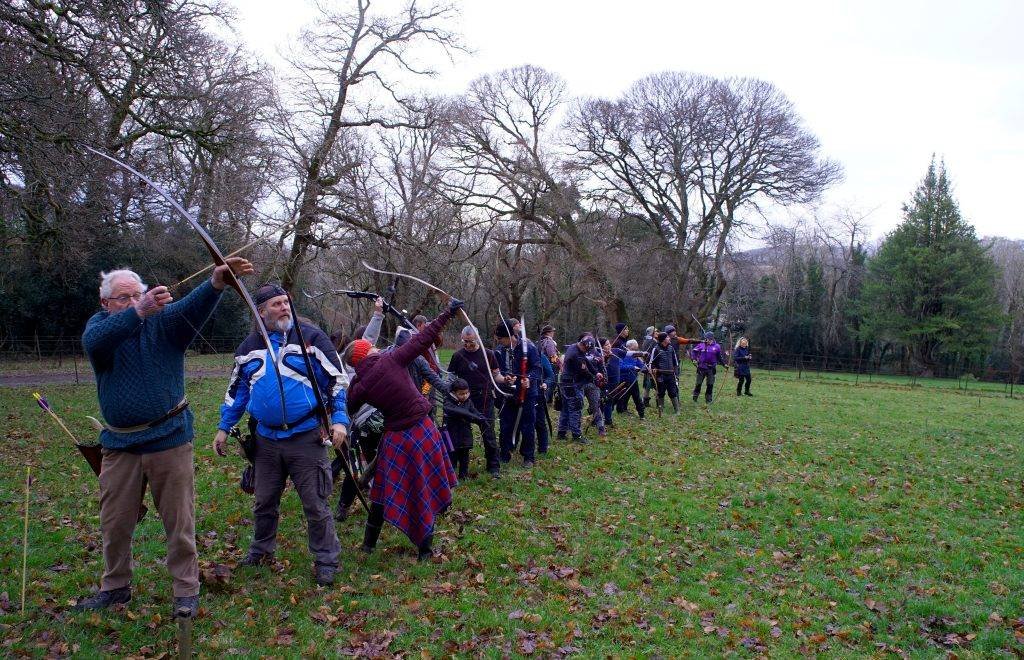
Afternoon brings the archer to a wide field where the target is a flag 180 yards distant. The wind offers its own curriculum. The European longbow feels compact in the hand, a different creature from the yumi. The stance widens, settling the archer against the gusts. Here, aim is a conversation with distance and weather. The sight picture lifts far above the flag into a blue or pewter sky, the mind holding a calculation of arc and wind-drift. The flag’s chatter and the testimony of the trees inform the shot. The heart learns humility; long range turns arrogance into education with brisk efficiency.
The archer breathes with the draw, an inhalation that widens the back and seats the scapulae. At anchor, a moment of held softness invites the release. A clean loose sends the arrow on a high parabola, a letter carried into the sky. The bow arm remains a steady mast, the follow-through fixing the shot’s shape in the body’s memory. An arrow that falls true crowns the many small choices that preceded it. The walk to the target is a social act. Archers retrieve their shafts with laughter and the friendly rivalry that builds clubs. The arrows in the grass around the flag write a clear paragraph, revealing habits with honest candor. Ranging shots invite adjustment; tight groups invite gratitude.
At the day’s end, the two practices speak to each other in the archer’s muscles and mind. The dōjō’s inward focus on gesture and breath lends a new ease to the shoulder in the afternoon wind. The clout field’s humbling negotiation with the sky refines the archer’s sense of follow-through when returning to the indoor line. A sensei’s insistence on presence at each stage translates into a field captain’s call for courtesy and clear command. Cross-discipline work enriches both. The kyūdōka who walks a clout line learns humility before weather. The field archer who steps through a ceremonial shoot learns reverence for quiet.
The instruments themselves bind the communities. Bowyers and fletchers on both sides of the world smell of linseed, resin, and seasoned wood. Their workshop conversation travels easily between spine values and stories of unforgettable shots. An arrow from such a bench holds a kind of blessing. What, then, does form teach judgment? It teaches that early choices govern later outcomes. That a small correction in the feet reshapes an entire flight. That patience at anchor cultivates courage. The shot carries character into the air through decisions made long before the draw: the choice to maintain equipment, to respect others, to listen, to measure the wind honestly, to love difficulty. For the archer who begins today, the work is to feel how each stage of the shot deserves its own full attention. For the veteran, it is to borrow a cue from a sister lineage, refreshing reflexes grown familiar. The inquiry continues…
Views: 130