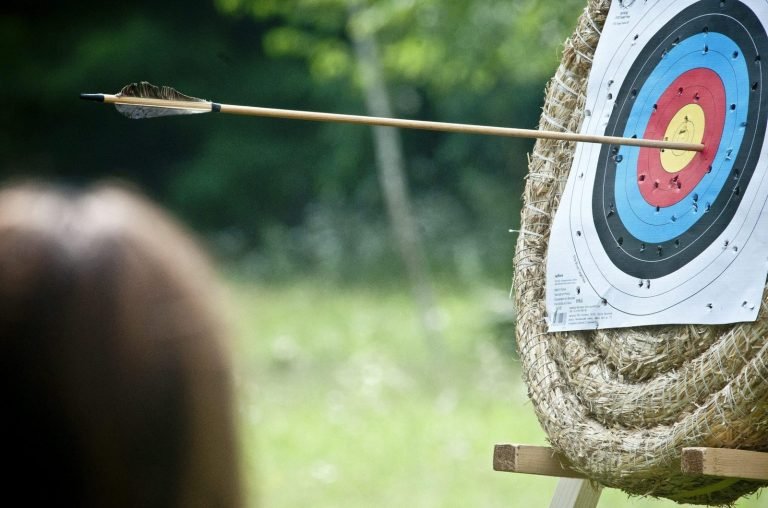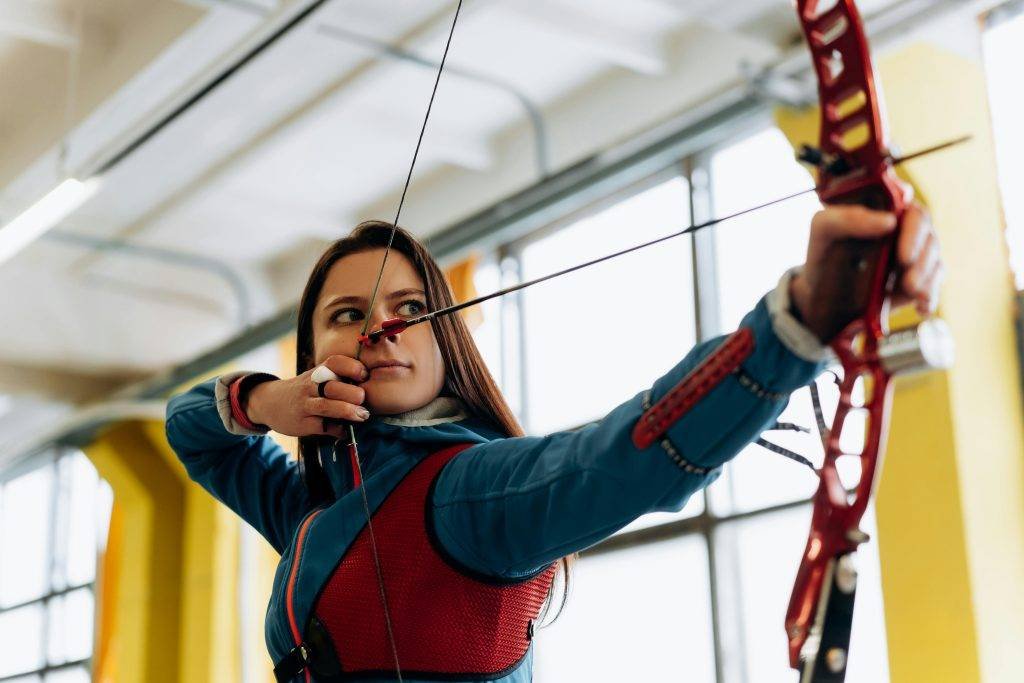
The physical discipline of archery begins with stance—applied biomechanics and declaration in one breath. An archer settles the feet, a shade wider than the hips, weight gathered forward so the balls of the feet drink seventy percent of the load. Clay presses through the soles as a solid fact, grit mapping itself into memory. The bow warms the palm with a promise of stored energy. On a green field the body writes a first word before any arrow flies, a quiet constitution of the self that says: I stand here to perform this work. Judith Butler’s account of the performative utterance sharpens the scene: as a doctor’s “It’s a girl” calls a social identity into presence, planted feet call the shooting body into agency. The body steps forward as subject, the point from which the entire narrative of the shot unfolds.
Geometry shapes the form, both ancient and altogether new in every person who assumes it. The pelvis tucks under; the back flattens into strength. The ribs settle; the chest lowers; the centre drops until the platform holds. Shoulders ride low; arms rise without strain. Readiness travels the spine and the mind follows its direction. Each person who comes to the line brings a history folded into posture. One carries years of instruction to stand broad and claim space. Another carries years of practice in making herself smaller. Ground and bow offer the same demand to each: balance in the feet, stability in the core. In learning the stance, the body discovers a language grounded in bone and force, a syntax that persuades through alignment rather than argument.
Learning arrives through rhythm—the long, slow beat of practice. Draw, anchor, release. Again, and again. Upper-back musculature—lower trapezius and rhomboids—accepts a new vocation. Load migrates from forearms toward those steadier engines, a shift that occurs deep under the shoulder blades, felt as a clean transfer of labour. Identity condenses inside repetition. Butler locates subject formation in precisely such “stylized repetition of acts”; the thousand small performances of walking, speaking, gesturing produce the legible truth of who we are. Archery follows the same law. A figure waits within the body and steps forward through daily practice. Arrows leave the string and, over time, the one who looses them acquires a name that carries weight: archer.
Each movement serves a larger figure, a taught grace. The head of the humerus in the bow arm rotates inward by a hair’s breadth, aligning bone for strength and clearing the string. The drawing elbow swings through a clean arc until it stands in a straight line with arrow shaft and bow-hand pressure. A line of force—old as the first stave—permits the skeleton to bear the burden while muscles remain quiet. The body learns this grammar of tension and release, clause and cadence. Within that learning, gestures that often draw gendered readings receive new meaning through function. A woman’s back opens into full draw as a correct application of leverage—bone over bone, back over arms—without social embroidery. A man’s fingers relax as the string slips away because relaxation yields the most efficient escape. Meaning lives inside disciplined motion. At the line the body performs an identity built from skill, a deep knowledge housed in sinew that answers to the arrow’s flight alone. Freedom enters there: movement understood for what it accomplishes—power and precision through practiced form.
The bow teaches with even temper. A two-armed spring governed by plain physics, it concerns itself with consistency. It asks for constant draw length, an anchor that touches the same ridge of bone each time, face to hand, hand to jaw. Meet those terms and the bow returns an honest flight, trading potential energy in its limbs for the arrow’s kinetic run with clean efficiency. Bodies arrive in many measures and the bow keeps its rule. A longer draw stocks more energy; a shorter draw stocks less; the principle holds. Fairness in the tackle offers a design for the fellowship that grows around it.
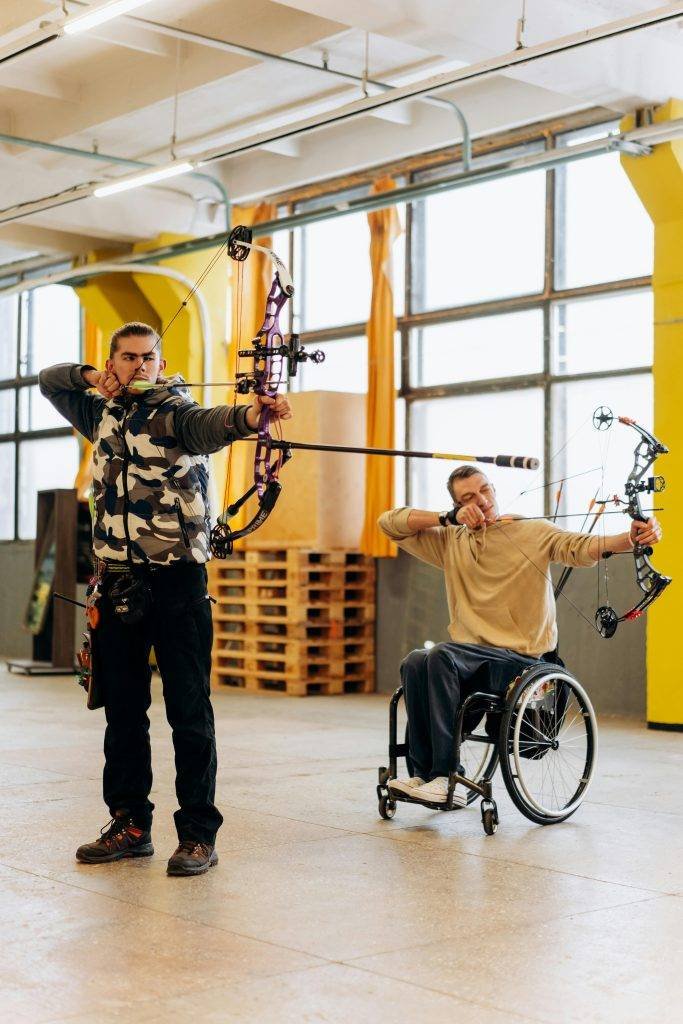
A good coach carries that fairness in the eyes and the hands. The task is simple and patient: help each archer satisfy the bow’s demands using the geometry they possess. A wheelchair becomes a stance; chair angles set the foundation; a chest strap steadies the column. Limited function in a hand meets a mouth tab, a prosthetic hook, a shoulder-release aid—clever tools that permit draw and loose without compromise to safety. Conversation runs between archer, coach, and equipment, each reply measured against the shared end: a safe, repeatable, efficient shot cycle. The mood resembles a bench of instrument-makers—adjust a brace height, test a nocking point, feel the tiller with the fingertips—until the shot answers with reliability.
From that care, a club grows on firm ground. Inclusion emerges as a direct effect of discipline. The shared challenge of sending an arrow true creates a commons. Friendships form over the fletching jig; voices compare spine weights, brace heights, string servings; a tight group on paper lights faces with the same quick grin. People begin to see one another through the lens of craft: the rock-steady bow arm; the quietest release on the line; the one who reads a fickle crosswind by a quiver’s faint sway. Respect accrues to patience, attention, willingness to teach and learn. A community takes shape around embodied practice, where each archer’s singular carriage and earned strength registers as a gain for everyone.
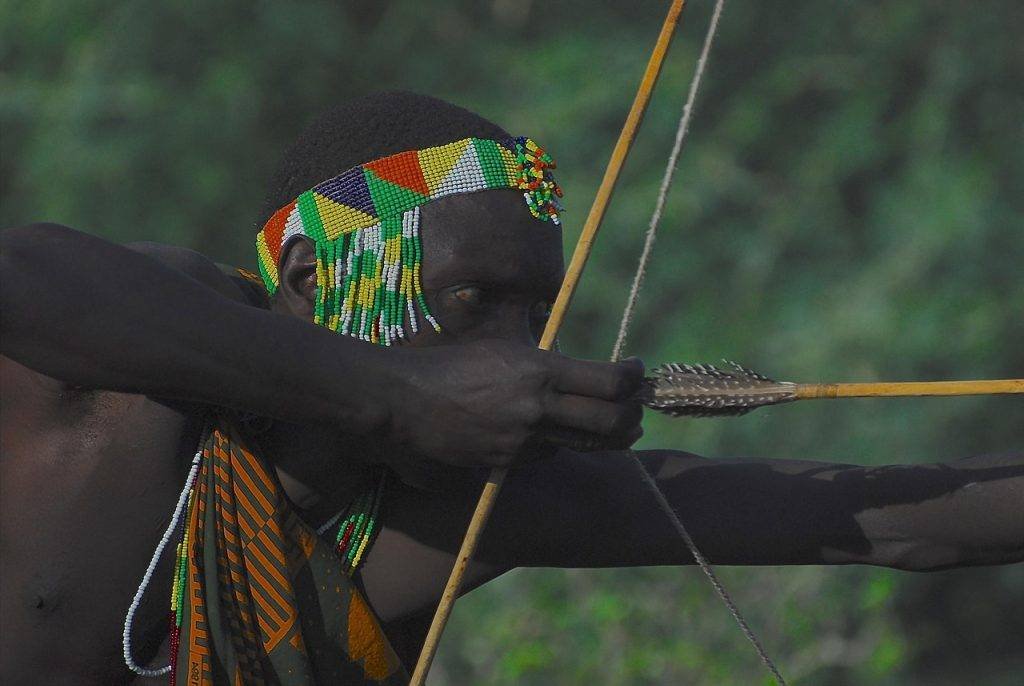
The line also carries a long story. To step into position places the feet in a current that runs back thousands of years. Archery crossed into the Americas by 6000 BC with people who walked from Asia; for Indigenous nations across the continent, the bow served as both daily tool and cultural sign. Cherokee bowyers prized black locust and, after removal, Osage orange—bois d’arc, “bow-wood”—because those woods held resilience and memory. On the Great Plains, the horse changed the practice; shorter, sinew-backed bows of ash or cedar answered the demands of the chase at close range. A wooden self-bow today hums with that lineage; hand oil darkens the grip over seasons; grain lines guide the eye as surely as a river’s riffles. The tradition continues within living games such as Cherokee cornstalk shoots, where fellowship and laughter train the same senses that once guided arrows through thickets and across pasture wind.
Women archers stand across this river as constant figures. Myth names Artemis with her golden bow and Diana in the sacred groves. Chronicle and song remember Khutulun, Mongol princess and fighter, and Tomoe Gozen among the onna-bugeisha. Illuminated pages show high-born huntresses with quivers at the hip; Victorian greensward fills with women in corsets and petticoats drawing to anchor for serious competition. A woman who draws today stands in that unbroken company; her strength arrives as present fact and historic echo in one motion.
The shooting line, taken as a whole, functions as a living archive. Each body arrives with its account of gender, ancestry, ability, vocation; each account enters the work. The discipline itself invites a settled attention. Good shooting arises from felt cues: expansile movement through the back, breath that widens the ribs without rush, release that surprises even the hand that makes it. The conscious mind steps aside and trusts a trained pattern that knows the road to centre when allowed to walk it. In that shared attentiveness a bond grows. You watch a friend’s arrow rise and fall; some part of your chest rides the same arc. You witness a small correction at anchor and share the clean satisfaction when the next arrow joins the group. Friendships root in experience because the work lives inside the bone. Strength enters through performance; grace appears in the daily act: set the feet, raise the bow, draw to anchor, aim through the breath, let the string go, and follow the arrow with the whole body’s listening.
Views: 169