Let me begin plain. What follows isn’t a manual, and it isn’t a coaching note. I’ve no wish to stand in front of anyone with a whistle round my neck. I’m not a trainer, and I’ve never been much of a model student either. I’m simply a fellow who has spent years with bow and string, carrying this magazine the way one carries both load and gift, gathering scraps along the road—some knowledge, some wrong turns, a few bruises on the hand and on the pride. What you’ll read are thoughts laid down in my own manner: half-memory, half-inquiry, always lyrical because that’s the way I think. Take them for what they are. If they rub against your own sense of the shot, let your own argument answer back. And if anything leaves you in doubt, bring it to your coach, whose eye will show you truths that prose can only circle around.
With that said, let us turn to the palm, for the story begins there. Long before any sighting pin, long before a feather brushes the knuckle, a knowing gathers in the hand. An old yew once pressed that lesson into me: its grain ran like river-lines through the handle, and the stave gave a calm greeting into the pad at the base of the thumb. Flesh and timber spoke; touch answered touch. In that quiet meeting the shot already lived, and long after the arrow flew its arc it returned there again, to that same silent origin. Many speak of anchor, release, follow-through—the grand gestures, the visible pillars. Yet the hidden foundation lies in the bow hand, where bone aligns, pressure settles, and truth marries intention without show. Every clean arrow grows from that small territory, where a listening palm teaches the rest of the body its part. Strength, the kind that breathes quietly and travels straight, comes less from clenching than from yielding with structure: softness carrying a spine, control born out of surrender rather than strain.
The body serves as frame and channel together. Picture a riverbed: when the course runs true, the water flows with quiet force; when bent or blocked, turbulence steals the current in froth and waste. The archer’s work is to keep the channel clear. The line of force—what some name the draw-force line, a path traced from the palm’s pressure through forearm, elbow, shoulder, and into the wide sheet of the back—calls for bone to bear the weight. Bone carries honestly, repeating its answer without fatigue. Muscle, though dramatic, tires and alters its story with each shot. A stance grounded in the skeleton carries a pledge: the same shape, the same geometry, end after end, a refrain with the steadiness of psalm or plainchant.
The shoulder sets the whole arrangement. Invite it down and forward until it finds its seat on the collarbone, the collarbone resting on rib, rib anchored to spine. From that base, extend as though from underneath, widening across the latissimus until the humerus turns inward just a shade—clockwise for a right-hander. That small inward turn becomes the hinge of the whole frame. Bone falls into column; the elbow rolls clear from the string; the joint declares safety without theatre. The feeling is like leaning a palm against a wall and letting the skeleton shoulder the rest. Ease arises from architecture. The body builds itself into a buttress, ready to receive the bow’s hoarded intent and send it forward without quarrel.
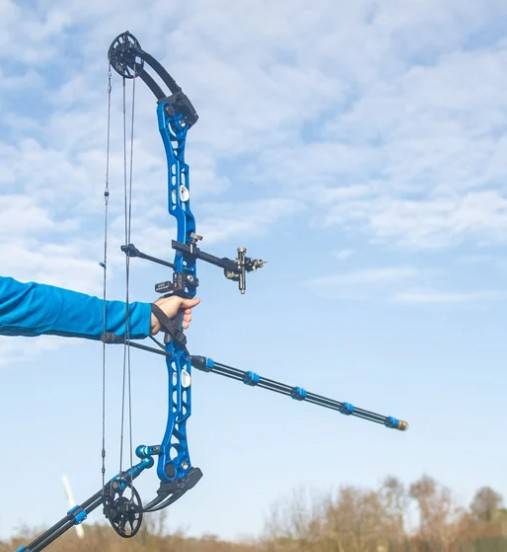
And then back to the hand, fulcrum of the whole act. No book alone can give you the right grip; it comes by touch. A small, firm island waits at the base of the thumb—the thenar eminence by the lifeline—and it joins straight into the radius bone. Place pressure elsewhere and the bow twists; place it here and the frame holds true. Bowyers have thinned grips for that very reason: a narrow handle persuades the hand toward honesty. With the point set, the knuckles slant at a natural angle—half-right to the riser—an open cradle rather than a fist, posture of reception rather than grasp.
A second landmark whispers from the web between thumb and forefinger—the pivot point. Balance lives between heel and web. Out of that balance comes the sense that the bow itself presses forward toward the mark, the thumb long and companionable, pointing the way. The fingers remain light—resting as though on breath, or curled away entirely—for the dialogue belongs to bone, not clutch. A wrist sling grants permission for such trust. Leather around the wrist invites the bow to leap at the loose while the hand stays open. The arm holds steady like a fencepost planted deep, so the mind may rest and the arrow leave under its own will. Many archers know the dread that seizes aim, the panic that snaps the shot. A palm softened by sling teaches another habit. The body leads, the mind follows; confidence grows when the hand refuses to claw.
Every bow speaks. A tense palm and crooked line give a harsh voice—a crack, a clatter—that betrays wasted power. A clean frame and easy hand sing lower—a thrum, a hush. Physics writes the verse. Drawing stores energy in the limbs; release passes the gift to the shaft. The rest rattles the riser into noise. Stabilizers and dampers absorb some, but the first and greatest dampener is the archer’s flesh. A rigid hand echoes like drum-skin; a relaxed hand hushes like turf. Heavier shafts hush a bow because they carry more of the stored gift into flight. The search for quiet becomes its own teacher: silence answers form. And the hush without reflects the hush within, the mushin the Kyudo masters prize: a mind cleared of grasping where fear has no hold. A quiet palm both grows from that field and recreates it with every shot.
Traditions across the world circle the same truth. Arabic and Persian treatises weigh heel of hand and “acute obliqueness,” suited for pressing shafts against tower walls or defenders in armour. Their straight palm suited close work, quick and deadly. A master named Isḥāhaq spoke of a middle path, and students still nod at his sense. Different wars, different quarry, different solutions; the same riddle underneath: power wedded to steadiness, speed married to control.
Across oceans the bow carried covenant. Plains elders in America named bow female and arrow male—the balance of life embodied—and taught with ceremony and practice alike. Some northern tribes learned a loose so soft the grip rolled with release, letting fletch clear wood without complaint. Knowledge lived in tendon and memory, handed from aunt to nephew, uncle to niece, across firelight where silence kept watch.
Japan refined the enquiry into a path of its own. In Kyudo the tenouchi, the seating of the hand, begins a meditation whose end bears three syllables: shin-zen-bi—truth, goodness, beauty. The conviction runs that a correct shot must be beautiful because beauty springs from truth. Teachers insist on release as surprise, the hand opening like a child’s—because surprise saves the archer from meddling. Purposeless will, they say; the arrow departs as a gift held in trust. Biomechanics concurs with their bones; the old schools add the reasons of the heart.
Modern instinctive shooters stand in that same company, whether they know it or not. They raise a bow bare of numbers, and the body’s long arithmetic answers wind and distance. Their palm serves as compass and altar both—measuring and vowing together—because feel speaks truer than chatter when the shaft must leave at once.
And so the circle returns to its origin, the palm pressed against wood or carbon. Science and lineage meet there; Zen counsel and workshop practice shake hands there; hunter’s common sense and coach’s geometry align there like halves of a mould. After the whisper of the loose, after the fletching fades downrange, the hand writes the final line. Open, soft, held by sling, the bow sprung forward as if eager to greet the mark—that picture reveals a promise kept. To study the bow hand is to hold a mirror close. In it impatience shows as clutch, anxiety as white-knuckle, composure as thumb sleeping against the neck, attention as the quiet slant of knuckles. Apprenticeship lasts a lifetime. Each weekend teaches anew, felt in bone before named in words. Mechanics and mind meet without quarrel, practice turns into devotion without hymn. The unseen foundation carries the house entire. Every arrow, whatever its fortune downrange, begins and ends in that patch of living skin where wood presses flesh and the archer answers with trust.
Views: 119