Which servant flies truer than any oath, drinks the heat of a living wrist, obeys a boy’s tremor and a god’s vanity, and yet carries a sovereignty that begins at release and ends only where the point decides?
A glove lay on the rail at the ferry slip in Odda, a workman’s glove, thick at the palm, stiff along the knuckles, with zinc dust lodged in the seams like flour in a baker’s thumb. I lifted it as a priest lifts a paten—half habit, half guilt—and the inside offered sweat-salt and that sour metallic breath that sits behind the tongue and colours a man’s words for hours. The fjord held the factory’s reflection with an affection that startled me; water tightened every line, sharpened every hard edge, turned pipes into calligraphy, and made the plant look clean enough to bless. Across the bay a peninsula carried the works like a bad tooth capped in pale crown, while the town sat around it with the settled manners of a place that paid its bills on Fridays, sent its children to school on Mondays, and kept its grief in a drawer beside the cutlery. Woollen hats bobbed. Earbuds flashed. Lunchboxes swung on short straps. Young shoulders stooped with that brave sulk that adolescence wears like a scapular, a temporary creed learned from corridors and bus stops and the long, mute catechism of keeping face.
I watched Ragnarok at my kitchen table in Ireland, with a chipped mug beside my hand and a small bowl of walnuts pushed toward the window as if the light mattered to them. The kettle clicked itself into silence. My daughter had left two pencils near my elbow, their sharpened points bright as tiny spearheads. On the screen, mountains held a patience that reminded me of parish saints carved in wood, saints who had stood through centuries of fingers and prayers and cheap candles; beneath them a factory rose like a secular cathedral, with pipes for pillars, tanks for apse, and the whole money-liturgy carried out through valves, signatures, and the soft spoken authority of men in clean boots. The series placed its altar exactly where beauty and effluent shared the same water, where a valley promised clean Norwegian air and offered a mouthful that tasted of industry’s afterbite.¹ I felt a tug in the chest that a man calls conscience when he wants a grander word; I felt shame in a smaller register, the shame of recognising that apocalypse arrives through paper, through meetings, through a line on a report that everyone reads with a calm face.
The town on screen called itself Edda, and the name arrived like fate laughing into its sleeve at a family dinner, the joke cutting deeper than any jest has a right to cut. A sign at a road junction carried the letters with municipal pride, and the landscape answered as if it had always been baptised that way: fjord, ridge, schoolyard, factory, the whole parish boundary drawn by geology and payroll. People speak of “setting” as if place served as painted canvas behind human drama; here the place served as witness, and witnesses carry teeth. Wet roads—polished by tyres, marked by salt, marked by brake light—offered their own glimmer under headlamps. Windows glowed weakly in afternoon rooms. Hydroelectric grandeur lived beside industrial aftertaste, and each scene carried the authority of actual geography, the kind that makes a viewer sit up straighter, as though a lie had lost its footing.
I moved in imagination along that shoreline while my body stayed planted at the Irish table. The screen showed teenagers moving through school corridors with the peculiar brutality of the young: casual cruelty delivered in a laugh, kindness delivered with awkward hands, a moral education carried in gestures more than in words. The show’s wager appeared early, and it struck me as both clever and vicious: doom arrived as procedure, and procedure wore the voice of civic virtue. Environmental collapse rose through shrug and stationery. A file moved from tray to tray, and the world cracked a little more. The series made a theology from paperwork, and it asked you to kneel with an empty censer while the smoke of industry rose anyway, indifferent to liturgy.
Institutions in Adam Price’s work breathe like organisms; they secrete favour, fear, permission, hush, and they eat the timid first. Ragnarok kept that habit and poured it into a mythic mould, so giants wore suits, gods carried schoolbags, and the end of the world began with an inspection report that arrived late. The effect carried its own terror: a monster in a forest teaches courage, while a monster at a desk teaches obedience. I have met both kinds, and the desk-monster has always eaten better.
The Jutul family’s house rose above town with the calm entitlement of old money dressed in Scandinavian minimalism: glass clean as a chalice, pale wood polished like a communion rail, steel that held its shine the way a lawyer holds a smile. Inside, everything sat in place, as though even dust had learned manners. Giants disguised themselves as local aristocracy, and the disguise held the oldest trick: predation thrives best when it wears your neighbour’s face. The show handled this with a cruel accuracy. A teacher’s tone, a parent’s phone call, a strategic smile at the shop counter—these can break a boy more thoroughly than any axe in the old stories. A listener who has lived in a small town understands the arithmetic of social pressure: one family owns the factory, the factory owns the jobs, the jobs own the mortgages, and the mortgages own the mouths.
A teenage face held by a close camera can carry the weight of a battlefield, and the directors understood it. The lens returned again and again to the tremor around a mouth, the hard swallow that kept a boy from crying in public, the flare in an eye that wanted to become violence. Magne Seier entered as a big quiet lad with a body built like a proverb—broad, slow, hard to move—and the performance refused the heroic pose. Divinity arrived through ache. Thor’s inheritance sat on his spine like a load of turf. Even his kindness carried strain, the kind a farm boy carries when he lifts a calf too early and feels something in his back tighten for weeks.
Laurits carried the show’s sharpest moral climate. The lad’s humour curled into hunger. Tenderness grew teeth. Longing for love learned how to bargain. Loki in the old tales carried laughter that turns rancid at the wrong hour, and the series carried that truth into modern skin, where survival and threat shared the same grin. I watched him with a sort of embarrassed recognition. Every family holds a Laurits somewhere: the one who smiles while counting exits, the one who loves you and calculates you in the same breath.
The writers avoided museum-Viking costume, and the avoidance saved them. Horns and pelts and blood theatrics would have turned myth into tourist merchandise. Steel-toe boots replaced ring-mail. Phones replaced ravens. Gods woke through a cashier’s touch and a social worker’s fatigue. Myth survived here as it survived across centuries: by changing its clothes, keeping its bones. Snorri Sturluson wrote as a Christian Icelander with legal training and political ambition, and he carried pagan matter into prose with the cool hand of an editor who loved poetry and feared oblivion.² The series performed a related act for the age of streaming and timetables: old names packed into young bodies, possession presented as inheritance, the past renting a flat above a supermarket.
A town called Edda carried sly self-awareness for a while, though slyness burns away under consequence. Each time the name appeared on a sign, I felt recognition settle in my ribs. Myth walked among us with its archive on its back. Mountain, fjord, factory, schoolyard: memory held in place by landscape, as if prophecy had learned municipal zoning. Even buses seemed to move under a sentence spoken long ago.
A young person’s conscience, once awake, becomes a kind of plague. Magne’s awakening carried sweetness for minutes, then power pressed on him and demanded service, and service pulled him away from ordinary pleasures—laughter with friends, the soft drift of a day that asks little. Crisis creates reluctant saints. Activism begins as discomfort, discomfort turns into sleeplessness, sleeplessness turns into action, and action turns into enemies. I saw that chain in him, and I remembered my own smaller chains, the ways I have moved toward duty with the sulk of a man who wants comfort and receives responsibility.
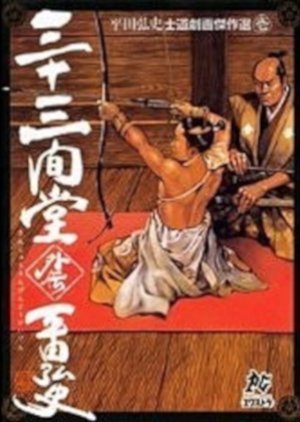
At that point an image came, as images do, arriving like a stubborn bird that insists on landing in your hand. I thought of an arrow. A hammer announces itself; a storm declares its law through sound and spectacle; a shaft of wood with a metal point travels in quiet, and the quiet frightens me more than thunder. Its line carries a promise of finality, and finality terrifies any man who keeps a conscience alive under his shirt. In one of my own lectures I wrote that the arrow obeys the hand and judges the hand, as the flight carries the memory of release, and the release exposes the ruler of that moment.³
The series understood that quiet dread when it brought archery into its mythic machinery. In a landscape thick with hammers and serpents and giants, the bow appeared almost humble, as if it belonged to a school sports hall, a scout troop, a weekend hobby. Humility carried dread. A string drawn beside a graduation ceremony turned civic rite into sacrament. An arrow flew into a young man’s chest while classmates clapped and teachers smiled, and the ceremony carried on with rehearsed cheer, as if community had agreed to keep bleeding just outside shared sight. The moment struck with the cold clarity that only myth grants: violence arrives through ordinary hands, and a crowd keeps applauding.
I held that scene in my head and heard another scene from the old tradition pressing against it. The Baldr story carries a cruelty that tastes of bureaucracy. The shining god drew oaths from all things that they would spare him, and a small overlooked detail—mistletoe, too slight for solemn vows—became the hinge of death.⁴ Loki guided Höðr, the blind one, toward the throw, and the cosmos lost its innocence through a neat act. When I read it as a young man, awe gave way to nausea. The mechanism resembled a permit system: immunity established by paperwork, loophole exploited by a clever tongue, murder executed by the least suited hand. Ragnarok lifted that mechanism and set it inside a schoolyard, marrow preserved while skin changed.
A blind god guided into harm sounds like a medieval exemplum, yet it lives close to contemporary politics. A minister signs a document prepared by an adviser. A manager approves discharge into water as the permit sits on the desk. A citizen repeats a slogan placed in his mouth by a radio voice. The hand moves. The mind follows. Augustine spoke of the mind commanding itself and meeting resistance, and every age performs that interior civil war in fresh costumes.⁵
The show’s institutional intelligence shone in its smaller rooms. Giants conquered through procedure. Ran, seated in a school office, turned administration into weaponry: meetings that carried threat in perfume, grades used as shackles, smiles calibrated like knives. Turid, the mother, carried a domestic theology: love held in tension with exhaustion, bills, and the quiet dread of raising children beside a powerful corporation. She kept the lights on while gods and giants postured, and that felt like the truest mythic detail of all. Epics forget parents. Parents remember.
One evening I watched an episode late enough that the house had taken on that nocturnal hush where every small sound gains authority. The kettle sat cold. The mug, earlier chipped, sat again in my hand with the same jagged bite at the rim, and the small injury to the porcelain pressed itself against my lower lip like a reminder. The bowl still held walnuts, and my fingers kept straying to it as if I needed a taste to anchor myself. I paused the screen and looked at my daughter’s pencils.
—You let them get blunt—she said, appearing at the doorway with the stealth of youth—her voice soft as a verdict.
—They cut well enough for sermons—said I, and the lie tasted of zinc.
She came closer, took one pencil, and sharpened it with a small hand-held blade, turning the wood with the care of a sacristan trimming a candle. The point emerged bright. I felt a sting of pride and a sting of fear, and both stings belonged to fatherhood. She looked at the screen, at Magne’s face, at the factory in the background.
—That place eats them—she said.
Her sentence carried a child’s blunt mercy. It carried truth also. A corporation eats by feeding. It offers wages. It offers sponsorship. It funds the football jerseys. It pays for the school’s new computer lab. It smiles at the town’s festivals. The mouth stays polite. The teeth stay clean. Then the fjord takes the effluent anyway, and the water keeps reflecting the factory as if reflection alone were absolution.
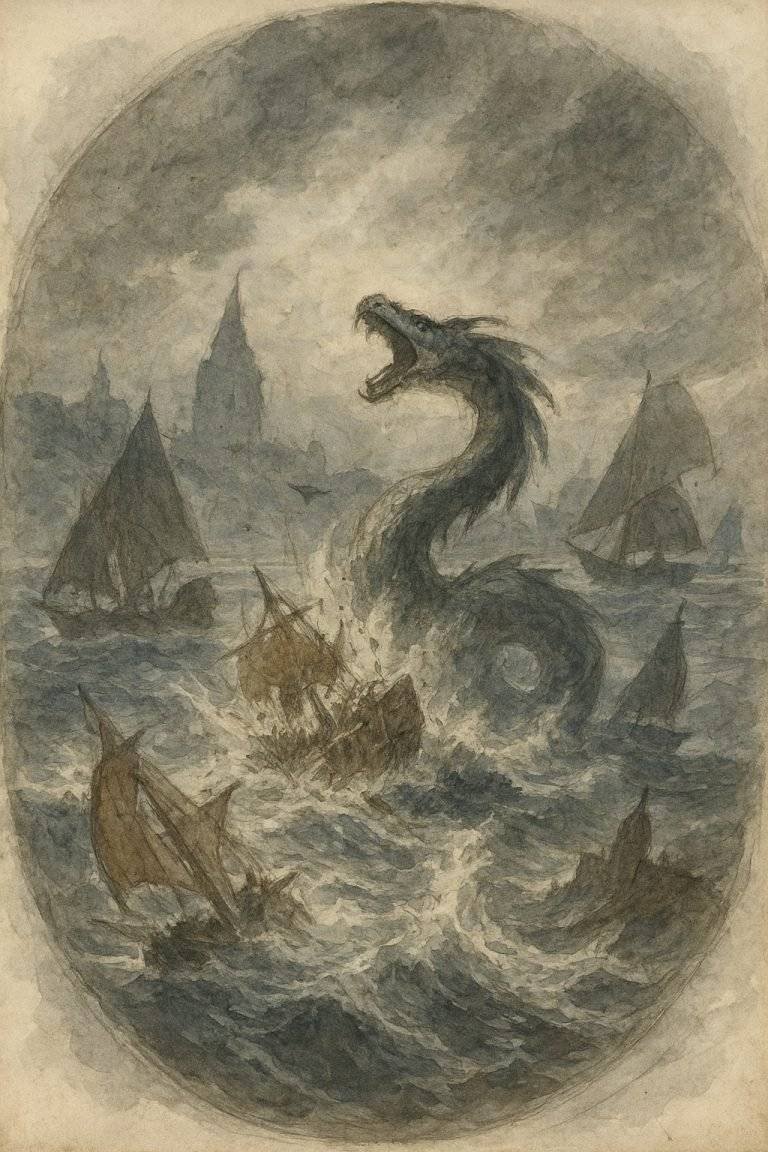
The serpent mattered, too. A world-serpent in the water beside an industrial plant carried an indecent aptness, as Jörmungandr in the old tradition stands as Loki’s child and Thor’s destined enemy. Thor’s victory carries poison as payment: he slays the serpent, he walks nine steps, he dies.⁶ Heroism and fatal cost sit welded together. The series hinted at that weld even when it turned cosmic duel into social and psychological struggle. A serpent in a fjord teaches a viewer to look at every slick surface and wonder what life coils beneath.
Accuracy in such work lives on two levels, and a lecturer in folklore measures both with a hand that shakes more than he likes to admit. Historical texture concerns material culture: grocery stores, school systems, municipal politeness, the way a cashier speaks, the way a bike leans against a wall, the way a teenager holds a phone with the solemnity of a rosary. The series carried that texture with care. “Vikingness” hovered as spectral inheritance rather than reconstructed lifestyle. That carried ethical weight for me. A fantasy of pure pagan past offers easy pleasure; a present-day Scandinavia with its myths of cleanliness, sustainability, social trust, and its gnawing anxieties about industry and climate, offers harder fare, a fare that sticks to the ribs.
Mythic function concerns the gears: trickster destabilisation, giant appetite, protector burden, serpent consequence, Baldr’s wound as crack in communal order. Those gears turned beneath the new paint, and a viewer with modest acquaintance with Eddic stories could hear the old machinery working.
Yet temptation also hovered: the temptation that haunts modern storytelling, where public catastrophe thins into private mood, and mood serves as anaesthetic. A scene arrived with eerie force, then a teen corridor quarrel followed and dulled the edge. Institutions kept rescuing the story from pure superhero comfort, though superhero comfort waited nearby like a warm blanket that the show’s own hands kept reaching toward. I confess complicity. Comfort calls. Moral clarity packaged in neat arcs appeals. Righteous violence offers guilty pleasure. The series held a mirror to that appetite, and the mirror showed my face, lined with academic talk and softened by the same childish hunger for spectacle.
The old Ragnarök itself carries a double taste: destruction and continuation in the same breath. Worlds fall. Worlds rise. Gods die. A renewed earth appears.⁷ Renewal arrives with a price, and the price includes blood and memory. A modern retelling that turns renewal inward—asking whether a young man can step beyond inherited scripts of grief, destiny, masculine violence—keeps faith with the old structure while shifting stage. In the old poems, the end comes as fate and as consequence; the same duality lives in climate dread, where each act carries a drop of poison into the fjord until the fjord becomes a ledger.
At a deeper level the series asked what power does to a person who wants an ordinary life. Magne’s strength behaved like infection; it pressed him toward duty that stained the hands even when gloves covered them. In that sense the show remained truer to myth than many glossy retellings, for myth offers consequence and ledger more readily than comfort. Ellis Davidson wrote of Norse gods as figures bound into doom by their own greatness, and that binding sits close to the throat when one watches a boy carry thunder in his bones and still want a quiet afternoon.⁸
I returned in thought to the fjord and the glove on the rail. Industry there possessed a strange liturgical beauty: pipes aligned like organ tubes, cranes lifting like long-necked birds, the hum of machinery carrying along valley air in a constant note that reminded me of a choir warming up behind a chapel door. Attraction rose. Revulsion rose. A human animal admires what human hands build even when those hands build poison. Dualism—reverence and dread—forms the ground on which philosophy and folklore walk. Clunies Ross taught me to see Norse myth as a prolonged echo shaped by social structures and by the pressures of conversion, and I felt that echo bouncing off glass and steel in Edda’s modern skin.⁹
The Icelandic memory of law and feud carried across centuries in prose that smells of turf and blood, and that memory kept leaning into the ground with boots that pressed hard.¹⁰ Broader Viking past—ash and elm, ship-tar, oath spoken over a threshold—pressed behind the show’s clean surfaces, as if history itself stood at the window and watched.¹¹
Archery inside such a world carries a lesson that cuts cleanly. A hammer offers spectacle. An arrow offers surprise, and the victim receives bewilderment as gift. The crowd continues its ritual. Clapping continues. Singing continues. Graduating continues. That captures the present age with brutal honesty. Ceremonies continue while harm travels through air, and the old weapon keeps its older contexts close: tool before symbol, craft before metaphor, a technology that served hunting and war and status long before sport-hall safety rules wrapped the string in foam.¹²
A friend once spoke to me after a lecture in Portlaoise, a thin man with hands marked by factory work, and he asked about myths as if myths were a kind of union.
—Myths give lads an excuse—he said, and he held my gaze with the calm aggression of a man who has lifted heavy things for years.
—Myths give lads a mirror—said I, and I felt my own cowardice stir, as every answer carries a dodge.
He tapped the side of his nose as if he had smelled something sour.
—A mirror gives vanity, Mr. Smallridge—he said—where a ledger gives fear.
His word ledger landed with the hammer cadence I love and dread. A ledger belongs to factories. A ledger belongs to courts. A ledger belongs to God in a certain kind of sermon, the kind I heard as a boy when priests spoke of judgement with faces that looked almost pleased. Ragnarok offered a ledger written in effluent and school reports. It offered a ledger written in family betrayals and in the slow poisoning of water. It offered a ledger written in the moment an arrow crossed a gymnasium and the crowd’s applause kept time.
A riddle asks for its answer at the end, and the end arrives like a footstep you have heard for minutes on a stair. The servant who flies straight and keeps sovereignty in flight bears a name you already hold in your mouth. The arrow serves a wrist, a story, a god’s quarrel, a corporation’s lie, a boy’s loneliness, and the service carries a lordship of its own, empty enough to judge every master who claims it. Release reveals the ruler of the moment, and the ruler wears the shape of desire, fear, applause, the fjord’s hard reflection of a factory breathing pale chemistry into a valley where children walk to school with lunchboxes swinging and old destinies pressing on their shoulders. The thin snap of the bowstring carries a prayer that my mouth has swallowed, and the prayer keeps scraping the back of my throat like zinc dust, and when the ceremony keeps smiling the wound keeps opening and I keep hearing the servant’s sovereign flight as if it were an angel choosing its own path, or a clerk stamping a file, or a god blinking in a school corridor, and you, gentleman, you keep watching, and you keep—
Scholia:
1.Anne Pedersen, “Weapons and Their Contexts: Scandinavian Archaeology of the Viking Age,” in Stefan Brink and Neil Price (eds.), The Viking World (Routledge, London, 2008), pp. 206–215.
A bow in a Nordic landscape carries less theatrical glamour than an axe, and that lack of glamour explains its potency as symbol. Archaeology yields arrowheads by the thousand, small proofs of a technology that served hunting, war, signalling, status; form answers need, with broadheads for flesh and bodkins for penetration, each an argument made in iron. A modern viewer sees sport hall safety nets and foam targets; a saga listener hears stealth and ambush, a death arriving from hedge or ship’s rail. When a modern retelling places an arrow at civic rite, two worlds lock together: communal ceremony that celebrates continuity, and the old weapon that interrupts continuity with a line drawn through air. The weapon’s modest profile allows it to pass beneath the crowd’s moral radar until the wound forces recognition, and recognition arrives too late for comfort, too early for sleep…
2.Adam Price, Ragnarok (television series), SAM Productions, Copenhagen and Oslo, 2020–2023.
3.Snorri Sturluson, Edda, trans. Anthony Faulkes (Everyman, London, 1987), pp. 7–118.
4.Martin Smallridge, An Arrow Knows no Master : Thirteen Lectures Framing Archery Axioms in Western Philosophy (TIFAM CLG Publishing, Portlaoise, 2025), pp. 1–22.
The bow has always carried the manners of a moral instrument in my hands. A hammer grants brute reassurance—weight and sound and impact—while a drawn string demands inward attention, an attention that recruits breath, shoulder, finger, eye into one deliberate act. At full draw a tremor rises that belongs to body and mind at once, and the tremor teaches that intention lives in flesh as much as in thought. A clean release feels like grace, yet the arrow’s arrival teaches humility, as every shot leaves a trace of the archer’s character on the target face. I wrote those lectures under the pressure of that lesson and kept learning it again at desks far from any range, where decisions carried quieter arrows and where the wrist moved in words and signatures instead of in cedar and steel.
5.The Poetic Edda, trans. Carolyne Larrington (Oxford University Press, Oxford, 1996), pp. 245–252.
6.Augustine, Confessions, trans. Henry Chadwick (Oxford University Press, Oxford, 1991), pp. 149–153.
7.John Lindow, Norse Mythology: A Guide to Gods, Heroes, Rituals, and Beliefs (Oxford University Press, Oxford, 2001), pp. 307–317.
8.Rudolf Simek, Dictionary of Northern Mythology, trans. Angela Hall (D. S. Brewer, Cambridge, 1993), pp. 254–259.
Ragnarök carries a moral force that a modern audience often receives as spectacle, though the old structure offers indictment. Fate, choice, betrayal, courage braid together until even the best action carries poison inside its reward. Thor fights. Thor wins. Thor dies. Greatness bears its own doom as part of its substance, and the pattern refuses sentimental progress. A community builds a cleaner future while carrying ash in its pockets. A person grows wiser while carrying a scar that shapes every later kindness. When a modern series binds climate dread to Ragnarök, kinship emerges between them, as both speak of consequence arriving through cumulative acts, through habits repeated until the world’s fabric tears.
9.H. R. Ellis Davidson, Gods and Myths of Northern Europe (Penguin Books, Harmondsworth, 1964), pp. 163–184.
10.Margaret Clunies Ross, Prolonged Echoes: Old Norse Myths in Medieval Northern Society, Vol. I (Odense University Press, Odense, 1994), pp. 15–39.
11.Jesse L. Byock, Viking Age Iceland (Penguin Books, London, 2001), pp. 45–68.
12.Neil Price, Children of Ash and Elm: A History of the Vikings (Basic Books, New York, 2020), pp. 91–106.
Views: 86