2026
Of all the venues up here, Greenmount is the most beautiful. It does have the advantage of being part of the agricultural college and is therefore the best maintained course, with a melding of curated gardens and natural growth.
Upon driving in, a great leaning tree peers into a mirror-clear pond, its shaggy strands falling forward to dip gently into the water. Vast, leafy plants open up along the edges of the ponds, giants compared to their kindred. Ascending into the sky, beech and oak trees snatch at the sun’s rays and cut the light apart to infuse it with their shadows.
Several species of waterfowl lazily reside upon the glassy surface of the water; mallards dipping beneath the surface for a nibble at something; moorhens sticking illusively to the taller reeds, only noted by their shrill tills; and goosanders, newer residents. Even herons feature, with a pair of swans further in.
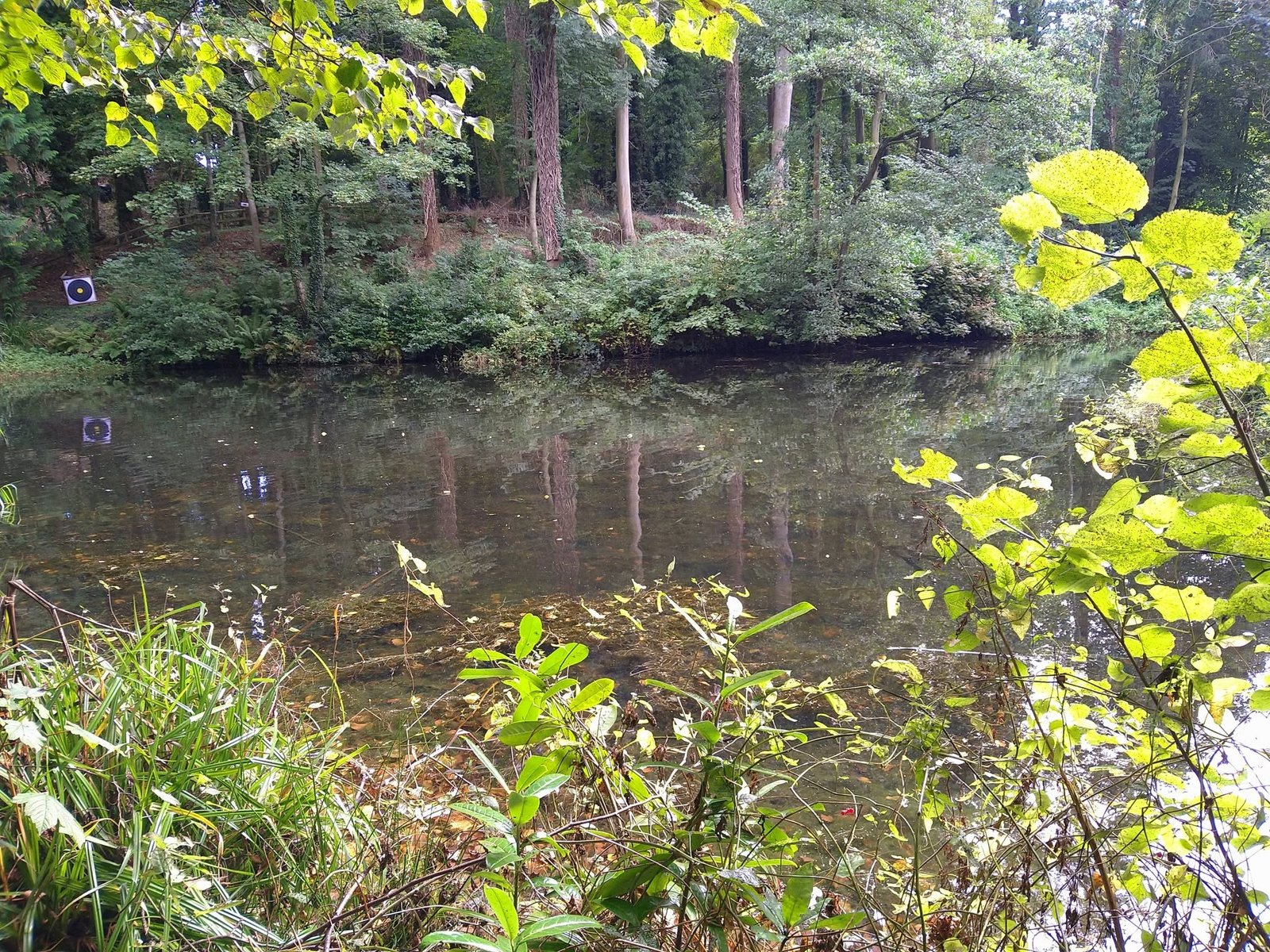
And I was thrilled to see it all. For the past couple of weeks, I had been dealing with the neurological fallout from Clandeboye, and a mild panic attack at my own club – an autistic shutdown was avoided, otherwise I’d never have been mentally or physically able to shoot Greenmount. One thing I can rely upon to help during such incidents is nature. I was still apprehensive, however, going into Greenmount, concerned that I wasn’t going to be on top form, given this is usually a challenging course.
On day one I took a moment to lean by the fence of the larger lake and look out at the ducks. The idea, much like intuitive shooting, is not to think about anything but simply let the sensory information filter in without giving it any real consideration; the hues of the leafy plants, their wild shapes; the contrasting colours of the mallards; the ripples radiating outwards from the ducks; the patterns and groups the waterfowl adhere to.
Thus, on day one, I did not hit the ground running but I did manage to stay on my feet. Thankfully, I was in good company, with Mike Lecky returning to field shooting, and bringing his beautiful flatbow along with him. Both Toms, Williamson and Scott completed our group, with flatbows of their own, to keep us all on the yellow peg.
It was a struggle, with every arrow loosed leaving a strand of fatigue in its wake to slow my mind. Yet, despite the slow start, I was soon back on form, determined to bring my best. As we moved from target to target, I could hear the rustic cries of magpies blurt out from hidden perches, and imagine their glossy white, and striking blues gliding between the hedgerows.
With a 15m bunny as our second target, we wondered if this could be to our benefit, getting a harder target out of the way. Each of us did alright on it, I have to say, the alarm from the sudden ambush working to heighten our focus perhaps. Oddly, this was our only bunny for some time, with a large array of 60 and 80 faces in the first half to stretch our focus and form.
There was a brief moment of chilling shock in the second half, when I overshot a 35m target, a flat target at that, with my first two arrows. Such tremulous feelings were manifested from the knowledge that, one, I had not blanked a target yet, and two, this was the very target my father had overshot once before, disturbing a wasp nest. As it turned out, my last arrow hit the target, and as I was scoring, Tom Scott brought both my arrows back without incident. Hardly entertaining, or exciting for you the reader, I know, but that’s just how it went.
But here is something to chuckle at: tragedy struck when I lost a 6 on a bunny, an unmarked target close to the full 10m. It had been a while since I had suffered such calamity and had to settle with a total score of 4 on that target. Though I’ve spent years waving off such issues – either that or I’m just repressing them – I moved on, putting it out of my mind.
One thing we had all been happy with, whilst not exactly counting our targets, was the fact that our second half was likely to be easier going. There were at least five more bunnies to shoot, and more multiples. Yep, the hard graft was done, and once we had finished, my score card made this clear with a wide margin between my first and second half scores.
Across the course the wildfowl and swans were quieter than usual, as if anticipating us, and watching. By the second larger pond, great dragonflies hovered and sliced at the air among the reeds, late-evening shades of blue caught beneath blurry translucent wings. There were few wasps about, thankfully, and I did hear of a sighting of a shrew.
As much as we need the weather to be good, or at least tolerable, all of the sounds of the natural environment are required I as well believe. It would not do to shoot a full round in silence, without the honk of a raven, the flute-like belligerence of a robin, the sudden wafting of wings from disturbed wood pigeons, and the very sarcastic sounding quacking from mallards.
I say this as a native of County Down of course, where the most dangerous animal expected might be a badger. In the far away land of the Fascist… I mean United States of America, a friend of mine shooting in New York State told me that several of their 3D targets had been ravaged by a black bear – this did not deter them from having a barbeque, however.
For all the fine paths to follow, and with autumn on the horizon, there were plenty of shadowy patches in which targets were placed – in particular a 15m bunny. Under our boots were plenty of strands of ivy and those thorny things that always catch my feet, as the course setters worked hard to keep us within the more natural elements of the venue. Many of the short targets, the bulk of a good score, were fixed onto banks just to strain our confidence, and chip at our scores.
With day one cleared, I had shot my third best score for a
mixed round.
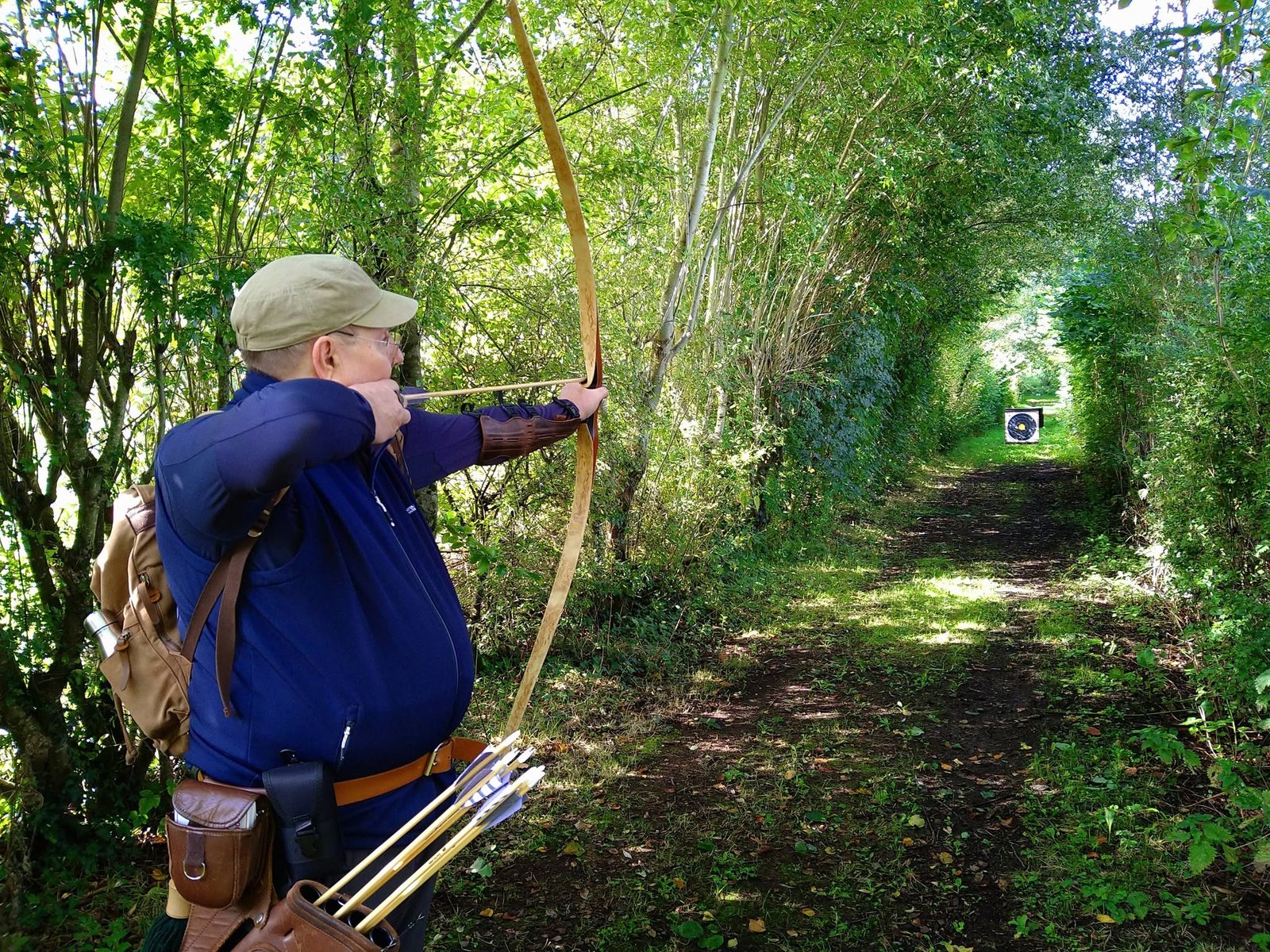
Now, don’t tell anyone I said this, but I don’t mind scoring. The simple arithmetic keeps my mind from dulling, and frankly I hate having to mark targets.
Come day two, my father had been placed into our shooting group, which is always a good way to make sure I behave myself. It also broke up the serenity of the group’s pattern, with his great metal riser and fancy carbon limbs, and heathen string-walking ways.
Still, I have never convinced him to try something more traditional, though I am happy he is just out and shooting, given the years he spent holding Lough Cuan Bowmen up, like Atlas holding the heavens on his shoulders.
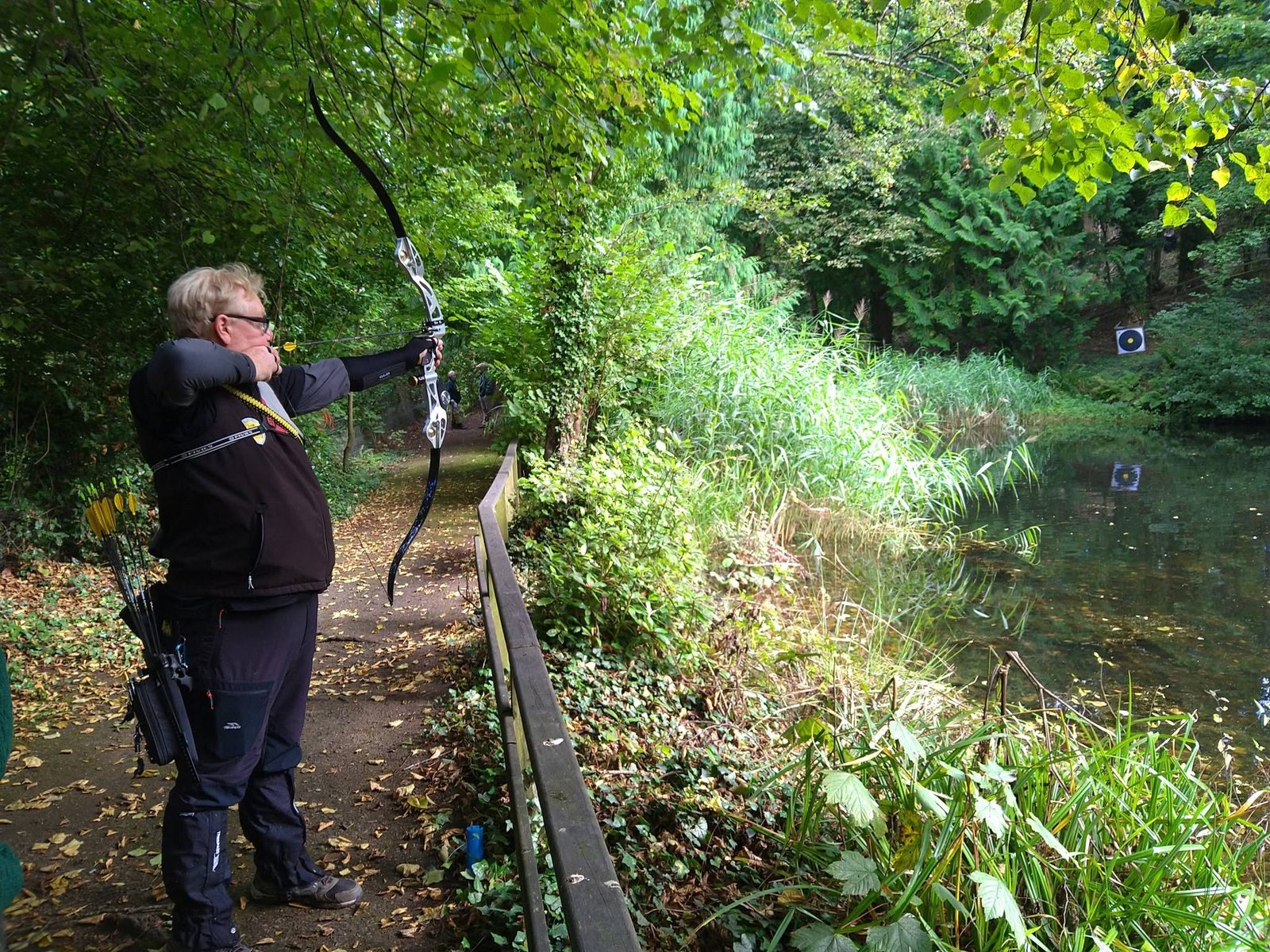
All four of us made a decent opening on the targets, though once more, our second target in was the 15m bunny! Though a large part of the course had been changed overnight, this was simply a dire coincidence.
All that said, I don’t believe there is ever a good time to
find yourself at the 15m peg for a bunny.
Much like day one, shadows, and rises and dips in the ground stole points from our scores, keeping the bunnies and multiples challenging. Every point on these was hard fought, and I found myself settling for lesser scores simply because of the target setup.
Robins were making a fuss in the hedgerows, and the magpies kept themselves hidden away as they watched us move from target to target. At one point a jay cut across the trees above us, its rustic cry giving it away, and all there was to tell us of its presence. Common enough, but illusive, able to tuck themselves away within the trees.
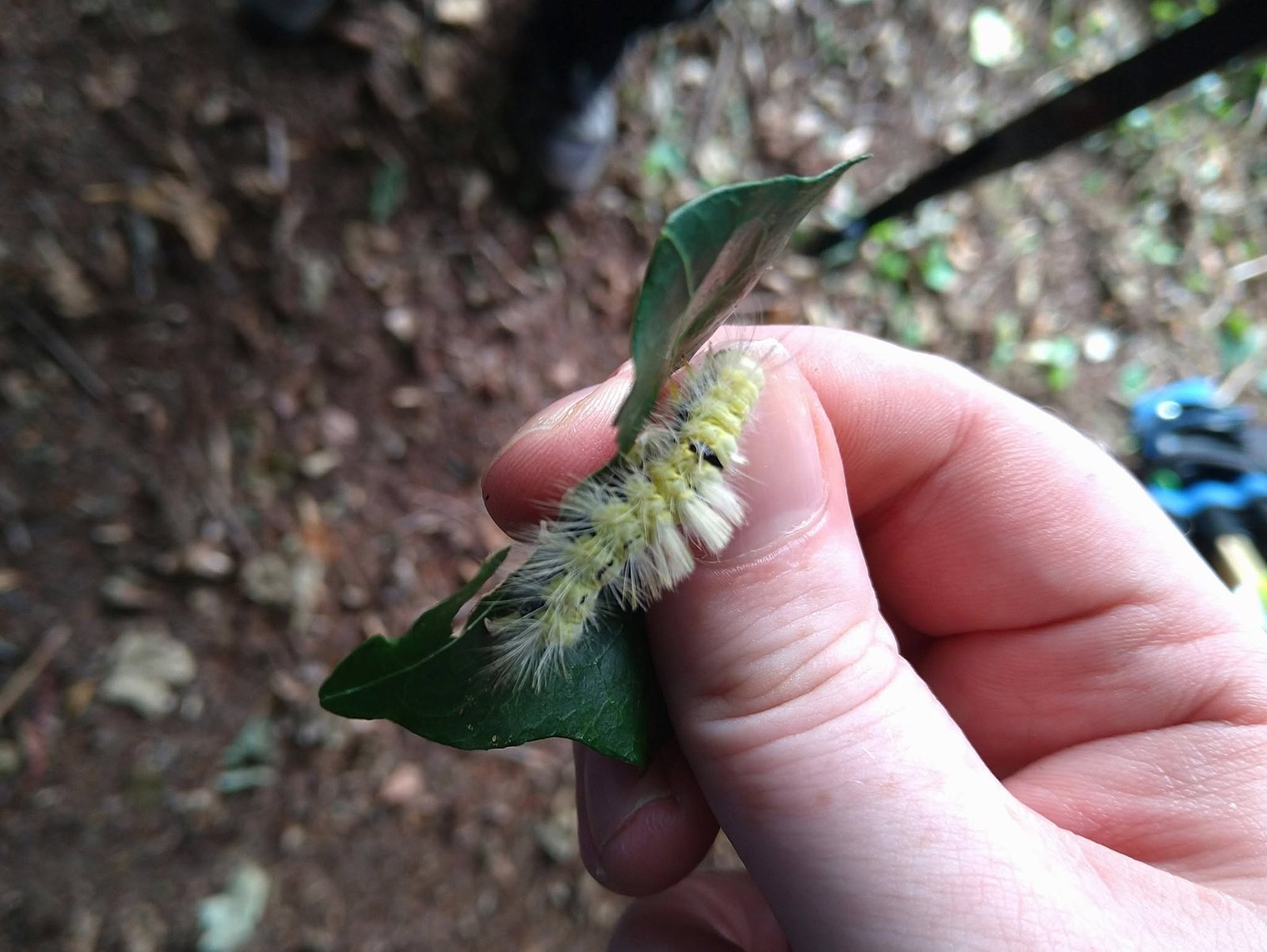
Prior to one target I managed to get a photo of a rather furry looking caterpillar, a delightful creature shuffling its way along some ivy. Just another fun reason to do field archery, and I was fascinated by the prickly strands and bright colours.
And on this same target, I suffered a bouncer! Worse I witnessed it hit the 5 ring, and just how was I to claim this? Thankfully my father saw it hit too. Under WA rules, if everyone can agree on where the arrow hits, then the unfortunate archer gets the points – otherwise they can shoot another arrow.
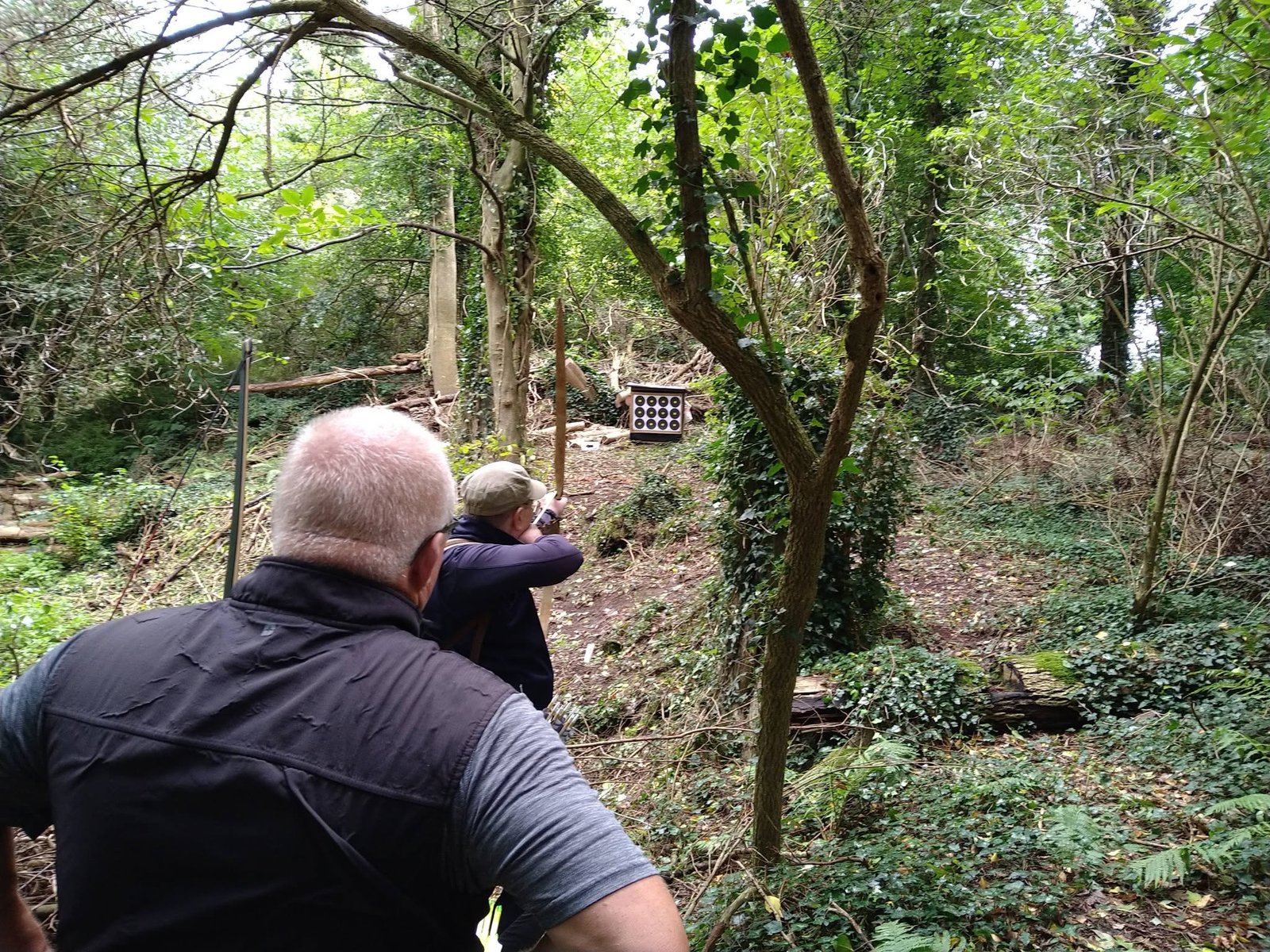
Tom Scott always shoots a blinder and can use a bow ambidextrously, too. Even with my own ambidextrousness I have yet to get to grips with switching hands. Tom has done brilliantly to overcome his target panic, pushing through it, and looses arrows with all the flare of an artist. He too keeps his shooting simple, intuitive in nature, and it’s obvious from his scores that his focus is sharp.
Thankfully he’s in the 50+ group.
Every time I shoot with Tom Scott, I always learn something new about archery, a new technique, historical shooting style, or something about arrow craft. It is a rewarding experience to spend the day with this gentleman.
Across both days I had the other Tom, Williamson, dogging my own score. It was not until the second half of day one that I managed to get ahead of him, and he did beat me on day two by 3 points.
I do say I’m not a competitive person, but even I’m beginning not to believe it anymore. But iron sharpens iron as they say, and I credit Tom Williamson with pushing me further as a field, and longbow archer.
And after making a fuss about his new arrows, I’m glad to say my father shot well across such a challenging course. Between his wrist, and the limited amount of time my father had to shoot in the past, he has come back into field archery with a furore, punching arrows into the higher scoring rings, and covering the distance of the longer targets with ease. None of his fancy new arrows were lost or broken either. And I did get a great photo of him using his fancy new knife to dislodge at arrow – a photo I can hold over him as leverage, threating to show it to my mother.
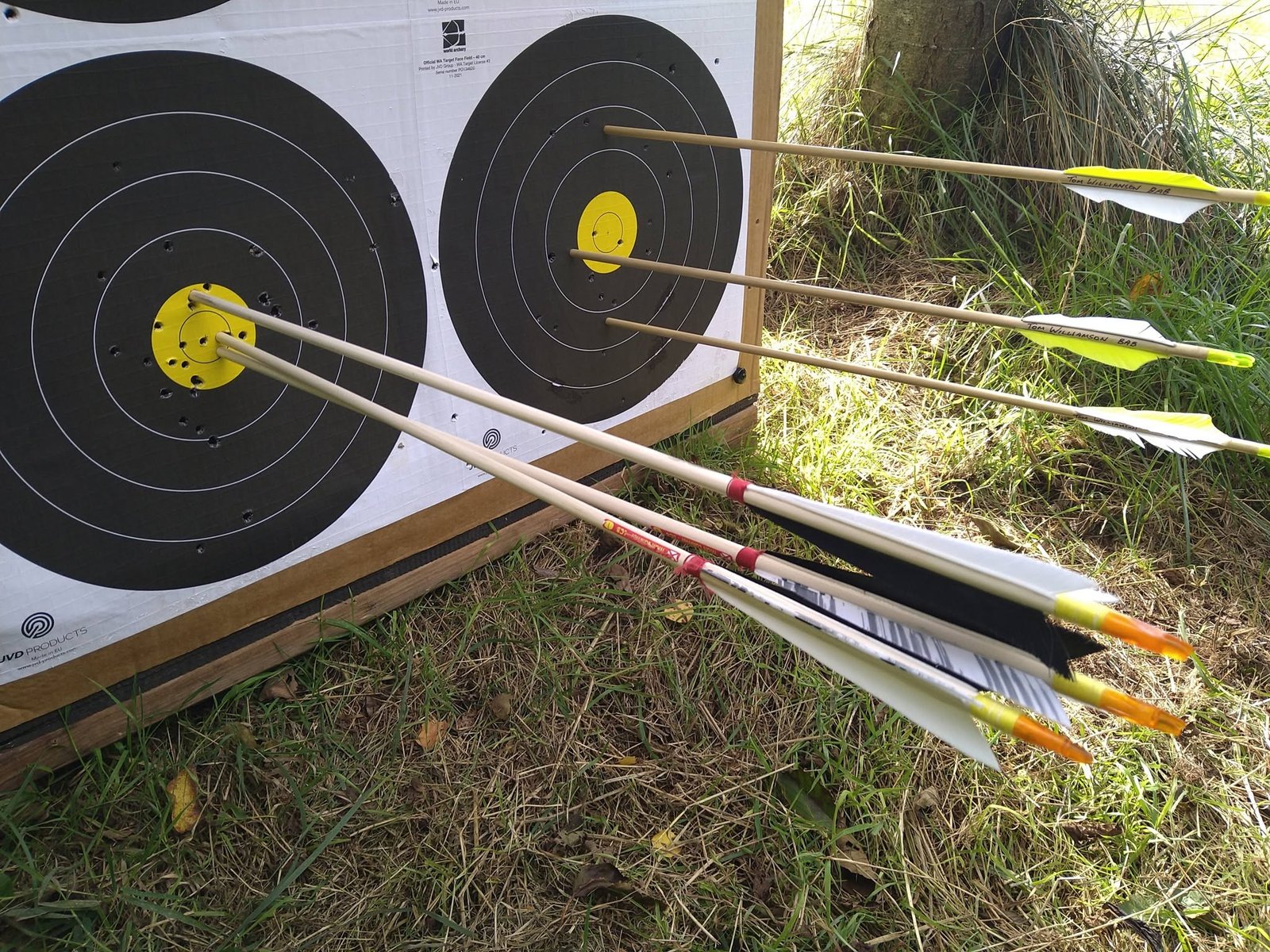
The shoot at Greenmount was a joyful experience, as archery should be. By the end of both days, I had my fourth and second highest longbow scores for a mixed round, and thus this was a successful weekend – it wouldn’t do to shoot a personal best, not at Greenmount, as it might upset the course setters. This course was expertly set up by a group of course setters and judges who are the very definition of professional. I’ve never known anyone at Ballyvally to fall short in field archery.
Views: 86