2026

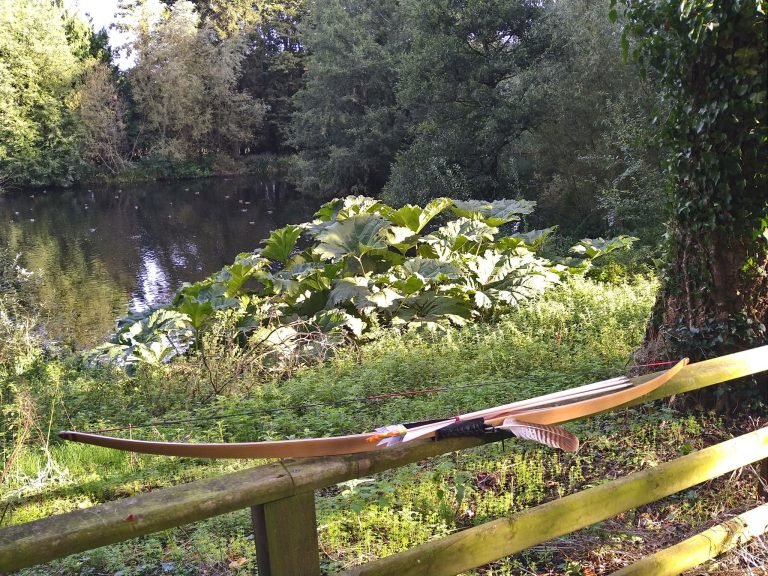
What principle allows Apollo to draw pestilence from one stretched string, song from another, so that distance carries beauty’s measure beside cruelty’s reach? At a field archery butt I have heard a recurve string answer the fingers after an arrow has gone: a dry, brief note, close to the sound of a nail struck against seasoned wood, yet clean enough to turn the ear. Across my thumb, serving thread settled after release while the limbs returned through their narrow arc into rest, leaving in the hand a memory of stored force discharged through space. From that small sound I enter Apollo, for Greek poetry repeatedly places music beside archery while his fiercest acts depend upon force sent across an interval from a body remaining elsewhere. Their kinship reaches deeper than ornament: the arrow touches flesh after crossing measured space, whereas the lyre reaches hearing through vibration carried by air, each instrument storing strain before effect arrives. Apollo becomes legible here through distance itself, a measured separation that grants his gifts purity of form while permitting suffering to arrive with terrible cleanliness.
Near the first gate of the Iliad, Homer places that cleanliness inside the quarrel over Chryses. Leaving Agamemnon’s presence with insult lodged in memory, the priest walks beside the sounding sea before asking the god of the silver bow to make the Achaeans pay for his tears.¹ Down from Olympus comes Apollo, his bow carried beneath a quiver whose arrows already intimate the answer. Before mortal flesh receives any shaft, missiles rattle against the divine shoulder; Homer then grants the weapon an acoustic mark, δεινὴ δὲ κλαγγὴ γένετ᾽ ἀργυρέοιο βιοῖο, the fearful sounding of the silver bow. Through the encampment, disease settles first among the mules, passes among dogs, then takes human victims until funeral fires thicken beside the ships. Poetic archery gives epidemic action agency while disease keeps its terror, the divine missile rendering sudden affliction imaginable through directed flight. Apart from the ships Apollo takes his seat, preserving spatial separation inside the act itself, so death reaches the camp while its sender remains beyond human reach.
Such remoteness makes Apollo’s violence feel exact even where human judgement recoils from its scale. Against one old priest’s dishonour stands an army enduring nine days of pestilence, yet epic causality treats that widening consequence as the extension of a violated sacred relation through the host commanded by Agamemnon. Fritz Graf reads the episode through Apollo’s archaic identity as an archer whose lethal reach can reverse into healing, while the arrow itself becomes apt for imagining epidemic death: a shaft arrives suddenly from afar, its source becoming legible through interpretation.² Within that structure I locate the moral difficulty in the interval separating divine proportion from mortal suffering. Homeric measure follows cultic relation shaped first by hierarchical duty, then by ritual standing as a ruler’s act spreads through those gathered beneath his authority. Agamemnon wounds a sacred bond; Apollo answers through the collective flesh under royal command. Cruelty enters where sacred arithmetic reaches living bodies, even as the calculation retains its exact form.
Ritual repair alters the sound of the same shore. Once Chryseis returns to her father, sacrifice changes the relation between camp and priest under divine sight: animal life enters the altar while fat burns upon wood, after which wine meets flame before Chryses asks Apollo to redirect his former action from the Danaans.³ Homer lets music occupy the space previously filled by bowshot, for young Achaeans sing the paean through the day until their praise pleases the far-working god. Across this movement, pestilence begins in prayer fulfilled through archery, whereas release emerges through restitution completed in communal song. Music enters as enacted relation whose consequence reaches beyond ornament, gathering scattered breath into common measure where disorder had multiplied pyres. By virtue of that change, the paean acquires social force: rhythm orders a community previously broken by disease, while Apollo’s pleasure confirms a repaired line running from worshippers through priest to deity. Where the weapon transmitted wrath across distance, song crosses the same interval carrying reconciliation.
Within the Homeric Hymn to Apollo, the pairing becomes explicit through the newborn god’s first declaration of mature purpose. After divine food has entered him, his speech names κιθάρις καὶ καμπύλα τόξα: lyre beside curved bow.⁴ Prophecy follows within the same utterance, extending the field from stringed instruments into transmitted knowledge. Over that order I linger, for an archaic singer places stretched string beside stretched string at the threshold of Apolline identity. Bow beside lyre enters the god’s self-declaration as a double instrumentality through which force travels, while divine speech gives the pattern another medium. Across physical space a shaft reaches its mark; through air a musical tone arrives at hearing; from deity to consultant an oracle carries hidden knowledge into mortal decision. Each act depends upon relation preserved across separation, with the effect appearing elsewhere from its point of origin. Apollo’s famous remoteness thus acquires a practical grammar: his power travels by sending.
Heraclitus provides the hardest philosophical stone beneath that grammar. Fragment B51 places bow beside lyre in a παλίντροπος ἁρμονίη, a back-turning fitting whose coherence arises through opposing strain.⁵ Within its surviving language, the fragment speaks from an Ephesian field where both objects already possessed archaic cultural intimacy capable of bearing thought. For my reading, physical structure carries the decisive burden: a slack cord yields another condition, whereas effective form arrives through forces drawing against each other. Bent limbs store energy before release; chosen string strain upon the lyre governs pitch so that tone emerges through controlled relation. Heraclitus finds coherence within contention, allowing Apollo, when read beside the fragment, to appear as a deity whose attributes arise from disciplined strain itself. Beauty may grow from tension while injury proceeds through the same source; form supplies structure, whereas purpose gives that structure its moral destination.
In Odyssey XXI, Homer gives the mechanical kinship an astonishingly concrete body. Raising the great bow, Odysseus examines it before stringing the weapon with the ease of a skilled singer fixing twisted sheep-gut upon a lyre peg.⁶ Under his testing hand the cord sings sweetly, like a swallow, whereupon the room changes. Colour drains from the suitors’ faces as Zeus answers with thunder, after which the arrow follows and the contest of axes becomes a threshold of killing. Here poetic simile passes briefly into physical equivalence, as the bow enters music before it enters blood. Through hearing, Homer establishes competence prior to displaying consequence, so the note certifies mastery before the weapon certifies force. Failed command would declare itself through awkward stringing before a wandering shaft or weak cast exposed the hand; Odysseus produces a clean tone followed by a clean line. Sweetness therefore carries dread by virtue of the precision it announces, making beauty an audible proof of stored capacity.
Material history strengthens the comparison while keeping its limits firm. Greek lyres employed a resonating shell or wooden body according to type, with strings stretched from lower fixing points to a crossbar where tuning arrangements altered strain; animal gut supplied a common string material.⁷ Another geometry governs the bow, yet both devices place useful force inside controlled deformation. I keep that resemblance inside historical bounds, treating technical likeness as support for poetic analogy while theology continues to arise through literary evidence joined to ritual practice. Repeated contact taught ancient performers how a string behaved beneath fingers that first set its strain before provoking sound or release. Musicians likewise knew pitch as a property governed through tuned relation, while later Greek theorists developed increasingly exact accounts of interval through scale.⁸ At the meeting point between felt material knowledge and poetic association, reflective measure arises from an instrument whose string instructs the fingers before philosophy supplies a name.
Ancient musical exactness gives the same lesson further weight. In sound, proportion offers immediate sensual reward when two pitches enter relation, allowing the ear to receive interval as shaped difference. Across measured ground, an archer performs a comparable conversion through stance feeding draw before release gives flight its line, so two separated locations become parts of one disciplined act. Apollo’s epithets repeatedly name him as far-worker or far-shooter, lodging spatial reach inside epic speech. Such remoteness carries definite form, as mythic accuracy turns separation into relation. Chance scatters force across space; Apolline action gathers distance into aim.
Another form of the pattern appears in the Hymn to Apollo when the god moves with his lyre to rocky Pytho before passing to Olympus, where divine attention gathers around music.⁹ In response to his playing, the Muses answer through song while mortal suffering becomes part of their subject, giving the scene a severe double scale in which divine delight contains knowledge of human endurance. Amid that ordering of sound Apollo plays, so the lyre carries more than sweetness or repose. Measured music gives shape to a cosmos where immortal pleasure coexists with mortal exposure, placing beauty beside pain inside one divine field. Under Apollo’s hand, form governs experience more firmly than consolation.
Through years of reading Delphi, I have found distance most useful when treated as active relation. Apollo’s cultic forms give remoteness positive force, for questions travel from the polis into the sanctuary before answers return as speech demanding judgement from those who hear them. Heraclitus’s famous saying about the Delphic lord presents communication through indication, making the oracle another instrument stretched across an interval. Between utterance, interpretation, event, divine speech preserves separation while drawing mortals into response. Sacred difference guards Apolline knowledge, while human hearers complete the remaining movement through thought. Across these forms, the archer’s target receives flight while the listener’s ear receives tone, just as a consultant’s decision occupies the far end where divine action becomes consequence.
Healing reveals the same reach in another register. During the fighting around Sarpedon, Glaucus suffers an arrow wound delivered by Teucer; pain weakens his arm while blood continues from the injury.¹⁰ Through prayer he calls to Apollo, whose response eases pain before closing the flow and restoring strength for battle. Almost surgical in its reversal, the scene answers the plague image from Book I: earlier divine arrows entered bodies across the Achaean camp, whereas here the god’s power reaches one wounded man and returns his arm to useful force. Remoteness therefore serves care as readily as punishment, exposing the moral openness of exact effect. A capacity capable of reaching across space may kill under one purpose or restore under another, while the form of reaching retains its disciplined character.
Sophocles presses the relation among plague, healing, distance into civic tragedy. At the opening of Oedipus Tyrannus, Thebes reeks with incense while voices rise from altars; failed crops accompany pregnancies ending in grief as disease consumes the polis.¹¹ Creon has travelled to Delphi, whose answer directs the city to pollution linked with Laius’s killing. Later the chorus calls upon the Delian healer while invoking far-shooting Apollo among the divine powers sought against death. I read that convergence as one of tragedy’s sternest Apolline forms, for the cure arrives through knowledge capable of wounding the man who discovers it. Hidden killing must acquire public legibility, so civic suffering drives testimony into remembered events before prophecy compels recognition. Apollo heals through truth brought accurately to its mark.
Modern clinical language offers one causal map, whereas Greek religious pollution belongs to its own social and ritual order under theological authority. Robert Parker’s work on disease, divine vengeance, civic purification gives that distinction historical discipline.¹² Within Sophocles’ Thebes, collective suffering arises from an offence lodged inside kingly history, so expiation requires disclosure followed by separation before restored relation can emerge between the city and its divine command through acknowledgement of the dead ruler. Apollo’s cure therefore cuts into the house it saves. Knowledge strips Oedipus of kingship before household identity collapses into self-blinding, after which exile carries the ruin into space while the polis receives release through his fall. Once more proportion divides across two scales: civic restoration can coincide with personal devastation, giving the god’s exact diagnosis salvation at one end, catastrophe at the other.
Cruelty appears with greater clarity in Achilles’ story of Niobe near the end of the Iliad. Her sons fall beneath Apollo’s silver bow while Artemis kills the daughters; their mother’s offence against Leto draws divine retribution across her children.¹³ Within Achilles’ speech, the passage enters a conversation where grief moves through burial before the return to food marks mortal endurance, carrying the weight of another bereaved parent into Priam’s mourning. Apollo’s arrows deliver familial punishment through a severe economy in which the children become the medium through which their mother receives correction. Such action exposes the deepest ethical wound in divine proportion, for accuracy can coexist with transferred suffering. Each shaft reaches a chosen young body, yet the punishment reaches Niobe through that flesh, binding two targets inside one mythic act.
Those silver shafts preserve a disturbing aesthetic surface. Homer gives Apollo a gleaming weapon whose beauty survives the scene of slaughter, so divine splendour remains materially present at the moment of loss. Through an implement fitted to a god of radiance, Niobe’s sons fall, turning polished form into the vehicle of lethal consequence. I read the silver bow as an object that defeats any comforting equation between beauty and moral gentleness. Beautiful form can serve exact harm, for the straightness of flight may please the eye through disciplined execution while the consequence wounds ethical judgement. Apollo joins those responses inside one gesture.
Marsyas brings the same problem from archery into music. Herodotus, passing through the Phrygian city of Celaenae during his account of Xerxes’ march, records the local claim that the skin of Marsyas hung there after Apollo flayed him; Xenophon later connects that punishment with a contest of musical skill.¹⁴ I keep each witness inside its historical date, allowing tradition to accumulate across sources while preserving their separate evidential weight. Through their combined testimony, musical judgement becomes punishment written upon skin. Defeat carries lost honour into flesh, while Apollo’s supremacy becomes visible through a body converted into relic. Music therefore shares the bow’s hard logic: mastery establishes rank, after which rank authorises an effect whose final mark rests upon skin.
Herodotus’s concise report makes the cruelty heavier for me through its topographical plainness. Beside a river rising from Phrygian ground, an army passes while local memory points to skin, allowing myth to enter place as something a hand might indicate. Long after the contest’s sound has faded, punishment clings to geography through an object carried in communal recollection. Apollo’s distance changes under that condition, for the deity departs while the victim’s skin remains fixed in civic memory. Divine action thus travels through time by attaching itself to material residue.
Marcel Detienne’s study of Apollo with the knife in his hand widens this image beyond the polished classicist figure, tracing the deity through sacrificial killing where purity acquires form through blood before civic foundation draws expiation into public life.¹⁵ I value Detienne’s insistence upon the object held in the hand, where theology acquires gesture through contact with resistant material. Each Apolline implement demands its own trained movement: the bow receives the draw, the lyre answers the plucking finger, while the knife opens flesh under ritual purpose. Apollo’s authority lives through actions performed upon things before philosophy converts them into abstraction. Fat burns at the altar as strings answer the plectrum; elsewhere arrows leave the hand, so a god associated with clarity can stand amid blood while retaining exact form. Within Greek religion, purity carries ritual meaning compatible with sacrifice and death.
Beauty returns at this point under sharper terms. I propose that proportion possesses moral innocence while it remains formal relation, whereas lived consequence gives form ethical direction. A musical interval may satisfy through ratio, just as an arrow’s flight may satisfy through accuracy while ritual acquires order through prescribed sequence. Once proportion governs persons, however, ethical judgement admits the recipient’s exposure beside questions of desert, while mercy enters through the cost imposed upon living flesh. Apollo’s cruelty arises where flawless relation carries a human price accepted by the god’s own scale as fitting.
Human makers know a gentler version of that lesson through disciplined tools. On a field archery course the marked target fixes distance into rule, while the archer accepts a defined peg before the target face establishes scoring through a prescribed sequence of shots. The old lethal geometry survives as sport under chosen limits that convert flight into judgement through agreed rules. Through my fingers the bow remains legible as strain passing into release, followed by after-sound, while the target renders distance visible through result. Such practice helps me understand Apollo through resistance more readily than romance, for a string behaves according to material law while skill grows through submission to that law. Divine myth then raises the harder question of what follows when mastery of relation acquires power over lives.
The paean carries a corresponding human answer. Greek song culture developed this ritual form in close association with Apollo, where healing meets the averting of danger through communal performance.¹⁶ Its social action interests me as deeply as its theology, for voices enter measured time through breath shaped into common phrase. Fear acquires rhythm while dispersed persons become a chorus for the duration of performance, giving communal discipline a sonic body. Apollo’s music therefore offers a human technology of measured relation against the terror associated with his distant shafts. Communities answer the far-shooter by making interval audible among themselves.
Measure, then, carries two faces beneath Apollo’s hand. Within disciplined joining, a tuned string orders sound while choral movement converts separation into relation; elsewhere oracular speech governs the interval between divine utterance and mortal decision, while healing reach gives remoteness another use. Under punishment, the same exactness appears when plague-arrows culminate in funeral fire, Niobe’s children receive shafts through maternal offence, then Marsyas’s skin preserves musical defeat upon the flesh. I keep these powers within one divine identity, as Greek polytheism allows a deity to gather related forces through cult whose local practice grows into story. Apollo’s coherence arises from the manner of action more readily than from a modern moral category. Across each field he reaches by setting an interval whose strain acquires consequence through release.
My opening question therefore returns with its answer earned by the bowstring whose note becomes lethal flight, the lyre cord whose strain becomes music, the plague fire answered through paean, the wound restored by remote healing, the oracle reaching its listener, the skin left at Celaenae. The principle allowing Apollo to draw pestilence from one stretched string while drawing song from another is proportion acting across measured distance. Beauty arises when relation acquires order; destruction can use the same order with equal precision. Through perfected form Apollo exposes ethics as a question carried beyond formal exactness, for moral character arises from the purpose directing an effect, the recipient who bears it, then the limit governing its reach. His bow teaches that measure becomes humane when the life at the far end of the line enters the reckoning.
Scholia:
- My reading begins with Homer’s plague scene due to its extraordinary concentration of sound within ritual offence, after which animal death widens into human loss through one movement of divine action. Iliad I.33–52 makes Apollo’s bow audible before the poem reveals the full social cost of disease; the archer takes his seat apart from the ships, so remoteness enters the scene as part of agency itself. I read the arrows as Homer’s religious-poetic representation of epidemic action while preserving the poem’s archaic terms through their own imaginative force. Across the movement of contagion, affliction reaches animals before passing into human victims until pyres provide the visible measure of divine anger. Homer, The Iliad, trans. A. T. Murray, 2 vols (Cambridge, MA: Harvard University Press; London: William Heinemann, 1924–25), I.33–52.
- Graf serves as my main modern guide to the conjunction of Apollo’s lethal archery with his healing identity, after which musical culture places the same deity within another mode of transmitted effect. His treatment of Homer stresses the aptitude of remote shooting as an image for sudden epidemic death before following the far-worker into paean as restorative practice. That sequence supports my claim that apparently divergent Apolline functions can be read through modes of reaching across an interval. Graf also displaces the polished solar image inherited from later classicist habit by returning attention to the Homeric god who arrives in wrath, sits away from the camp, sends death, then accepts ritual restoration. From Graf I take historical discipline, while the language of proportion developed above remains my interpretive contribution. Fritz Graf, Apollo (London: Routledge, 2009), pp. 9–19, 33–51, 79–85.
- For the reversal from plague to song I return to Iliad I.430–474, where Chryses’ second prayer belongs within a ritual movement beginning in restitution before sacrifice passes through the shared meal into libation, after which the paean closes the restored relation. Musical performance thus enters a sequence whose consequence reaches beyond ornament. Young men sing through the day while Apollo receives pleasure from their voices. I read that performance as social repair enacted in time, for the community previously marked by funeral fire now gathers breath into measured praise. Its position after sacrifice gives music a precise place within restored relations linking the human group to its priest under divine acceptance. Homer, The Iliad, trans. A. T. Murray, 2 vols (Cambridge, MA: Harvard University Press; London: William Heinemann, 1924–25), I.430–474.
- The bow-lyre pairing rests upon the Homeric Hymn to Apollo, where the newborn deity announces κιθάρις καὶ καμπύλα τόξα among his chosen concerns before moving across the wide earth. Such juxtaposition carries greater evidential weight than later allegorical systems, for an archaic hymn already places both instruments near the centre of Apolline self-declaration. My interpretation emphasises their shared dependence upon stretched string under controlled strain, whose effect travels beyond the player or archer. Prophecy follows within the same speech, opening a further possibility that Apollo’s powers share a structure of sending across distance. The hymn supplies the conjunction while my account of interval gives that relation philosophical articulation. Homeric Hymns, Homeric Apocrypha, Lives of Homer, ed. and trans. Martin L. West (Cambridge, MA: Harvard University Press, 2003), Hymn to Apollo, lines 119–145, esp. 131–32.
- Heraclitus B51 enters beside Apollo with care, for the surviving fragment names bow beside lyre while the god remains outside its wording. Kahn’s commentary on the παλίντροπος ἁρμονίη clarifies the older force of harmoniē as joining or fitting while preserving the musical field activated by the lyre. Opposed strain creates a functioning whole, which gives my argument its philosophical centre. Through tension the bow gains projected force; under a related material principle the lyre gains tone from string held at chosen strain. Heraclitus lets physical structure bear thought, suiting an object-led reading in which Apolline exactness emerges from relation. Charles H. Kahn, The Art and Thought of Heraclitus: An Edition of the Fragments with Translation and Commentary (Cambridge: Cambridge University Press, 1979), pp. 195–200.
- Odyssey XXI.404–421 provides my strongest Homeric witness for the practical intimacy of bow beside lyre. Odysseus strings his weapon through a simile drawn from a skilled player fastening sheep-gut at the peg; the tested cord then sings like a swallow before the arrow trial. Through its temporal hinge, the passage places acoustic beauty immediately before lethal capacity becomes active. The pleasing note authenticates skill, while that skill soon governs death. Homer therefore gives material form to the proposition that beauty of execution can coexist with destructive purpose. Homer, The Odyssey, trans. A. T. Murray, 2 vols (Cambridge, MA: Harvard University Press; London: William Heinemann, 1919), XXI.404–421.
- Landels supplies the physical history of Greek stringed instruments through discussion of construction in relation to string material, after which tuning practice clarifies playing technique across principal instrument families. His treatment of lyre-type instruments places animal hide beside tortoiseshell before wooden arms support gut strings within reconstructable material culture, while his account of pitch range keeps interpretation tied to feasible mechanics. Such evidence deepens the bow comparison through shared material strain while keeping the analogy inside historical bounds. Technical similarity supports comparison; theology continues to arise from texts joined to cultic practice. John G. Landels, Music in Ancient Greece and Rome (London: Routledge, 1999), pp. 47–68, 86–109.
- West gives my wider account of Greek scales in relation to tuning, where interval enters musical theory through increasingly exact description. His work establishes a culture in which musical difference received formal articulation, allowing proportion to function as audible practice long before later European aesthetics made Apollo an emblem of polished harmony. My use remains deliberately restrained. I infer a cultural field where string tension governed pitch while measured interval possessed practical reality capable of philosophical extension, with the ancient sources retaining their disciplinary boundaries. M. L. West, Ancient Greek Music (Oxford: Clarendon Press, 1992), pp. 48–80, 218–253.
- From the Olympian music scene I take Apollo’s lyre beside divine dance while the Muses sing mortal suffering, allowing musical beauty to hold knowledge of human endurance within measured form. Homeric Hymns, Homeric Apocrypha, Lives of Homer, ed. and trans. Martin L. West (Cambridge, MA: Harvard University Press, 2003), Hymn to Apollo, lines 182–206.
- Glaucus’s healing supplies a deliberate Homeric reversal of Apollo’s remote killing, for after hearing prayer the deity eases pain before closing the wound’s flow, then restores fighting strength, showing the same spatial reach operating through care. Homer, The Iliad, trans. A. T. Murray, 2 vols (Cambridge, MA: Harvard University Press; London: William Heinemann, 1924–25), XVI.508–529.
- Sophoclean plague gives my reading its civic form through The Oedipus Tyrannus of Sophocles, ed. Richard C. Jebb (Cambridge: Cambridge University Press, 1887), lines 1–166, 300–315. Delphi supplies a cure through disclosure of Laius’s killer, while the chorus invokes Apollo as healer beside the far-shooter, letting truth function as a curative force whose arrival carries mortal cost.
- Parker keeps pollution inside Greek religious categories while tracing its civic reach. His discussions of disease in relation to divine vengeance sharpen my reading of purification as a public process through which Thebes bears one concealed offence inside its political history. Robert Parker, Miasma: Pollution and Purification in Early Greek Religion (Oxford: Clarendon Press, 1983), pp. 207–280.
- Niobe’s punishment comes from Homer, The Iliad, trans. A. T. Murray, 2 vols (Cambridge, MA: Harvard University Press; London: William Heinemann, 1924–25), XXIV.602–617. Apollo’s silver bow kills the sons while Artemis’s arrows kill the daughters; Achilles tells the story while teaching Priam how grief eventually returns the bereaved body to food.
- Two witnesses preserve the Marsyas tradition at different historical moments: Herodotus, The Persian Wars, trans. A. D. Godley, 4 vols (Cambridge, MA: Harvard University Press; London: William Heinemann, 1920–25), VII.26; Xenophon, Anabasis, trans. Carleton L. Brownson (Cambridge, MA: Harvard University Press; London: William Heinemann, 1922), I.2.8. Herodotus preserves the displayed skin, whereas Xenophon states the musical contest, allowing later tradition to gather around distinct pieces of evidence.
- Detienne widens my view of Apolline violence through Apollon le couteau à la main: Une approche expérimentale du polythéisme grec (Paris: Gallimard, 1998), pp. 11–18, 225–39. His attention to sacrificial killing places purity beside founding gestures while expiation keeps the Delphic god close to blood, tools, altars, civic acts, restoring material action to a deity frequently polished into abstraction.
- Rutherford supplies my account of the paean as a Greek ritual song-form strongly associated with Apollo, where healing meets the averting of danger through communal performance. That history allows me to treat song as collective measured action whose social force exceeds private aesthetic pleasure. Ian Rutherford, Pindar’s Paeans: A Reading of the Fragments with a Survey of the Genre (Oxford: Oxford University Press, 2001), pp. 3–136.
Views: 159