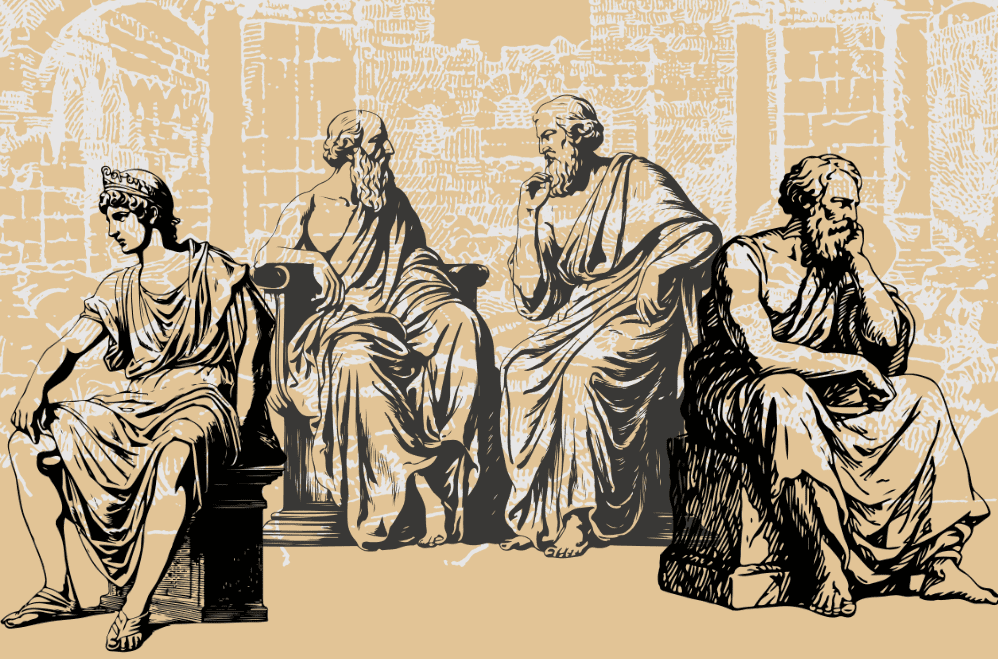
A sage from the auld days, a Roman steady at the helm of his own heart, praised the archer. He watched the draw and saw a likeness for a life well shaped. The whole purpose, the gathered labour of person and breath, seeks one thing: to send a straight shaft. Intention rises, the self gathers, the release flows like a river—here lives virtue. The flight that follows, the kiss of point and centre, stands as a thing to be chosen and hoped for, though it enters wind and chance. The shot, once underway, lives in the world’s weather; the archer shapes the act. So the true aim rests inside the work itself: a deep alignment of mind, body, and care, where the goodness of intention crowns the effort. From this ground springs the whole catechism of archery as moral art. It reads as a craft of process, a way in which the soul holds its posture at the instant of release, for that moment carries the true target. A person who draws a bow in that spirit carries a quiet steadiness, an authority over desire, and a habit of courage that weaves through days and deeds. Many paths promise skill; this way raises character, and the arrow flies witness.
This Stoic teaching, bright in its clarity, meets a strong harmony in Aristotle’s thought, where the archer models a flourishing life, a rhythm of eudaimonia. We move as archers move and grow surer of the right when a visible mark draws the eye and the will. From here the ethical current gathers force. The telos, the ultimate end, claims pride of place. The archer’s way shapes a pilgrimage of purpose, a road walked one shot at a time, and each arrow riding the breeze carries a gift of yourself—gathered, tempered, and sent with care. In that craft, aretē finds its hearth. Excellence arrives when a thing fulfils its nature with grace. Shooting well mirrors being well and pours its habit into speech, friendship, anger rightly held, and losses carried with dignity. Virtue lives in the mean, the golden centre between extremes. The draw illustrates the lesson: pull with slack hands and the arrow creeps from the bow, sighing short of its mark; pull with harsh force and the body trembles, the gaze wanders, the mind scatters. The mean gives sweet truce where strength marries ease, a sufficiency equal to aim, free of slackness and free of strain. This quality reads as craft, a habitus earned through repetition upon repetition, until body and soul find balance without conscious tallying. The archer grows awake to a thousand small variables—the whispering wind, the lay of ground, the secret tug of sinew—and shapes the aim in living response. The mean remains personal to the archer, a point of balance born anew with every cast. Practice turns judgment into instinct. Fingers begin to read the string’s mood; shoulders learn a language of angles; breath times its own prayer. The mark answers with presence. An hour at the butts trains the day beyond the field. A person who studies that mark learns mercy for error and courage for correction, since purpose keeps watch and the practice keeps faith. Across months and years the archer earns a centre that travels, a way of measure that serves on street, in house, and at the workbench.
This path into the archer’s craft carries us toward the marrow of being, toward the lived body as field of meaning. Maurice Merleau-Ponty would greet the archer with delight, since the scene enacts his philosophy of perception. The skilled archer experiences the body as lived presence, a unity of limbs, breath, and intent guided from within. They inhabit the body as home; they are the body in act. The bow turns from object into limb; the arrow expresses the will. Here stands the body-subject, an embodied consciousness that meets the world pre-reflectively. Practice braids the many steps—stance, nocking, draw, anchor, release—into one flowing habit. The body remembers the path to the mark. Merleau-Ponty names this current ‘motor intentionality,’ a primal awareness through which the body takes hold of the world as a field for action. The archer’s frame understands possibilities rather than measurements. The target appears as a magnet of practice, a pole that draws the lived body into orientation. Within that state, boundaries soften among self, bow, and air, and a single deed gathers them. The archer serves as a channel through which the world hums, a partner in an event that unfolds across string, muscle, and weather. Instinctive shooting grows from cultivation that reaches toward first immediacy. Through hours of mindful work the archer eases into becoming-arrow, joining the meadow of things in frank companionship, setting aside a spectator’s vanity. The hand steadies, the shoulder sets, the breath keeps even time, and the eyes share one mind with the mark. The person who grows in that way enters communion with a wider order, and the shot arises from that communion with true natural authority.
This unity of self and world heightens responsibility. The instant of release gathers freedom and choice, a bright point that carries existential weight. Jean-Paul Sartre’s word that existence precedes essence resounds through the archer’s stance. An archer arises through decisions and deeds rather than birthright; one becomes through practice. Each shot sketches a self-portrait. Standing before the boss, the archer breathes, chooses, commits, and writes identity with that commitment. Freedom stands inescapable, and so does the tremor that attends freedom. A person senses the full authorship of the arrow’s course and accepts it. Ownership enters the scene: the time of release, the reading of the air, the poise of the shoulder, the ring of the string—each element flows from a chosen act. The world plays chorus; the archer keeps the lead. From such authorship springs a fully authentic life, one shaped by values firmly affirmed through action. The field serves as a school for that affirmation. Choice meets consequence, and character earns definition through steady practice. Where a weaker will drifts, a trained will gathers. Where a heart hesitates, a disciplined breath advances and steadies the sight. Decision seeks clarity; habit gives courage. Over time the archer crafts a signature through thousands of releases, each one a living thesis on freedom embraced. Through that craft a person claims the fullness of responsibility and grows in stature. The target stands as witness; the breeze writes commentary; the shaft reports the truth of the moment. The life that follows the field profits from the same rhythm: choose with care, act with courage, welcome the result, and build again with clean intent.
This arc of striving invites a path toward the theological. Perfected archery rises beyond display and flowers as an aesthetic event, a beauty that gestures toward the divine. For him, beauty lives as objective splendour, a light that shines from a form, a luminous Gestalt. The grace of a master archer—the line of stance, the choreography of draw and release—presents a form that glows from within. Truth, goodness, and beauty meet within that form. True shape of the shot, married to the good intention of a virtuous archer, arrives as a beautiful deed that captivates witness and maker alike. Balthasar writes of earthly beauty as a participant in a higher radiance, a corridor that leads the gaze toward God, disclosed in fullness through the form of Jesus Christ. The archer’s call toward the perfect shot reads as a theological quest, an effort to embody a form that resembles divine glory. A deed may carry a revelatory tension, a drama through which finite action hints at the infinite. A watching heart feels moved, seized, by that splendour and receives a summons toward change. The aesthetic moment turns into encounter. Grace enters through posture and gesture; splendour cleaves the grey of ordinary hours. The field grows liturgical for an instant. Shadows fall back; colour sharpens; breath carries prayer. The arrow’s path sings an alleluia in its way. Such experience carries theology at the level of perception: beauty speaks, reveals, claims, and confers. The archer answers with gratitude and fear-of-the-Lord joy, eager for a life that corresponds to the form glimpsed. Every return to the line carries a hint of pilgrimage. Form educates desire; desire seeks form; the circle climbs, and the craft itself begins to preach.
This theological register threads through the Western tradition and breathes through the sacred books of Israel and the Church. The bow and the arrow stride across Scripture as charged signs that carry many meanings of divine action. God appears as a Divine Archer, arrows flashing as swift judgment for the violent and a shield for the upright. Within the Psalms and the prophets the bow serves as an instrument of wrath and a banner for defence. The image also carries covenant and peace. The first bow in the text shines across rainwashed cloud as the rainbow after the flood, a sign that seals a promise. The warrior’s bow lifts toward heaven, away from earth, with the string relaxed, a mark of mercy and a pledge of regard. The sign speaks of intimacy between Creator and creation, a binding of kinship across sky and soil. So the bow bears a holy dialectic: instrument of judgment and emblem of grace, power in action and promise in rest. This pairing reflects the drama of divine and human relation, stern in justice and boundless in hope for renewal. Through those pages the arrow can announce calamity or deliver rescue; the bow can gather clouds or clear them. Readers who carry that imagery into the field sharpen their conscience. Each draw reminds the heart of the double charge carried by strength: the charge to defend and the charge to spare. The archer receives that charge as a form of worship and as an ethic that blesses the lane between trial and blessing.
Our own era keeps the bow as a potent emblem, alive across sport ranges and wild grounds. Target archery prizes precision gear and steady cycles of repeatable motion, and a spiritual path breathes within that regimen. Discipline, focus, and self-mastery guide the practice; process yields result through patience. The ethical horizon sharpens further in hunting. Now the archer addresses a living creature and accepts a serious charge. A hunter guided by fair chase pursues, studies sign and wind, and seeks a single clean shot that ends swiftly and honours the animal and the land. Within ecological ethics this craft can serve a moral good, since hunters join the trophic exchange and assume personal responsibility for food. Predation in the wild often brings harsh exits through hunger, disease, or tearing jaws; a keen arrow can grant a swift passing. Skill, humility, and gratitude frame every stalk and every release. The hand that takes also gives: habitat care, population balance, and a deep regard for seasons and limits. Bowhunting, undertaken with that spirit, initiates a person into realities of life and death that city air may hide. Many who walk that lane speak of sacrament. The act itself carries a rite-like sobriety: approach, pause, anchor, send, and follow, each step attended with prayerful mind. Meat on the table then bears the mark of earned responsibility. A family eats with knowledge of the source and with respect for the creature. Within that frame the forest and the kitchen stand in conversation; the arrow becomes a signature on a shared covenant with the place.
So the archer’s path unfolds as a richly layered journey through ethics and theology. It opens with a Stoic attention to the pure act, a schooling of the will that grants release from outcome-tyranny. It claims purpose in the Aristotelian telos, where virtue grows as a balanced, harmonious state. It feels unity in the phenomenological body, where world and self move as one continuous deed. It crowns choice through the existential moment, where freedom and responsibility write identity arrow by arrow. And it rises toward the theological, where the beauty of a perfect shot grants a glimpse of divine glory and joins the true with the good in radiant form. From ancient fields of war to modern ranges and wild edges, drawing the bow speaks for the human condition: a steady yearning for excellence, an awake sense of freedom and consequence, and a search for meaning carried by a shaft that sails into open weather. This metaphor teaches courage, patience, humour, and deep mercy. Breath steadies; posture deepens; purpose governs time. The lane between hedge and hill turns into a kind of cloister where motion, grace, and prayer share one grammar. And the arrow, released with honour, continues the lesson through its song in the air.
Views: 65