2026
Bibliothèque nationale de France
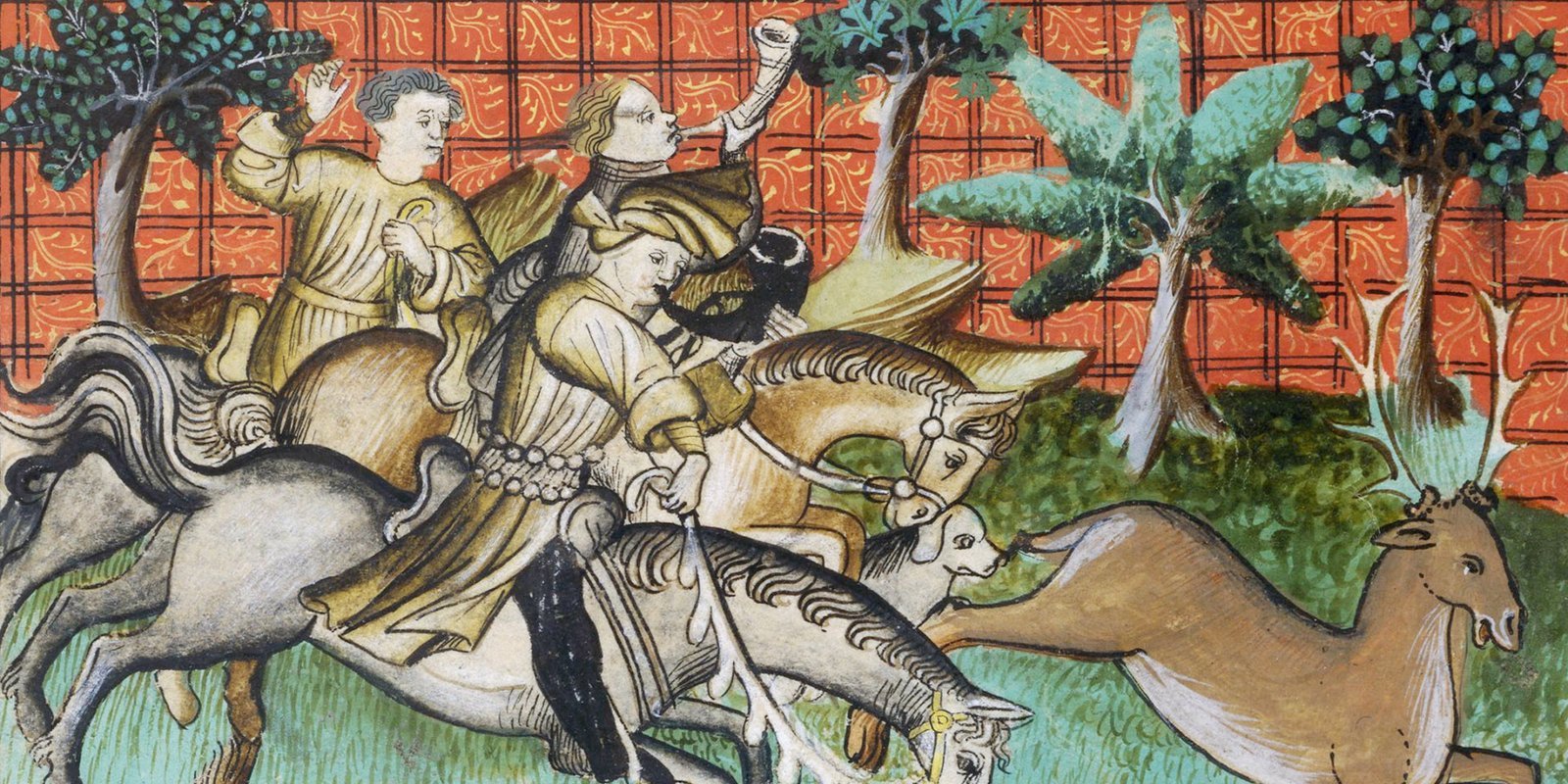
What, precisely, died near Senlis in May 987: Louis V through a hunting fall, or Carolingian kingship through a killing arranged to clear Hugh Capet’s road to the crown? Beneath that question I place a foot, a small human instrument set against woodland earth at the instant when dynastic history altered its bearer. Richer of Saint-Rémi, whose Histories provide the fullest near-contemporary narrative, sets that foot upon the ground with almost indecent simplicity: Louis had gone hunting near Senlis when his footing slipped; the fall struck him hard enough to injure his liver, blood later issued through nose or throat, fever followed until death came on 22 May.¹ Across this compressed sequence the disputed throne hangs from the sole of a boot, with imperial ancestry reduced for a moment to balance meeting impact in damaged flesh. On Richer’s page, the foot reaches collision before internal injury declares itself through haemorrhage, while fever completes the fatal labour. Later retelling supplies a horse, whereas conjecture introduces an arrow whose appeal rests chiefly upon political timing. Such distinctions bear the first weight of inquiry, for any theory of assassination acquires historical standing when its proposed mechanism meets the material supplied by the earliest witness, even where suspicion gathers densely around motive.
Woodland hunting tempts conspiracy more readily than a guarded deathbed through liberties granted by trees, distance, armed attendance, broken sight-lines. Across forest ground, witnesses scatter naturally while animals rupture formation as cries travel unevenly through timber, making sudden movement part of the chase itself. Under such conditions an arrow driven into soil near a mount might startle the animal; a shouted signal could alter pace, or a weakened strap could betray a rider at speed, yet each conjectured gesture requires surviving testimony before physical possibility acquires historical force. Here the suspected arrow draws spectral energy from dynastic timing far more readily than from documentary trace. Louis possessed a crown while Hugh possessed immense princely weight; Archbishop Adalbero of Reims faced royal hostility as Gerbert of Aurillac moved within his correspondence, with Charles of Lower Lorraine nearby as the strongest Carolingian claimant. At precisely this junction a royal death occurred where competing interests had already drawn close enough to bruise one another. Circumstance therefore feeds suspicion, whereas evidence grows from marks that parchment can carry. Within my reading, those substances remain distinct even when both lie against the same palm.
Royal pursuit deserves its proper historical weight, for Frankish rulers treated movement through woodland as an enactment of lordship expressed through danger, territorial command, mastery over game, aristocratic fellowship. Eric J. Goldberg has traced that culture across the Carolingian centuries, showing how the chase formed part of princely masculinity as well as rulership.² Louis died while performing an activity thick with royal meaning, a practice through which elite bodies entered managed danger before retainers whose presence confirmed rank. From Goldberg’s reconstruction Richer’s account gains a sharper irony: the final Carolingian ruler of West Francia met his fatal injury during one of the exercises through which Frankish kings had long enacted command over territory through the disciplined pursuit of quarry before their households. Goldberg reads the incident as a fall occurring on foot, a modest physical mishap beside the heroic violence available within aristocratic hunting literature. Under that reading the famous speculative horse stands at an awkward distance from the surviving record, while fatal action remains attached to ground meeting a failing step before later imagination supplies a mount.
Experience tells me how quickly a boot can betray a man on woodland earth, where a root hidden beneath leaf mould changes a stride while chalky clay takes the heel sideways, sending confidence into weight travelling through hip, rib, shoulder. Such knowledge proves little about Senlis, though it keeps Richer’s vocabulary materially credible through mechanics familiar to any body crossing broken ground. Rank altered the witnesses gathered after impact, shaped the remedies attempted, multiplied the political consequences carried by injury; flesh answered force through common physical laws. When Richer makes a damaged liver the seat of injury, he writes through tenth-century medical learning while giving remembered symptoms a learned anatomical home. His reported progression remains strikingly concrete, as slipping motion reaches impact before internal injury declares itself through bleeding, with fever carrying the damaged body into death. Into that clearing an assassination hypothesis arrives after a coherent physical explanation has already occupied the ground.
Political motive supplies its strongest tool through Gerbert of Aurillac. Two years before Louis died, Gerbert wrote from Reims that Lothar held the royal name while Hugh exercised royal substance in deed.³ Such a remark has the cut of factional intelligence, exposing a political judgment already mature before the fatal hunt. From Gerbert’s vantage, Hugh appears as the man whose practical capacity exceeded the authority exercised by the crowned Carolingian, making later election intelligible within a hierarchy that contemporaries could already perceive. Gerbert’s letters equally reveal a world where episcopal interests crossed the borders of West Francia through Lotharingian affairs shaped by Ottonian kinship, while Roman appeals entered princely households through trusted carriers whose journeys gave politics movement. Through family relation, ecclesiastical office, patronage or fear, allegiance passed from person to person across that network. Thus Hugh’s accession grew from soil prepared long before May 987. Beside the crown, a rival centre of force had formed while a Carolingian head continued to wear royal gold.
Louis inherited that quarrel as something warmer than parchment. His father Lothar had fought to extend Carolingian influence eastward, whereas Adalbero’s ties drew the archbishop deep into the Ottonian political orbit. Within the prelate’s circle Gerbert served while hostility around Reims sharpened into proceedings capable of changing careers, loyalties, perhaps lives. By 987 Louis had summoned Adalbero to answer grave accusations at an assembly whose projected judgment carried danger for the accused churchman. Before that confrontation reached its appointed form, the king died. Elizabeth M. Hallam with Charles West place the sequence plainly: Louis continued his father’s policy, summoned the archbishop, then died before the projected meeting; Adalbero soon became a major force behind Hugh’s elevation.⁴ From such timing the conspiracy theory draws its hardest edge, for the threatened prelate survived his accuser while the magnate favoured by the same episcopal circle acquired royal office. Political murder could readily enter contemporary suspicion through facts arranged by benefit with such stark economy.
Mechanism, however, demands another grade of knowledge from motive. The proposed arrow asks the archive to perform work that Richer assigns to Louis’s footing, while even the horse requires insertion into the earliest surviving narrative. Every literary means required for a riding mishap stood within Richer’s reach, for mounted hunting belonged to elite life, with horses filling aristocratic warfare, travel, display. His fatal syntax chooses a slipping foot. At that point source criticism acquires a moral duty: possibility grants permission to investigate, whereas probability asks theory to correspond with witness, circumstance, physical sequence. A hidden archer fits the first condition splendidly. Documentary support gives that archer thin purchase. Medieval political killing could thrive through hired agents or ambush, while a hunt could give clandestine action useful cover; surviving testimony furnishes an accident whose stated mechanics already explain the death. Around the event, suspicion survives as a legitimate historical question, though the reported occurrence itself retains the shape Richer gave it.
Richer deserves careful trust proportioned to what his writing can bear. Justin Lake’s study of his historical practice shows a writer steeped in classical models, medical learning, rhetorical construction, dramatic scene-making.⁵ Speeches could acquire literary form as chronology bent under narrative intention, while inherited material could emerge rewritten with energy far beyond an annalist’s line. In Richer’s hands, historical writing sought intelligible action through educated reconstruction. Such habits acquire special importance when his pages approach 987. Anatomical detail after Louis’s fall may embody learned interpretation, while Adalbero’s later speech recommending Hugh belongs to a classical mode in which public argument receives polished verbal form. Literary shaping occupies a different category from factual invention, for enlargement of a scene may coexist with preservation of its governing event. Accordingly, my reading treats Richer’s slipped foot as evidence for what his historical tradition believed had happened, while his speeches receive sterner examination as representations of political argument.
Jason Glenn places Richer even more firmly inside the political world of Reims, where historical memory met local loyalty, episcopal conflict, patronage.⁶ The surviving manuscript, preserved in Richer’s own hand, brings me exceptionally close to a tenth-century historian at labour. Parchment rises in the imagination under a pen whose corrections enter margins while phrases receive polish beside political memories close enough to bruise reputations. Gerbert’s presence loomed over that intellectual world, whereas Adalbero’s cause touched it directly through institutional allegiance. From a conspiracy-minded reading one may therefore propose that Richer inherited an account cleansed by men who profited from Louis’s death. Such an interpretation possesses an elegant internal fit: a sympathetic historian moves beside an interested circle as convenient accident precedes swift accession. Elegance carries danger in historical reasoning once suspicion begins feeding upon every silence, turning partisan proximity into proof of concealment while each missing accusation becomes evidence that secrecy succeeded. Theory then begins manufacturing the test by which it expects confirmation.
Stronger discipline asks what a partisan account actually chooses to preserve. Richer gives Louis a violent, ugly death in which blood enters the scene after impact while organ damage follows the fall, with fever carrying the young ruler through his remaining days. Youth sharpened the event, for the king had occupied his inheritance briefly while a legitimate son had yet to enter the succession, leaving a dispute already burning around Reims to receive fresh fuel. A writer chiefly intent upon smoothing Hugh’s passage beneath providential haze could have selected a terse death notice as easier material. Richer’s narrative chooses a physical progression memorable enough to invite scrutiny. That choice grants the accident tradition substance while every proposed intervention remains dependent upon conjectural reconstruction. A murder hypothesis therefore carries the heavier evidential load, for it must explain why the chronicler preserved a pedestrian mechanism while every supposed act of sabotage stayed beyond the known narrative inheritance.
Death then changed political tempo with astonishing speed. Richer reports that discussion over Louis’s burial carried an immediate practical concern: leading men needed to remain gathered while the kingdom’s future received settlement. Compiègne offered burial beside assembly, allowing continuity of presence to serve dynastic decision at a moment when dispersal would have slowed agreement. Around the corpse politics physically clustered, a young ruler laid out while men nearby converted bereavement into constitutional action. Magnates who had arrived for one royal crisis found themselves inside another whose urgency demanded immediate settlement. More revealing than the imagined archer, for me, stands this recorded management exercised in daylight through ceremonial gathering shaped into negotiation. Hugh’s supporters possessed a royal funeral itself as the chamber where opportunity could harden into decision; ritual kept the required men close enough for succession to take institutional shape.
Charles of Lower Lorraine carried Carolingian blood close enough to make succession contestable. Heredity spoke through him, yet political memory supplied Hugh’s supporters with arguments against his elevation: Ottonian allegiance weighed heavily while his regional position placed him within another configuration of power, with previous conflict furnishing usable grievance. Andrew W. Lewis places Hugh’s accession within the long history of Capetian succession, where descent met aristocratic assent through consecration, possession, family strategy.⁷ Such conditions make Hugh’s election part of a political culture already accustomed to negotiation over kingship. Robertians had worn the West Frankish crown before him, leaving a usable precedent beneath his candidacy. From that lineage Hugh entered royal office as the latest victor in a long contest between leading houses, although later centuries turned 987 into a cleaner dynastic threshold than contemporaries themselves could have experienced.
At Senlis, Richer places Adalbero near the centre of the choice. The archbishop’s famous speech presents kingship through fitness for office expressed as public honour joined to practical capacity, while hereditary proximity yields to the candidate judged more capable of bearing rule. I hear political advocacy spoken through a historian trained on Sallust, where speeches interpret events as much as they report them. Best read as evidence for the argument Hugh’s circle wished history to remember, the oration gives Charles moral-political disqualification while Hugh receives elevation through a vocabulary of public necessity. Such rhetoric resembles a hand cleaning a seal before pressing it into wax: the device already exists, while the fresh impression seeks authority capable of surviving the circumstances that produced it.
Gerbert’s later correspondence adds a second layer of defence. Writing in Adalbero’s voice to Charles, he displaced sole authorship of the royal choice from the archbishop to the public body of the Franks, presenting settlement of the crown as communal business. More than any imagined confession, that rhetorical gesture fascinates me through the anxiety it reveals. Men explain their conduct where accusation has acquired enough heat to demand a public account. Adalbero’s circle evidently felt the charge that it had acted decisively against Carolingian expectation, so the letter answers grievance by enlarging the electorate until a political community appears as chooser. Such language strengthens the case for planned succession politics. Its evidential reach ends where a planned killing would begin. Through Gerbert’s defence, the political chamber where Hugh’s elevation received retrospective justification opens clearly, while the forest death remains governed by Richer’s separate account.
Another primary witness helps gauge what early memory retained. Rodulfus Glaber, writing in the next generation, treated the extinction of Louis’s branch as the point at which government passed to Hugh, followed later by Hugh’s care to associate Robert with royal power.⁸ His retrospective narrative carries strong theological habits, yet emphasis falls upon transfer shaped through election before dynastic consolidation follows. Across that remembered sequence the physical death plot acquires little narrative mechanism beyond the fatal vacancy itself. Silence by itself carries modest evidential force; placed beside Richer’s concrete accident tradition, it gains greater weight through convergence. Among writers who remembered political controversy vividly, the imagined arrow remained outside their explanatory inheritance.
Hugh’s next move reveals the lesson he drew from contingency. Having gained election, he sought the consecration of his son Robert during his own lifetime, placing succession inside the reigning family before another vacancy could reopen competition. Through that act a vulnerable victory acquired familial continuity, while a crown won through choice began to acquire hereditary habit. The logic has the plain intelligence of a farmer setting a second stone beneath a leaning gate: chance had opened 987, so future transfer required preparation while Hugh retained authority to shape it. Lewis’s study of Capetian succession gives that act its long historical consequence. From the accident, the new dynasty learned a lesson about continuity, whether the initiating event began in a misplaced footfall or through darker agency.
Rosamond McKitterick’s account of the later Carolingian kingdoms helps strip away the illusion that 987 arrived as a sudden birth of France.⁹ West Frankish politics had spent generations dispersing royal resources among powerful regional houses, bishops, counts, dukes, monastic networks whose accumulated claims shaped every king’s field of action. Hugh’s Robertian family already occupied a position near kingship while Carolingian authority endured beside formidable aristocratic autonomy. Louis’s death therefore acted as a hinge connecting older conditions with a newly successful lineage. Before Hugh, political vocabulary associated with sacral kingship had already joined royal office to assemblies whose ecclesiastical sanction carried centuries of inheritance through the Frankish polity. What changed was the family occupying the royal centre, followed by the persistence with which that house kept its hold.
Yves Sassier pushes the dynastic reading further, treating Hugh’s accession as the successful outcome of long Robertian advancement as well as a political coup whose success grew from tenth-century change.¹⁰ His formulation earns attention through its separation of two events that popular conspiracy often merges: Louis’s death through a hunting accident, followed weeks later by highly purposeful exploitation of political opportunity. The crown’s transfer could carry planning even where the king’s fall carried chance. I find that distinction historically fertile, for human beings routinely prepare for openings supplied by events beyond their making, while medieval magnates possessed every reason to maintain readiness for succession. Long before the fatal hunt, Hugh’s faction had already imagined a polity in which his power looked royal before his head received the crown. Their preparation therefore belongs to a political history older than the catastrophe near Senlis.
Michel Sot’s work on royal heredity before 987 places another weight on the scale.¹¹ Carolingian succession drew strength from blood while consecration gave sacred force to office, with recognition by leading men turning descent into effective rule. Louis’s childless death therefore created a genuine problem whose answer carried hereditary expectation beside elective practice. Charles could invoke lineage, whereas Hugh could invoke capacity reinforced through coalition, ecclesiastical endorsement, regional authority. Through Adalbero’s rhetoric that contest became a theory of suitable kingship. Later Capetian memory gained much from presenting the choice as orderly judgment, while a murdered Louis would have stained that political theology deeply enough to supply an abstract motive for concealment. Historical method then demands material evidence for such secrecy. Surviving testimony offers political justification in abundance, whereas physical traces of staged death remain beyond the record’s reach.
Ferdinand Lot’s old study of the final Carolingians still carries the smell of archival dust in the best sense, pages built from charters as chronicles meet genealogy through political sequence.¹² Later scholarship has revised portions of its architecture, yet the central drama remains recognisable through Lothar’s ambitions passing into Louis’s brief reign before Charles’s claim meets Hugh’s ascent. Reading that older historiography beside more recent work teaches restraint of a useful kind. Generations of scholars have found ample reason to debate legitimacy through election, Robertian strength or Reims intrigue, while the hunt itself continues to appear through the documentary tradition as an accident. A theory as dramatic as royal murder would gain extraordinary force from a hostile letter recording rumour, an annal preserving accusation or some later polemic carrying a whisper of agency. Medieval political culture readily produced accusations where faction found use for them. Here the record gives a different scandal: the speed with which a death became material for new legitimacy.
Jean Dunbabin supplies the larger map, though I prefer to feel it beneath my palm as a sheet scored with rival centres of force.¹³ Her account of West Francia before 987 stresses division between Carolingian royal resources, Robertian holdings, territorial principalities, ecclesiastical interests. Hugh’s accession therefore belongs to a long redistribution of effective authority more convincingly than to one fatal morning treated as sufficient cause. The event gains meaning through accumulated property supporting office while fidelity expressed through service met episcopal alliance shaped across decades, with reputation tested in repeated political contests. A forest conspiracy offers one clean origin. Tenth-century politics offers sediment laid through generations. Scraping layer after layer from the year 987 reveals Robertian strength beneath the election, Reims conflict beneath Adalbero’s intervention, older habits of aristocratic choice beneath the vocabulary of succession.
Plausible deniability remains the most seductive theme within the murder theory. A princely faction contemplating assassination would logically favour a mechanism resembling chance, while a hunt could provide such cover through distance as woodland shelter mixed armed attendance with animal movement. An arrow loosed near a horse might vanish into brush once panic had performed the fatal work. Yet plausible deniability describes an attribute of an imagined operation more readily than evidence for the operation’s occurrence. Once a historian crosses that boundary, inquiry risks solving a crime through qualities supplied by its hypothetical solution. I recognise the attraction, for old woods invite concealed agency while royal succession supplies motive beside sudden death as occasion. Discipline returns me to the footprint, where Richer gives a slip while Gerbert supplies political hostility, Adalbero offers advocacy, the magnates perform election, Hugh consolidates the resulting dynasty. Each element bears an evidential weight proper to itself.
A more troubling possibility emerges when I place those elements within one historical field: murder may be the lesser mystery. Political systems often reveal their deepest character through what follows chance. Louis fell; men gathered around his corpse while burial became assembly; a claimant suffered rhetorical exclusion; another candidate rose through coalition; consecration converted choice into sacred office; a son soon entered kingship beside his father. Beneath that rapid sequence lay readiness embedded in relationships while intelligence travelled through correspondence, with ceremonial command sufficient to convert vacancy into possession. Viewed from centuries away, such efficiency can resemble foreknowledge. Yet preparedness carries its own explanation through conditions surrounding Hugh long before May. His party had lived for years amid Carolingian weakness while Robertian capacity met Ottonian ties through episcopal rivalry; succession therefore belonged among the contingencies for which every great house kept retainers, letters, loyalties ready.
The title “accidental king” therefore demands care. Hugh came from a lineage that had already supplied kings, while his accession grew from accumulated power shaped by family history through church alliance. Accident supplied the opening date; election supplied the legal-political act; consecration supplied sacred authority; repetition gradually supplied dynasty. Calling him accidental risks mistaking contingency for randomness. Louis V’s falling body altered which prepared future entered reality. Among several possible claimants, one coalition possessed the means to turn a brief succession crisis into a regime capable of reproduction.
My mind returns to the king’s foot in the forest. I imagine leather darkened by earth, weight pitching beyond recovery, men turning at a cry while the ground receives a royal body with the same hard indifference it gives every body. History often feels grander after scribes have ruled lines beneath it. At the point of impact, grandeur contracts into tissue carrying breath through bone beside blood, after which institutions rush back around the wounded flesh. A messenger rides while clergy gather; magnates calculate as bells carry death across settlements. Parchment begins its work after earth has finished receiving the fall. Through that material sequence 987 acquires its terrible economy: a body strikes ground, then a dynasty changes hands.
At the close, the governing question returns with forest soil clinging to it: did Louis V die through a hunting fall, or did Carolingian kingship perish through a killing arranged for Hugh Capet’s benefit? Surviving evidence favours an accident followed by a fiercely managed succession. Richer’s fatal mechanism rests on a slipping foot, while the frightened horse belongs to later reconstruction as the well-aimed arrow belongs to conjecture. Gerbert, Adalbero, Hugh, the gathered magnates supply ample evidence for preparation surrounding royal succession, with factional manoeuvre becoming ideological justification after Louis’s death. Their conduct makes the accession look staged in its political execution, whereas the hunt itself retains the shape of mischance. From the accident Hugh’s allies engineered a king; surviving sources place bowstring and arrow beyond the king’s fall. Within that distinction rests the whole case. The foot struck earth. Politics took the crown.
Scholia:
¹ Richer of Saint-Rémi, Histories, Volume II: Books 3–4, ed. and trans. Justin Lake, Cambridge, MA, Harvard University Press, 2011, pp. 206–23.
Chiefly through proximity, narrative fullness, his place within the Reims intellectual circle that knew the actors surrounding the succession, Richer governs my reading. His account of Louis’s death gives the argument its material centre: slipping footing passes into a fall while injury receives anatomical interpretation as damage to the liver, after which haemorrhage appears before fever carries the king to death on 22 May 987. Within the same historical movement he links funeral arrangement with the practical need to keep leading men assembled while royal succession received settlement, joining wounded flesh directly to political deliberation. Immense interpretive weight rests upon that transition for me. Classical education with medical learning shaped Richer’s prose through rhetorical habits, requiring a disciplined distinction between event structure and learned reconstruction. Accordingly, I read the pathological diagnosis as intellectual interpretation applied to remembered symptoms, while the basic physical sequence remains the strongest surviving narrative of the occurrence. At this point the famous horse-arrow hypothesis encounters its first obstacle: Richer’s fatal mechanism gives decisive agency to Louis’s footing.
² Eric J. Goldberg, In the Manner of the Franks: Hunting, Kingship, and Masculinity in Early Medieval Europe, Philadelphia, University of Pennsylvania Press, 2020, pp. 213–37.
Through Goldberg the hunt regains its Carolingian social meaning as royal pursuit joins territorial command with aristocratic display. Courage becomes legible through the chase while princely fellowship gains a ritual setting inside woodland, giving Louis’s final activity a political meaning deeper than recreation. Especially useful for the disputed mechanics, Goldberg reads Richer’s report as a fall on foot during hunting near Senlis, contrasting its modest character with mounted crashes or boar wounds capable of furnishing aristocratic death with heroic drama. Such analysis changes the evidential scale of the conspiracy theory. A frightened horse feels plausible to an imagination trained on mounted hunts, yet the primary narrative places fatal action elsewhere. Forest space retains political charge while the supposed mount loses documentary standing. For that reason I keep the distinction close, since historical suspicion earns credibility through exact attention to what surviving witnesses place before the reader.
³ Gerbert of Aurillac, The Letters of Gerbert: With His Papal Privileges as Sylvester II, trans. Harriet Pratt Lattin, New York, Columbia University Press, 1961, letters 55 and 131, pp. 95–96, 161–62.
Among primary witnesses Gerbert offers the richest testimony for the political atmosphere surrounding Hugh’s rise. Letter 55, written in 985, treats Hugh as the holder of practical power while Lothar retained royal title, a formulation revealing the intellectual ground on which Robertian kingship could already be imagined before Louis’s death. Composed in Adalbero’s voice after Hugh’s elevation, Letter 131 shifts responsibility for choosing the king from one archbishop to the public body of the Franks. Great weight rests upon that defence in my reading, for it shows how acutely Adalbero’s circle understood accusations surrounding its part in the succession. Through these letters suspicion about political engineering deepens while the evidential boundary remains before physical assassination. Rivalry appears through alignment, anxiety emerges through self-defence, while retrospective justification receives polished form. Beyond those concerns, the proposed archer stays outside Gerbert’s correspondence. To my mind that division remains central: the letters expose the machinery that converted vacancy into Capetian kingship far more clearly than any machinery behind the vacancy itself.
⁴ Elizabeth M. Hallam with Charles West, Capetian France 987–1328, 3rd edn, Abingdon, Routledge, 2020, pp. 25–31.
From Hallam with West comes the political sequence linking Lothar’s late reign to Louis’s brief inheritance, Adalbero’s threatened position, Hugh’s candidacy, Charles of Lower Lorraine’s competing claim. Their treatment keeps chronology hard beneath the hand: Louis pursued policies inherited from his father, summoned Adalbero to an assembly, then died before the confrontation reached its intended form. Soon afterward the archbishop became an important agent in Hugh’s election. Such sequence grants the conspiracy hypothesis genuine motive of a kind stronger than dynastic hindsight. Their source criticism equally disciplines Richer’s celebrated Senlis speech, which bears the marks of classical historical composition. I therefore use the speech as evidence for Capetian-Reims political argument, while its precise verbal form occupies a different evidential grade. Across their wider treatment, 987 also sits inside a long contest among Carolingian, Robertian, ecclesiastical, regional powers, allowing later dynastic memory to stand apart from contemporary experience.
⁵ Justin Lake, Richer of Saint-Rémi: The Methods and Mentality of a Tenth-Century Historian, Washington, DC, Catholic University of America Press, 2013, esp. pp. 119–76.
Against credulity beside conspiratorial appetite, Lake supplies my principal check. Richer wrote with literary ambition; classical historiography shaped his scenes while speeches gained explanatory work, with medical knowledge colouring his treatment of illness or injury. Such habits allow a historian to reconstruct action with greater finish than an eyewitness memorandum would carry. For the argument here, that point cuts in two directions. Richer’s anatomical confidence after Louis’s fall deserves caution, whereas his plain assignment of the initial accident to slipping footing retains evidential value as the tradition he received or accepted. Lake’s account of narratio probabilis, rhetorical plausibility, helps me distinguish shaped narrative from discarded testimony. Medieval historical writing can carry ideology while preserving event structure. Treating literary shaping as concealment by default would erase the evidence needed to test concealment. My reading therefore lets Richer’s rhetoric complicate the death scene while keeping his positive physical claims firmly upon the table.
⁶ Jason Glenn, Politics and History in the Tenth Century: The Work and World of Richer of Reims, Cambridge, Cambridge University Press, 2004, pp. 89–166, 235–50.
Around Richer’s manuscript Glenn reconstructs the social room in which Reims carried more than geographical identity, for episcopal interests touched political allegiance while education, memory, patronage shaped the historian’s field of vision. Richer’s relationship to Gerbert’s intellectual milieu makes his treatment of 987 politically charged from its opening moment. Such context strengthens the question of bias that any murder hypothesis must ask. A chronicler close to eventual victors may inherit their explanations, while the same proximity gives him access to information circulating near the crisis. Access creates evidential value beside partisan risk. Preserved in autograph, the manuscript also changes my sense of Richer as a working historian, for parchment holds correction, selection, revision, the visible labour through which memory became narrative. Material proximity encourages scrutiny of each claimed mechanism more fruitfully than a single verdict upon the writer’s allegiance.
⁷ Andrew W. Lewis, Royal Succession in Capetian France: Studies on Familial Order and the State, Cambridge, MA, Harvard University Press, 1981, pp. 7–43.
Within Lewis’s long history of royal succession, blood met election through consecration while possession of office entered familial strategy. Louis’s death created a vacancy carrying competing routes to legitimacy. Charles of Lower Lorraine held Carolingian kinship, whereas Hugh carried immediate political capacity reinforced through Robertian precedent with episcopal support. Lewis’s account helps me resist the later illusion that Capetian heredity already stood fully formed at Hugh’s accession. Hugh’s achievement included the conversion of personal election into family continuity through Robert’s association with the crown. From that later act I read one of the clearest signs of how deeply contingency impressed itself upon the new ruler. A man elevated through sudden vacancy sought to shape the next transfer while authority remained in his hands. Planning becomes fully visible there, anchored in succession itself, where surviving evidence gives it firm ground.
⁸ Rodulfus Glaber, The Five Books of the Histories, ed. and trans. John France, Oxford, Clarendon Press, 1989, pp. 50–51. As an early retrospective witness, Glaber records the transfer from Louis’s line to Hugh before Capetian care over Robert’s royal position enters his narrative. His memory centres upon succession, giving the hunt little explanatory labour beyond the vacancy it created.
⁹ Rosamond McKitterick, The Frankish Kingdoms under the Carolingians, 751–987, London, Longman, 1983, pp. 305–39. Across McKitterick’s reconstruction Louis’s reign belongs inside the long redistribution of West Frankish power, where royal authority coexisted with increasingly weighty princely centres. Her account makes Hugh’s candidacy structurally intelligible before the accident supplied its date.
¹⁰ Yves Sassier, Hugues Capet: naissance d’une dynastie, Paris, Fayard, 1987, 357 pp. For my reading, Sassier’s separation between Louis’s hunting accident and the purposeful political success that followed carries special value. His account treats Hugh’s rise as the fruit of Robertian history shaped through tenth-century political change, with personal opportunity giving dynastic accession the character of a deliberate seizure after contingency opened the gate.
¹¹ Michel Sot, ‘Hérédité royale et pouvoir sacré avant 987’, Annales. Économies, Sociétés, Civilisations, 43.3, Paris, Armand Colin/EHESS, 1988, pp. 705–733. Through Sot the relation among royal blood, consecration, election, sacred office before Hugh’s accession becomes clearer. His treatment explains why Charles’s genealogical claim possessed force while leaving room for a politically chosen king.
¹² Ferdinand Lot, Les derniers Carolingiens: Lothaire, Louis V, Charles de Lorraine, 954–991, Paris, Émile Bouillon, 1891, 479 pp. As a foundational documentary study of the final West Frankish Carolingians, Lot retains value despite later revisions of several emphases. His reconstruction remains useful for chronology, dynastic relations, Charles’s claim, the political sequence running through 987.
¹³ Jean Dunbabin, France in the Making, 843–1180, 2nd edn, Oxford, Oxford University Press, 2000, esp. pp. 27–43, 124–62. From Dunbabin comes the longer redistribution of royal, Robertian, princely, ecclesiastical power across tenth-century West Francia. Her account keeps 987 inside a process extending far beyond one forest death, while her source discussion for the early Capetian period clarifies the boundaries imposed by the surviving record.
Views: 112