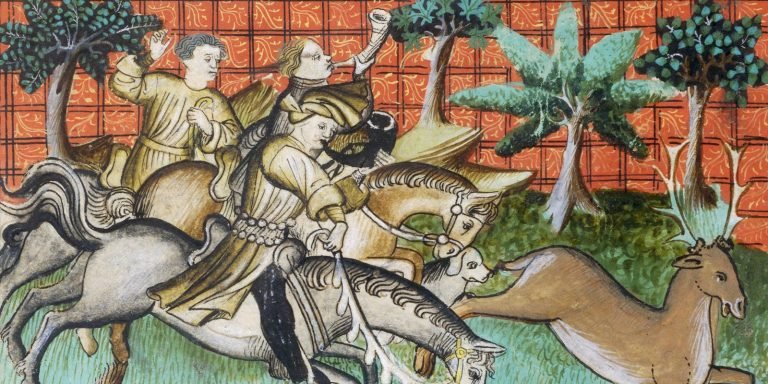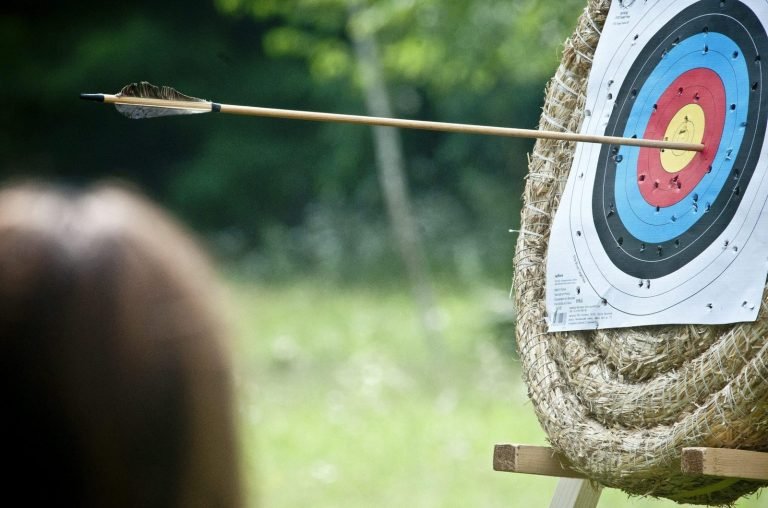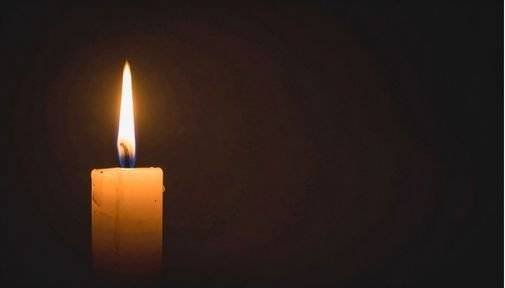
Memento mori opens the late-October syllabus, and dies irae, dies illa gathers vigil air into study. Samhain with All Souls sets a horizon where remembrance carries ethical weight under eschatological pressure. An archer approaches the line and receives a rite that carries the body from grounded orientation through mounting tension to a release that consents. A corridor runs from bow-hand to target and draws attention toward a future shaped for transfiguration. Practice within that corridor conducts grief-work through shaped repetition, while inquiry—psychological, sociological, and ritual—supplies a grammar already inscribed in the hands.
A psychology of memory frames the first movement through evidence the body refuses to ignore, since overwhelming experience settles as arousal signatures, postural guards, and reflex routes that tilt breath and stance long before counsel arrives. Language travels slowly across such ground, whereas coordinated sensation and movement build regulation through paced exhalation, receptive gaze, and timing woven into a single arc, so that the nervous system receives safety through contact, as argument trails behind.¹ On the range the soles agree with earth and the vestibular system accepts partnership; ribs rise to make a house for attention; the nock’s click returns as a syllable the mouth learned during kinder seasons; at anchor the skin greets string in a touch that signals permission; release arrives as consent the organism already rehearsed. Stephen Porges clarifies the physiology through a ventral vagal welcome that follows patterned breath, softened focus, and rhythmic muscular engagement, so that connection and meaning enter as neighbours rather than intruders.² A late-October club night—lanterns with a medieval glow, measured whistle calls, neighbours who keep a kind watch—sets an atmosphere of reliable cues, and grief yields agitation because cadence offers a more persuasive script.
Developmental thought deepens the vessel through a holding environment where reliable objects, timely gestures, and proportionate demands create room for play that heals.³ A well-kept range enacts that surround through steadied calls, constant distances, and equipment that meets the palm with known weight; coaching tones protect dignity while naming direction, such that repetition serves imagination and grants it room to move.. Growth announces itself through modest changes whose gravity the body recognises: shoulder blades learn a cleaner glide as the spine lengthens under air; pressure through the thenar web organises the riser so the forearm ceases to plead for rescue; anchor returns to the mouth’s corner with an earned friendliness. Under such care the wound learns play because agency returns through experiment while the frame sustains the experimenter. When a coach says, Lengthen through the ribs, the chest rises as if invited by the ground; when a coach says, Allow the sight to float, the eye accepts movement as a partner in accuracy; when a coach says, Invite the back to carry the draw, the arms enter covenant with the torso and hold it. A lexicon of competence settles in memory and rides home, where sleep confirms what the hands began.
Ritual theory clarifies why a practice that appears as sport acquires sacramental density in late October. Victor Turner describes liminality as charged time where rank loosens because those who share a threshold encounter a fresh orientation through passage.⁴ At the line a threshold forms at every end: a whistle hushes talk while bodies turn toward a single corridor and the air thickens with intent. Catherine Bell shows how ritualization arises through strategic marking so ordinary gestures receive sacral weight.⁵ Boots cross from gravel to grass with a slight pause that reads as reverence; voices lower to yield precedence to breath; faces align toward a shared horizon. Halloween intensifies the threshold and folds communal remembrance into choreography: carved faces send their light along the butts; a toast rises for the departed in a tone that permits courage to stand beside sorrow; children carry masks through the clubhouse door and learn passage as theatre and as courtesy. The field answers by tightening its liturgy so that courtesy steadies joy while discipline holds levity inside a fence of care, and form gathers fear into practice.
Sociology illuminates the fabric that holds such nights together because habitus names durable dispositions formed through practice, and the club teaches civic tact that enters muscle and bone before entering speech.⁶ Equipment receives quiet care; movement toward the line carries patience; lane awareness expands until courtesy feels like breath; correction lands warm and precise so dignity rises after contact and holds its ground. In a Halloween frame these dispositions temper carnival and give it mercy, since lanterns and costumes play across a centre governed by the rule of life. Maurice Halbwachs adds the architecture of social memory through symbols, sequences, and spaces that receive private grief into a choir that already knows its parts.⁷ A sun-faded noticeboard whose photographs keep company with absence, a cabinet scented with brass polish, and a harvest custom of naming the dead compose an archive where sorrow receives instruction in belonging.
A philosophy of perception supplies the next ligament through an account of agency that senses through skilled action, while passive reception yields.
Alva Noë argues that perception arises as exploration conducted by movement and expectation that test the world for answers.⁸ The archer proves the claim at every end as posture lengthens until the sight picture clears; proprioception negotiates both line and height until the bow sits inside a column the whole body believes; breath sets a tempo beyond the reach of command; timing carries release because the arc itself desires completion. Halloween widens the senses—moonwash over grass, reed-whistle in the hedge, kettle steam shouldering from the shed—so perception becomes choral and turns toward action. The hush during flight and the thud in straw provide punctuation the system expects; cadence replaces startle, and learning proceeds because the world plays fair.
Clinical accounts of mourning sketch a season of labour that aligns with range life. Freud pictured a reorientation of love and attention from the absent toward the living world, while later inquiry refined the picture through continuing bonds and meaning reconstruction; Judith Herman’s sequence—safety, remembrance with mourning, reconnection—maps with fidelity onto an archer’s year in which range discipline establishes safety, journals and whispers carry remembrance between ends, and service matures into reconnection that grants gratitude a body.⁹ J. William Worden’s tasks—acceptance, engagement with pain, adjustment to a world reshaped by absence, and an enduring link that coexists with active life—gain traction when each task anchors in movement.¹⁰ An arrow speaks a syllable in that grammar; shared chores convert interior travel into civic action when bosses rise to a trailer, straw leaves the floor under sweeping strokes, and a pot of tea appears for those who remain to close the hall.
Repetition requires discrimination because compulsion locks a loop whereas practice cultivates variation for the sake of integration. Thomas Csordas, writing toward an anthropology of embodiment, shows how attention and orientation build meaning before words take the field;¹¹ the rite of archery trains that pre-discursive order. Pelvic alignment grants the base while the spine rises under a thread of breath; a long exhale steadies the field of perception and lowers the demand for alarm; coordinated back tension gathers the draw so arms and torso cooperate and cease their quarrel; fingers find the mouth and facial proprioception fixes a constant for judgement; release travels on breath and distributes force along a trusted corridor. In late October the repetition inclines toward reconciliation as lantern light grazes the sod and straw whispers at the butts; bale-twine rasps across the knuckles and signals honest work; confidence grows because transformation arrives through a pattern the body understands and accepts.
Theology enters with a clear brief through eschatology that pours a forward pressure into present action. The communion of saints frames remembrance as relation; prayer expresses solidarity with those who have gone ahead and, through that solidarity, lays obligations upon the living who carry fragile edges. Under such a horizon each shot gathers intention for service: a steady form readies a guardian’s watch; patience ripens for a teacher’s day; a quiet spirit leans toward correction that preserves another’s face. The anchor at the mouth—finger at the corner, string along the chin—resembles a kiss granted to speech before silence, an everyday orans for a lay practitioner. Halloween therefore inclines toward a vigil economy: carved faces lend their light; bread and apples pass between hands; names rise through warm breath, and the club assumes the character of an open-air parish with sacramental gravity and without pomp. In that parish the Irish word comhluadar (company, fellowship) acquires heft because neighbours answer grief with presence.
Social psychology rounds the frame through generativity. Erik Erikson describes a strength that bends toward the next generation, and Dan McAdams with Ed de St. Aubin trace narrative scaffolds through which care ripens into commitments that endure;¹² range practice catalyses that turn when a bereaved archer notices a novice’s shaking hands before anyone else and offers steady presence at the shoulder, then locks the clubhouse after sweeping the floor and shoulders the heavier bale during clear-down. Proximity to trustworthy others lowers metabolic demand and enlarges resilience, so a club that honours such co-regulation converts technique into civic character, while Halloween’s choral mood invites vows that outlast the feast.¹³
Pedagogy proceeds as method, never ornament. since instructive language that points outward grants an inner lexicon for courage. When guidance invites height through the ribs, the column strengthens from below; when attention settles on the mark, the sight learns to float with composure; when the back assumes the draw, the arms cease their quarrel and follow, and follow-through reads as living continuation. Research on motor learning endorses that outward-facing, rhythm-centred teaching where focus rests on effects in the environment and timing ripens into accuracy.¹⁴ On a Halloween night the teaching voice carries like a low bell across the grass; lanterns cast long shadow; laughter travels in ribbons along the line; breath settles to a shared tempo, and learning takes on communal cadence that holds memory with grace.
The arc returns to the opening antiphon, Media vita in morte sumus. Life stands in the middle and carries traffic with death; the range answers with form. The arrow lifts the wound’s history into a curve whose physics favour mercy when alignment, breath, and timing consent to one another. Inquiry confirms what hands establish: neurophysiology names regulation through rhythm; developmental theory shows how a surrounding room opens space for healing play; ritual study maps the threshold where communities renew courage; sociology traces dispositions that carry care across years; a philosophy of perception assigns agency to movement and expectation; grief disciplines mark a route from safety to reconnection; pedagogy sets attention outside the self so effort flows as service. Under frost-rime and moonwash, while kettle steam curls beside chalk on a board, the club names the departed and turns to range work with equanimity worthy of every name. The thud in straw writes a sentence the heart learns to read as it learns to speak through action: tension gathers under ordered breath; attention aligns through neighbourly cues; release consents because the body trusts its corridor; energy travels along a path already blessed; meaning lands where straw receives it like a catechism answered. From that grammar a vow hardens into quiet steel and chooses its labour across seasons: I will hold form; I will serve neighbours; I will carry the remembered into work that shelters courage.
—Bring the bell—Tabhair an clog chugam—a Mháire, the coach calls at the shed door, voice warm as turf fire. The child runs with the small brass, both hands around it as though bearing a relic. The whistle lifts. The line breathes. Straw receives its share while the parish of the open field keeps company with the dead through arrows that travel on breath and return as peace.¹⁵
Notes:
1.On comhluadar: a parish idiom of fellowship that binds labour to remembrance through steady presence at ordinary tasks.
2. The Body Keeps the Score, Bessel A. van der Kolk, Viking, New York, 2014, pp. 54–91.
3. The Polyvagal Theory, Stephen W. Porges, W. W. Norton, New York, 2011, pp. 155–204.
4. Playing and Reality, D. W. Winnicott, Tavistock Publications, London, 1971, pp. 38–56.
5. The Ritual Process, Victor Turner, Aldine, Chicago, 1969, pp. 94–130.
6. Ritual Theory, Ritual Practice, Catherine Bell, Oxford University Press, New York, 1992, pp. 69–91.
7. Outline of a Theory of Practice, Pierre Bourdieu, Cambridge University Press, Cambridge, 1977, pp. 72–95.
8. On Collective Memory, Maurice Halbwachs, University of Chicago Press, Chicago, 1992, pp. 37–53.
9. Action in Perception, Alva Noë, MIT Press, Cambridge (MA), 2004, pp. 1–27.
10. “Mourning and Melancholia,” Sigmund Freud, in Standard Edition, Vol. 14, The Hogarth Press, London, 1957 [1917], pp. 243–258; Trauma and Recovery, Judith Herman, Basic Books, New York, 1992, pp. 155–213.
11. Grief Counseling and Grief Therapy, J. William Worden, 4th ed., Springer, New York, 2009, pp. 39–76.
12. Embodiment and Experience, Thomas J. Csordas, Cambridge University Press, Cambridge, 1994, pp. 10–36.
13. Childhood and Society, Erik H. Erikson, W. W. Norton, New York, 1950, pp. 227–247; Generativity and Adult Development, Dan P. McAdams & Ed de St. Aubin (eds.), American Psychological Association, Washington, DC, 1998, pp. 3–32.
14. “Social Baseline Theory: The Role of Social Proximity in Emotion and Economy of Action,” Lane Beckes & James A. Coan, Social and Personality Psychology Compass 5/12 (2011): 976–988.
15. Attention and Motor Skill Learning, Gabriele Wulf, Human Kinetics, Champaign, 2007, pp. 41–78.
Views: 93