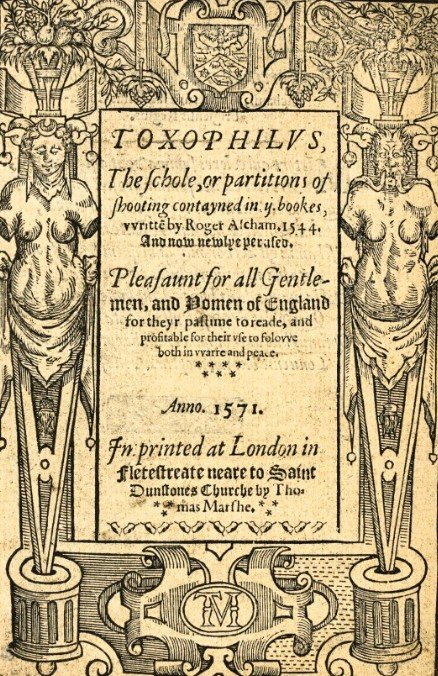
Roger Ascham arrived on my kitchen table bound within a worn volume, carrying the smell of chalky dust alongside old paste. A block of beeswax sat beside my longbow, waiting near a coiled linen string. Holding those threads evoked an argument already concluded, a dialogue bridging the heavy cord resting across my palms and the thoughts pressed into his pages. Toxophilus appeared during the year 1545 as an English treatise defending archery as a discipline appropriate for educated citizens, civic duty, alongside the shaping of human character¹ .
The author selected the conversational format with clear intent. Philologus enters the text embodying the easy condescension belonging to a man familiar with weapons strictly out in barns, assuming scholarship belongs safely enclosed behind college walls. Answering with the warmth of a true enthusiast, the speaker provides reasons rejecting mockery entirely. The structure itself performs the writer’s central ambition. Disputes shared between speakers echo Plato alongside Cicero, grounding the work in spaces where ideas carry social weight. Dragging the yew across that threshold required placing the implement inside this academic shape. A tool associated heavily with physical toil began speaking the language of ethics.
Favouring the vernacular over Latin carried massive weight for his overall thesis. Choosing the ancient tongue would have restricted the readership strictly to scholars. The local dialect welcomed the country gentleman accustomed to reading sermons, the parish clerk keeping accounts, the ambitious courtier seeking polished speech, alongside the tradesman capable of following a plainly reasoned case². Writing for his countrymen allowed the humanist to turn learning toward the commonwealth, addressing a public ready to meet a publication halfway. He hazarded his reputation on the European stage by picking an island tongue. His decision affirms that marksmanship deserves a defence spoken in the vocabulary ordinary people use every day.
Views: 7