Which servant flies truer than any oath, drinks the heat of a living wrist, obeys a boy’s tremor and a god’s vanity, and yet carries a sovereignty that begins at release and ends only where the point decides?
A glove lay on the rail at the ferry slip in Odda, a workman’s glove, thick at the palm, stiff along the knuckles, with zinc dust lodged in the seams like flour in a baker’s thumb. I lifted it as a priest lifts a paten—half habit, half guilt—and the inside offered sweat-salt and that sour metallic breath that sits behind the tongue and colours a man’s words for hours. The fjord held the factory’s reflection with an affection that startled me; water tightened every line, sharpened every hard edge, turned pipes into calligraphy, and made the plant look clean enough to bless. Across the bay a peninsula carried the works like a bad tooth capped in pale crown, while the town sat around it with the settled manners of a place that paid its bills on Fridays, sent its children to school on Mondays, and kept its grief in a drawer beside the cutlery. Woollen hats bobbed. Earbuds flashed. Lunchboxes swung on short straps. Young shoulders stooped with that brave sulk that adolescence wears like a scapular, a temporary creed learned from corridors and bus stops and the long, mute catechism of keeping face.
I watched Ragnarok at my kitchen table in Ireland, with a chipped mug beside my hand and a small bowl of walnuts pushed toward the window as if the light mattered to them. The kettle clicked itself into silence. My daughter had left two pencils near my elbow, their sharpened points bright as tiny spearheads. On the screen, mountains held a patience that reminded me of parish saints carved in wood, saints who had stood through centuries of fingers and prayers and cheap candles; beneath them a factory rose like a secular cathedral, with pipes for pillars, tanks for apse, and the whole money-liturgy carried out through valves, signatures, and the soft spoken authority of men in clean boots. The series placed its altar exactly where beauty and effluent shared the same water, where a valley promised clean Norwegian air and offered a mouthful that tasted of industry’s afterbite.¹ I felt a tug in the chest that a man calls conscience when he wants a grander word; I felt shame in a smaller register, the shame of recognising that apocalypse arrives through paper, through meetings, through a line on a report that everyone reads with a calm face.
The town on screen called itself Edda, and the name arrived like fate laughing into its sleeve at a family dinner, the joke cutting deeper than any jest has a right to cut. A sign at a road junction carried the letters with municipal pride, and the landscape answered as if it had always been baptised that way: fjord, ridge, schoolyard, factory, the whole parish boundary drawn by geology and payroll. People speak of “setting” as if place served as painted canvas behind human drama; here the place served as witness, and witnesses carry teeth. Wet roads—polished by tyres, marked by salt, marked by brake light—offered their own glimmer under headlamps. Windows glowed weakly in afternoon rooms. Hydroelectric grandeur lived beside industrial aftertaste, and each scene carried the authority of actual geography, the kind that makes a viewer sit up straighter, as though a lie had lost its footing.
Scholia:
1.Anne Pedersen, “Weapons and Their Contexts: Scandinavian Archaeology of the Viking Age,” in Stefan Brink and Neil Price (eds.), The Viking World (Routledge, London, 2008), pp. 206–215.
A bow in a Nordic landscape carries less theatrical glamour than an axe, and that lack of glamour explains its potency as symbol. Archaeology yields arrowheads by the thousand, small proofs of a technology that served hunting, war, signalling, status; form answers need, with broadheads for flesh and bodkins for penetration, each an argument made in iron. A modern viewer sees sport hall safety nets and foam targets; a saga listener hears stealth and ambush, a death arriving from hedge or ship’s rail. When a modern retelling places an arrow at civic rite, two worlds lock together: communal ceremony that celebrates continuity, and the old weapon that interrupts continuity with a line drawn through air. The weapon’s modest profile allows it to pass beneath the crowd’s moral radar until the wound forces recognition, and recognition arrives too late for comfort, too early for sleep…
2.Adam Price, Ragnarok (television series), SAM Productions, Copenhagen and Oslo, 2020–2023.
3.Snorri Sturluson, Edda, trans. Anthony Faulkes (Everyman, London, 1987), pp. 7–118.
4.Martin Smallridge, An Arrow Knows no Master : Thirteen Lectures Framing Archery Axioms in Western Philosophy (TIFAM CLG Publishing, Portlaoise, 2025), pp. 1–22.
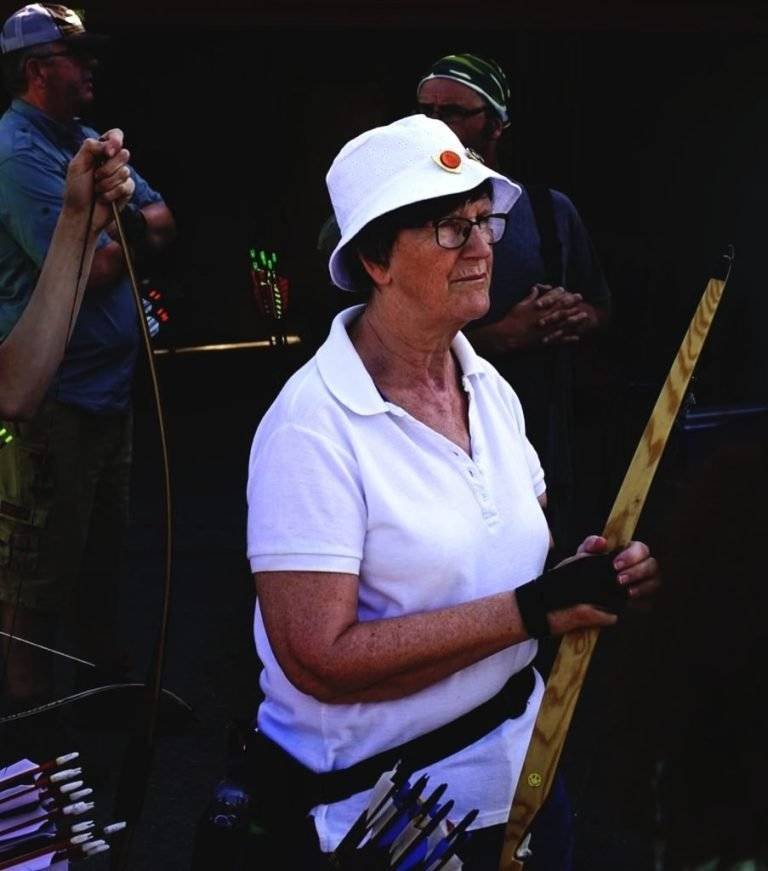
The bow has always carried the manners of a moral instrument in my hands. A hammer grants brute reassurance—weight and sound and impact—while a drawn string demands inward attention, an attention that recruits breath, shoulder, finger, eye into one deliberate act. At full draw a tremor rises that belongs to body and mind at once, and the tremor teaches that intention lives in flesh as much as in thought. A clean release feels like grace, yet the arrow’s arrival teaches humility, as every shot leaves a trace of the archer’s character on the target face. I wrote those lectures under the pressure of that lesson and kept learning it again at desks far from any range, where decisions carried quieter arrows and where the wrist moved in words and signatures instead of in cedar and steel.
5.The Poetic Edda, trans. Carolyne Larrington (Oxford University Press, Oxford, 1996), pp. 245–252.
6.Augustine, Confessions, trans. Henry Chadwick (Oxford University Press, Oxford, 1991), pp. 149–153.
7.John Lindow, Norse Mythology: A Guide to Gods, Heroes, Rituals, and Beliefs (Oxford University Press, Oxford, 2001), pp. 307–317.
8.Rudolf Simek, Dictionary of Northern Mythology, trans. Angela Hall (D. S. Brewer, Cambridge, 1993), pp. 254–259.
Ragnarök carries a moral force that a modern audience often receives as spectacle, though the old structure offers indictment. Fate, choice, betrayal, courage braid together until even the best action carries poison inside its reward. Thor fights. Thor wins. Thor dies. Greatness bears its own doom as part of its substance, and the pattern refuses sentimental progress. A community builds a cleaner future while carrying ash in its pockets. A person grows wiser while carrying a scar that shapes every later kindness. When a modern series binds climate dread to Ragnarök, kinship emerges between them, as both speak of consequence arriving through cumulative acts, through habits repeated until the world’s fabric tears.
9.H. R. Ellis Davidson, Gods and Myths of Northern Europe (Penguin Books, Harmondsworth, 1964), pp. 163–184.
10.Margaret Clunies Ross, Prolonged Echoes: Old Norse Myths in Medieval Northern Society, Vol. I (Odense University Press, Odense, 1994), pp. 15–39.
11.Jesse L. Byock, Viking Age Iceland (Penguin Books, London, 2001), pp. 45–68.
12.Neil Price, Children of Ash and Elm: A History of the Vikings (Basic Books, New York, 2020), pp. 91–106.
Views: 13