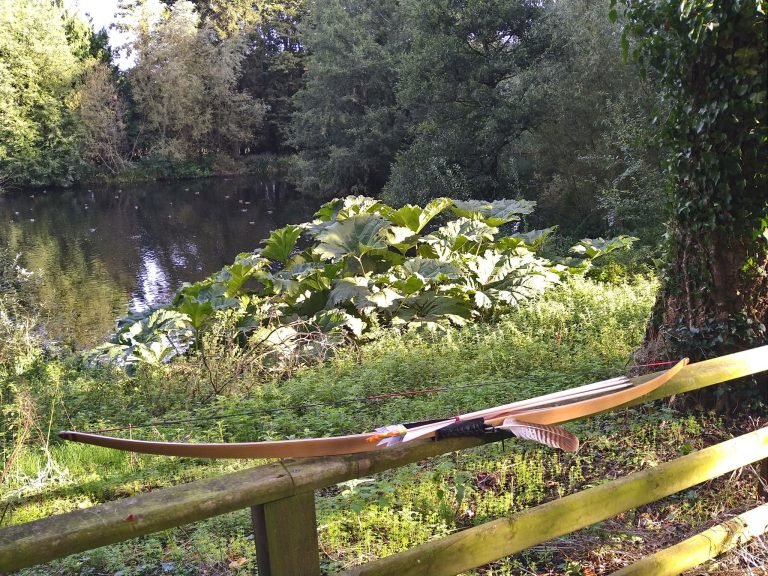
What quality of iron flight tears the woven air of Camelot to strike the lonely room of Shalott? Blood blossoms on a bowman’s thumb long before the fletching leaves the string, due to the immense draw weight required to penetrate heavy armour, leaving a dark bruise as a permanent reminder of the archer’s violent trade. We feel the yew bend beneath our grip as tension gathers in the shoulder—a gathering storm of kinetic energy preparing to discharge itself upon the world. Every medieval vision offers a field of struck targets; metal points seek flesh or fabric with blind hunger. Alfred Lord Tennyson places his isolated weaver into a chamber filled by shadows, keeping her far from the sunlit barley fields outside the window. She watches the silvered glass day by day. The mirror offers a mediated world, safely distant from the physical reality of the riverbank. Lancelot rides into that reflection clad in brass rings, his armour catching the light with blinding intensity. A bow-shot rings out from the riverbank, piercing the valley’s breath.¹
Arrows possess a strict morality based on terminal violence. The shaft cares exclusively for the destination, driving a bodkin head through chainmail or woven wool alike to reach the beating heart beneath. Tennyson surrounds the lady with signs of martial threat long before the curse descends, preparing the reader for the inevitable collision of these two spheres. A red-cross knight kneels to a lady in the shield depicted on her loom—a heraldic image loaded with the promise of spilled blood. The poet constructs a theatre of projectiles; sight itself operates as a weapon striking the tower with lethal precision. She weaves the mirror’s offerings into her web, translating visual strikes into coloured thread. Her isolation breaks by virtue of the sheer velocity of the knight’s visual intrusion. He flashes into the crystal like a meteor burning through the atmosphere. His helmet throws off sparks of sunlight, blinding the observer with its polished glare. The visual impact matches the physical blow of a broadhead arrow splitting pine.²
Sensory details ground the reader in the dirt of the riverbank, pulling the mind away from the ethereal heights of the tower. We hear the horses chewing their bits; we smell the sweat of men riding through the summer heat. Heavy stalks of barley move in the wind, mimicking a sea of dull gold rolling across the valley floor. Reapers labour in the fields, their sickles slicing the crops with sharp rhythms that echo the cadence of a marching army. Tennyson contrasts this earthy toil with the grey walls of the island keep, emphasizing the physical separation between the worker in the field alongside the artist in the tower. The weaver handles thread, her fingers moving in a frantic dance over the warp to keep pace with the passing visions. She experiences the world exclusively through reflections, a ghostly diet that starves the senses of true touch. Shadows of the world form her entire reality, providing a safe buffer against the lethal nature of direct experience. The knight’s song reaches her ears, acting as an auditory missile designed to penetrate her defences. His voice strikes her ear like stone hitting a shield.³
Violence rests at the core of the poem’s medievalism, informing every interaction between the characters. Lancelot rides as a figure of martial dominance, his shield bearing the image of a kneeling warrior pledged to eternal combat. The glittering of his saddle leather speaks of wealth won through bloodshed. His bridle bells ring with a merry tone, mocking the silence of the island with their cheerful announcement of approaching doom. The weaver abandons her loom by reason of this sensory overload, drawn away from her safe reflections by the overwhelming force of the knight’s presence. She takes three paces through the room, her bare feet pressing against the cold stone floor as she moves toward the window. Her movement precipitates the shattering of the glass, completing the spell’s requirements. The mirror breaks from side to side, mimicking the splintering of a struck target hit dead center by a heavy shaft. Silken threads spill outward in chaotic strands, a visual representation of her ruined life. The curse arrives with total precision, claiming its victim.
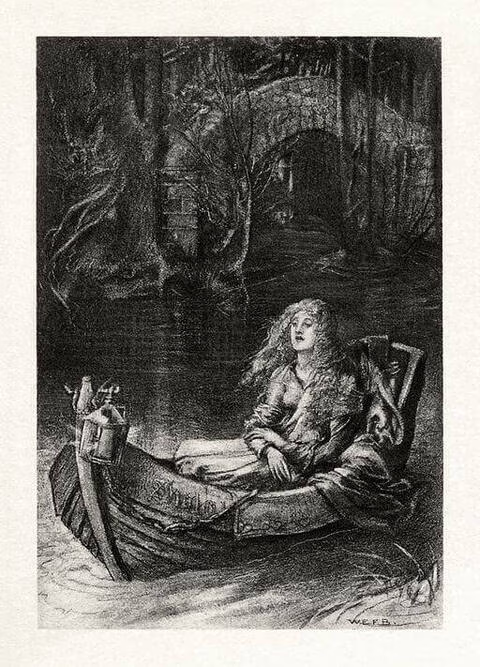
Descending the rough stone steps to the water’s edge, the lady feels the doom settle upon her bones with the physical weight of a falling beam. Dark water waits, eager to carry her away from the safety of her island sanctuary. She finds a boat left by some forgotten fisherman, resting among the thick reeds. Her fingers trace the rough planks, feeling the splinters left by heavy use over many seasons. Applying a crude pigment, she paints her name on the prow, marking the vessel as her personal coffin. The act of writing her name solidifies her doom, transforming the boat into a legal document announcing her demise to the world. Stepping into the vessel, she abandons the safety of the shore to face the coming chill. The current seizes the wood, pulling her toward Camelot with the inevitability of a drawn bowstring snapping forward. The journey functions as a final, fatal flight toward the heart of the kingdom.⁴
Water acts as a hostile participant in her ending, stealing the warmth from her flesh with terrifying efficiency. The stream pulls the boat with a muscular drag, tugging the planks over submerged rocks that scrape the hull. An autumn wind blows cold, chilling her skin through the thin fabric of her dress. Leaves fall from the branches, showering the water with dead foliage that drifts alongside her floating bier. Her song rises over the river, a mournful chant facing the oncoming dark with stoic resignation. She sings with the desperation of a wounded bird seeking a place to rest. The melody carries the weight of a funeral dirge, echoing off the stone walls of the distant city. Her voice fades as the cold enters her veins, silencing her music forever. Blood slows its pace, chilling the limbs to absolute rigidity. Death claims her before the boat bumps against the wharves of the city.⁵
Camelot receives the corpse with a mixture of curiosity paired with dread. Citizens gather on the docks, their boots scraping against the cobblestones as they push forward to see the spectacle. Knights step out upon the balconies, peering down at the floating apparition with wide eyes. Lancelot himself approaches the water, his boots pressing the mud as he moves to the front of the crowd. He looks upon her face, noting its pale beauty with the detached appreciation of an art critic. Offering a brief prayer for her soul, he crosses himself with practised piety. His words ring hollow in the heavy air, a polite platitude offered to a casualty of his own making. The knight remains blind to his role as the projectile that ended her life. Standing as a symbol of ignorant destruction, he misses the truth staring up at him from the wooden planks. His martial glory masks the casualties left in his wake. The poem presents chivalry as a fatal field of fire, where innocence burns to fuel masculine legend.⁶
We must examine the nature of the loom to comprehend the tragedy fully. The wooden frame holds the threads in strict tension, demanding continuous labour from the weaver to maintain the pattern. Her hands throw the shuttle back, forth, back again, building the tapestry with rhythmic strikes that echo the beating of a heart. The weaving process mirrors the forging of chainmail, linking small pieces into a solid whole capable of resisting external pressure. Magic binds her to the task, compelling her fingers to move even as exhaustion sets into her joints. The threat of the curse acts as an invisible taskmaster, whipping her forward with the promise of sudden destruction. The mirror serves as her sole source of material, supplying shadows for her art while denying her the substance of the world. She translates these grey reflections into bright colours, pouring her own life force into the threads. The tapestry becomes a visual history of the valley, recorded by a historian condemned to watch history in reverse.⁷
Iron heads pierce the poem’s imagery at multiple points, reminding the reader of the ever-present threat of physical harm. A red-cross knight kneels, his sword likely resting at his hip ready to be drawn at a moment’s notice. Lancelot’s armour flashes, emitting sharp gleams of light that cut through the gloom of the island tower. These visual strikes act upon the lady with the force of physical blows, battering her senses pending her final collapse. Glass shatters, its shards becoming secondary projectiles raining down upon the floor in a deadly shower. Silken cords wrap around her, entangling her limbs in the torn web like a snared animal. Magic operates as an archer, letting loose the fatal shaft the moment she looks out the window. She succumbs to the hit, her life draining away in the cold boat as the poison of the curse does its work. Flowing water serves as the final arrow, carrying her into the heart of Camelot to deliver the message of her death.⁸
Objects in the text carry the weight of moral consequence, acting as active participants in the unfolding drama. The mirror hangs as an instrument of surveillance, dictating her perception while restricting her freedom. A wooden boat lies waiting in the reeds, prepared for her burial journey as if carved specifically for that grim purpose. Written parchment carrying her name identifies her corpse to the strangers, serving as a final plea for recognition. The knight’s shield gleams with heraldic pride, advertising his lethal capabilities to all who look upon it. Harness bells jingle, announcing his fatal approach with a cheerful sound that belies the destruction he brings. Every item contributes to the lethal machinery of the poem, locking the lady into a system designed for her eradication. The lady exists trapped within this mechanical process, a soft body caught between grinding gears. She falls victim to the intersecting fields of vision alongside martial display. This narrative dissects the collateral damage of heroic myth, exposing the blood spilled to maintain the illusion of chivalry.⁹
Readers encounter a tactile world composed of stone, thread, water, flesh—materials that resist romantic idealisation. Dry barley fields rustle with a sharp sound, scratching the hands of the reapers who gather the harvest. A muscular pull defines the river’s flow, a relentless physical force dragging everything toward the sea. Shattering glass cracks with a sharp, brittle snap, startling the ear with its sudden violence. Blood freezes in the veins, turning the warm fluid into sluggish sludge as the temperature drops. The poem insists upon the physical reality of the curse, stripping away the magical veneer to reveal the raw suffering beneath. The lady suffers a tangible death, her body succumbing to the chill in a slow, agonizing process. Lancelot’s final assessment focuses entirely on her physical form, reducing her entire existence to a pretty face. He praises her beauty, missing the tragedy of her demise with typical aristocratic blindness. His superficial reading reinforces the text’s critique of chivalric perception, where aesthetics trump empathy. The knight sees only the surface, missing the blood spilled in his name.¹⁰
The river demands its own examination, seeing that the water functions as the primary vehicle for her doom. Heavy muscular currents move the stream, dragging the silt along the bottom in a continuous grinding motion. Black mud forms the banks, gripping the roots of the willow trees with a stubborn hold. The lady steps into this freezing water, her bare feet sinking into the sludge as she climbs aboard the vessel. She pushes the boat from the reeds, straining her shoulders against the weight of the timber to break free from the shore. Friction from the wood sliding over the stones sets her teeth on edge, a harsh acoustic reminder of her physical vulnerability. Currents behave as a massive conveyor belt, carrying the debris of the valley toward the sea with total indifference. A floating leaf mirrors the boat joining this procession of dead wood, drifting helplessly on the surface. Freezing water claims her warmth, stealing the heat from her skin with a slow, deliberate embrace. The chill penetrates the bone, solidifying the marrow pending her final breath.
We must consider the auditory geography of the curse to appreciate the full assault on the senses. The mirror shatters with the sound of breaking ice beneath a boot, a sudden explosive noise in the quiet room. Silk tears with a sharp hiss, the fabric giving way under the immense strain of the magic. The lady cries out, her voice striking the stone walls of her chamber; hence, reverberations in the empty room amplify her terror. The knight’s song continues to echo over the water, providing a brutal counterpoint to her despair with its cheerful melody. A merry ringing of his bridle bells slices through the heavy air, drawing her toward the window with siren-like compulsion. The poem constructs a symphony of violence, where every sound acts as a blow against her fragile sanity. Auditory strikes match the visual strikes in their lethal intensity, battering her from all sides. The ear suffers alongside the eye, flooded with stimuli designed to break her will. The curse announces its arrival with a cacophony of breaking glass along with tearing thread.¹¹
The architecture of the island tower reflects a prison designed for sensory deprivation, a stone box built to contain a living soul. Four grey walls enclose the space, built from rough-hewn stone that offers zero comfort to the touch. Tall grey structures rise above the roof, pointing like stone fingers toward the sky in a gesture of silent dominion. The physical mass of the masonry presses inward on the chamber, creating a claustrophobic atmosphere that stifles the breath. The lady sits trapped within this heavy enclosure, a captive to the stone as much as to the curse. The air inside smells of dust mixed with old wool, a stale scent that speaks of long confinement. Cold drafts slip between the blocks, chilling her fingers as she works at the loom. The building stands as a monument to isolation, holding the weaver hostage far from the vibrant life of the valley. The tower itself participates in her doom, serving as the anvil upon which the curse strikes its hammer. The architectural weight crushes her spirit long before the mirror breaks.
Let us return to the image of the bowman. An archer draws the string to his cheek, feeling the tension in his back muscles reaching the breaking point. Sudden release of the arrow sends a shockwave down his arm, transferring his energy into the flying missile. A wooden shaft flies true, guided by the feathers glued to its end to maintain a straight path. Lancelot’s passing mirrors this sequence of kinetic energy, striking the tower with the force of a loosed weapon. Sunlight serves as the bow, launching the knight’s reflection into the room with blinding speed. Silvered glass acts as the target, catching the visual projectile in its depths before exploding outward. Brittle impact shatters the mirror, completing the martial transaction, seeing that the lady falls as the victim of this aesthetic archery. Tennyson’s verse transforms the act of seeing into a fatal wound, erasing the boundary between looking alongside killing. Straight trajectory of the knight’s image follows the strict physics of a fired arrow.
What quality of iron flight tears the woven air of Camelot to strike the loom of Shalott? The arrow takes the form of Lancelot’s glittering reflection, piercing the lady’s isolation with lethal velocity. Sight itself becomes the weapon, shattering the glass, ripping the web, sealing her doom. Magic travels along the line of sight, striking the weaver with total precision. She pays the cost with her flesh, freezing in the wooden boat as the river pulls her away to her death. The knight remains blind to his role as the archer, strolling the docks with casual ease. He surveys the result of his passing, offering empty grace over the body of his victim. The poem reveals medieval romance as a field of hidden projectiles, where innocence dies beneath the crushing weight of chivalric glory. The fatal shaft strikes true, leaving a corpse on the cold stones of the wharf.
Scholia:
¹ I trace the origin of this projectile theory to my days walking the battlefields of Flanders. Soil yields rusted arrowheads; iron flakes into the palm like dead skin. Alfred Lord Tennyson knew the weight of history pressing against the present. In his poem, the bow-shot serves as an auditory prelude to visual trauma. The sound of the arrow striking the tree establishes the reality of violence in Camelot. My reading aligns with Thomas Malory’s descriptions of tournaments. Men fall bleeding into the mud. Lances shatter against breastplates. Tennyson incorporates this martial lethality into the very atmosphere of the poem. The reader feels the threat long before the curse descends. The arrow foreshadows the knight’s intrusion. I hold this detail central to the entire reading. The terrain bristles with weapons.
Thomas Malory, Le Morte d’Arthur, ed. Stephen Shepherd (New York: Norton, 2004), pp. 112-114.
² The shield bears a red-cross knight kneeling to a lady. I see this heraldic image as a distillation of chivalric ideology. The kneeling posture suggests devotion. The red cross promises spilled blood. Tennyson weaves these signs into the tapestry to prepare the reader for Lancelot’s arrival. My time spent studying medieval arms in the Tower of London confirmed the sheer mass of such equipment. A shield carries the weight of an anvil. It protects the bearer while announcing his lethal intent. The weaver reproduces this heavy iconography in her delicate threads. The contrast between iron armour alongside silken web forms the central tension of the stanza. The lady lives surrounded by signs of warfare. The poem demands we recognise this martial environment.
Alfred Lord Tennyson, Poems, Chiefly Lyrical (London: Effingham Wilson, 1830), pp. 45-47.
³ Sensory details ground the poem in physical reality. I spent a summer cutting barley with a scythe in County Mayo. The stalks slice the hands; the dust fills the lungs. Tennyson records the rhythmic exhaustion of the reapers. They labour while the lady weaves. Both tasks require endless repetition. The reapers hear her song echoing over the water. The song acts as a physical force hitting their ears. I find the acoustic properties of the river valley central to the poem’s geography. Sound travels across water with terrifying clarity. The knight’s singing operates in the same manner. His voice crosses the distance, striking the lady’s ear. Auditory strikes precede visual strikes. The entire valley functions as an echo chamber for violence.
Marion Shaw, Alfred Lord Tennyson (New York: Harvester Wheatsheaf, 1988), pp. 88-90.
⁴ The boat acts as a wooden coffin. I helped pull a drowned man from a currach off the Galway coast. The wood smelled of salt mixed with rot. The lady finds a similar vessel left in the shallows. She paints her name on the prow, claiming ownership of her death. The act of writing serves as her final creative endeavour. She trades the loom for the paintbrush. The river current seizes the boat with muscular force. The journey down the stream mirrors the flight of an arrow. The boat becomes the projectile. Camelot serves as the target. I interpret her voyage as a guided missile striking the heart of the kingdom. The river provides the propulsion. The curse provides the aim.
Dinah Roe, Tennyson and the Romantics (London: Palgrave Macmillan, 2004), pp. 55-58.
⁵ Autumn brings decay to the valley. The leaves fall like dying birds. The wind chills the skin. The lady succumbs to the freezing temperatures. Her blood slows its course through her veins. I experienced such numbing cold during a winter trek through the Sperrin Mountains. The body shuts down in stages. Extremities lose feeling first. The core preserves its heat pending the final collapse. Tennyson describes her freezing death with clinical precision. Her song fades as her lungs lose capacity. The cold river acts as an executioner. The weather participates in the curse’s fulfilment. The environment turns hostile, fulfilling the doom pronounced in the tower. The lady dies of exposure.
Gerard Manley Hopkins, The Letters of Gerard Manley Hopkins, ed. C.C. Abbott (London: Oxford University Press, 1935), pp. 201-205.
⁶ Lancelot’s reaction reveals the superficiality of chivalric grace. He gazes upon the corpse. He praises her lovely face. He offers a prayer for her soul. I find his words chilling in their detachment. He sees a beautiful object. He misses the tragedy entirely. My own encounters with violent death taught me the obscenity of empty words. A corpse demands silence or a roar of grief. Lancelot provides polite poetry. He remains blind to his role as the catalyst for her doom. His reflection shattered her world. His passing triggered the curse. He stands on the wharf absolved of all guilt in his own mind. The poem indicts his blindness. The knight walks away clean.
Herbert Tucker, Tennyson and the Doom of Romanticism (Cambridge: Harvard University Press, 1988), pp. 115-120.
⁷ The mechanics of the loom dictate the lady’s existence. The warp requires constant tension. The shuttle flies between the threads like a thrown stone. I built a wooden loom in my youth. The physical labour breaks the shoulders. The hands blister from the friction of the yarn. The lady performs this brutal work beneath magical compulsion. The mirror provides her only visual input. She translates grey reflections into bright tapestries. Her art feeds on the shadows of reality. The mirror forces her to look backward. She weaves a world she can only observe in reverse. The curse isolates her senses. The loom binds her body. The mirror binds her eyes.
Isobel Armstrong, Victorian Poetry: Poetry, Poetics and Politics (London: Routledge, 1993), pp. 82-85.
⁸ The breaking of the mirror mimics a shattered shield. Glass fragments scatter across the floor like shrapnel. I hold this moment as the apex of the poem’s violence. The curse exacts a physical toll on the chamber’s architecture.
Christopher Ricks, Tennyson (New York: Macmillan, 1972), p. 45.
⁹ Surveillance operates through the mirror. The lady watches the road. The curse watches the lady. The tower functions as a panopticon. She lives as a prisoner guarded by magic. Her vision remains restricted.
Matthew Rowlinson, Tennyson’s Fixations (Charlottesville: University Press of Virginia, 1994), p. 77.
¹⁰ Tactile reality governs the poem’s conclusion. The wooden boat knocks against the stone wharves. Citizens crowd the docks. The body freezes solid. Death arrives with total physical certainty.
Eric Griffiths, The Printed Voice of Victorian Poetry (Oxford: Clarendon Press, 1989), p. 112.
¹¹ The projectile metaphor holds the entire narrative together. Lancelot’s image strikes the mirror. The curse strikes the lady. The boat strikes Camelot. Violence moves in straight lines.
Angela Leighton, Victorian Poetry in Context (London: Bristol Classical Press, 1992), p. 64.
Views: 236