How did the shamrock come about as an Irish symbol? The fact that Ballyvally Archers’ Shamrock Shoot comes in March is rather apt, as it was Saint Patrick who taught of the Holy Trinity using a shamrock.
And whilst this competition holds the title of Shamrock, and happens in March, I was hard pressed to find any saintly persons present – especially with Alan Callister and Steven Wall Morris there.
Yet the biggest plot twist was that the largest shooting category was not in barebow, but 50+ Longbow. I can’t say I’ve been to a field competition where the wooden sticks outnumber the barebows. I was, however, still the only under 50 in longbow.
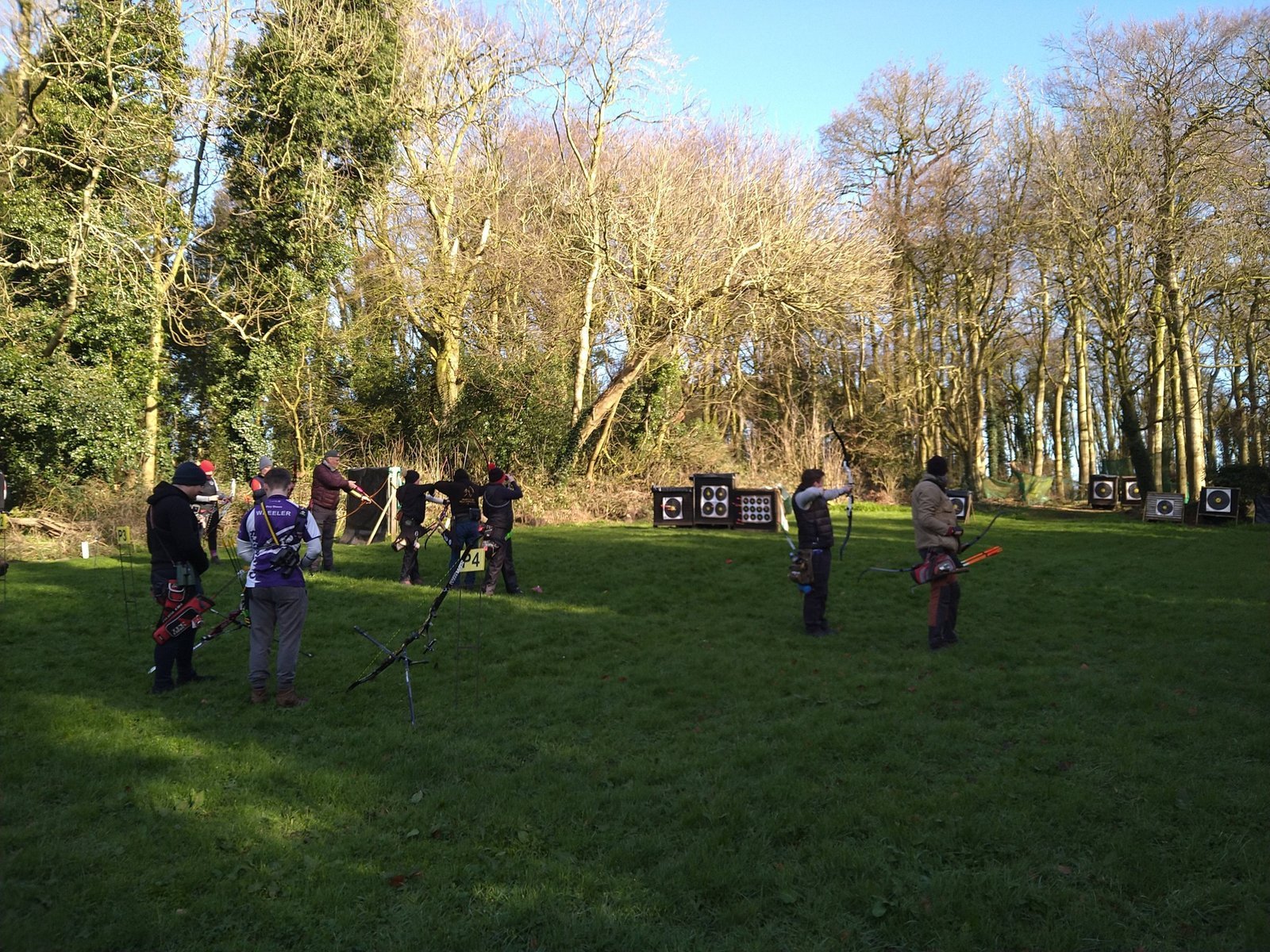
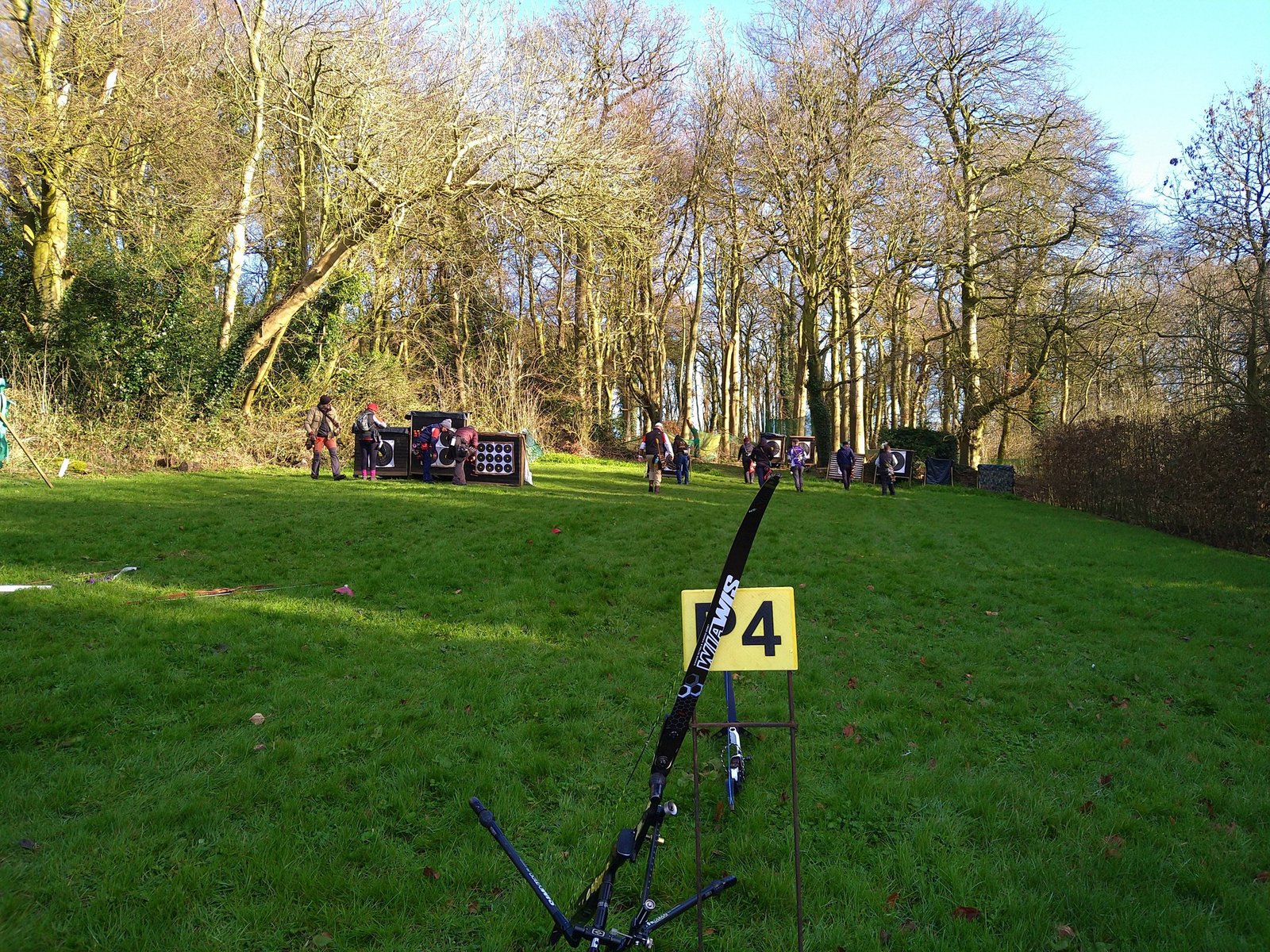
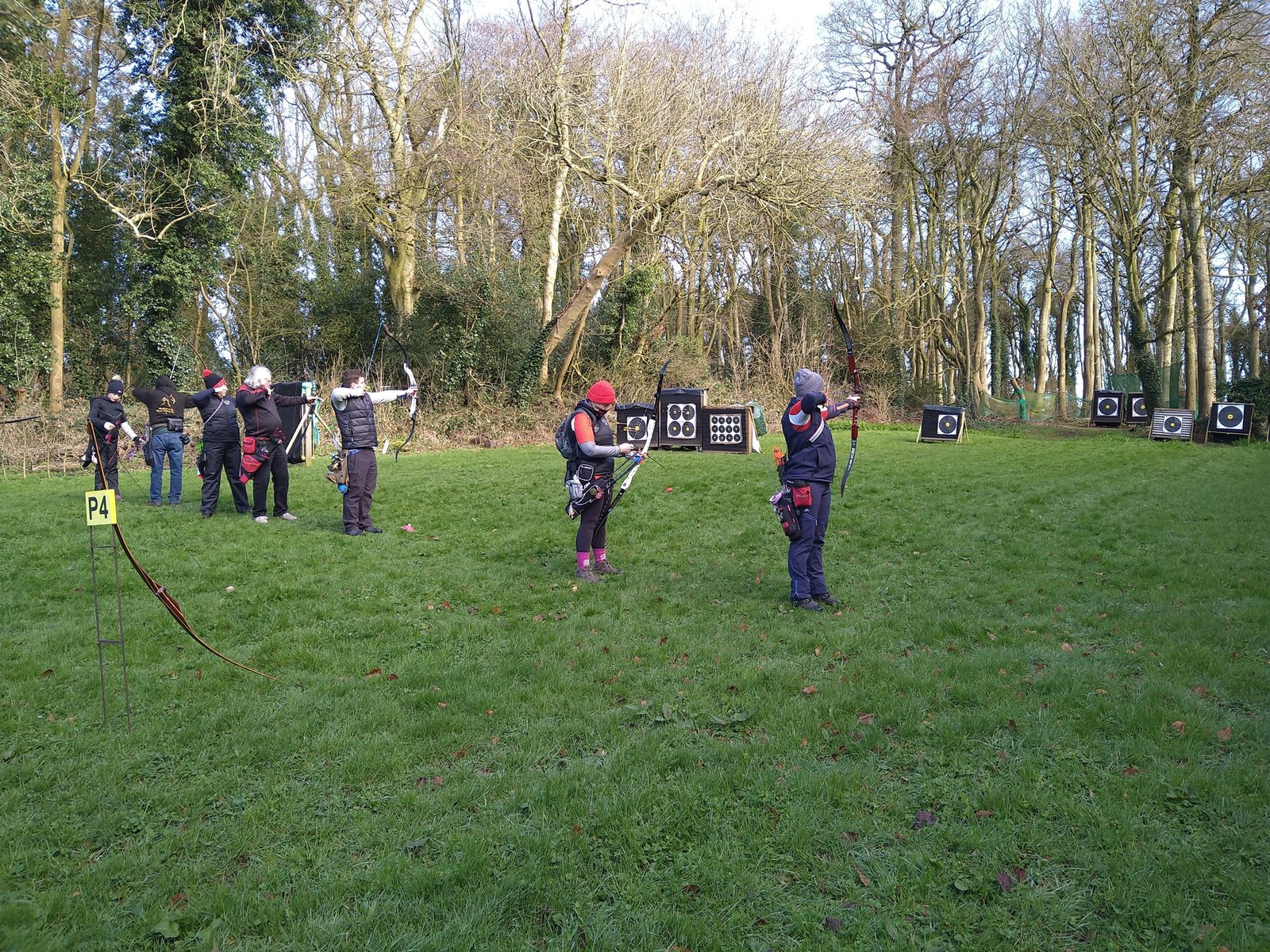
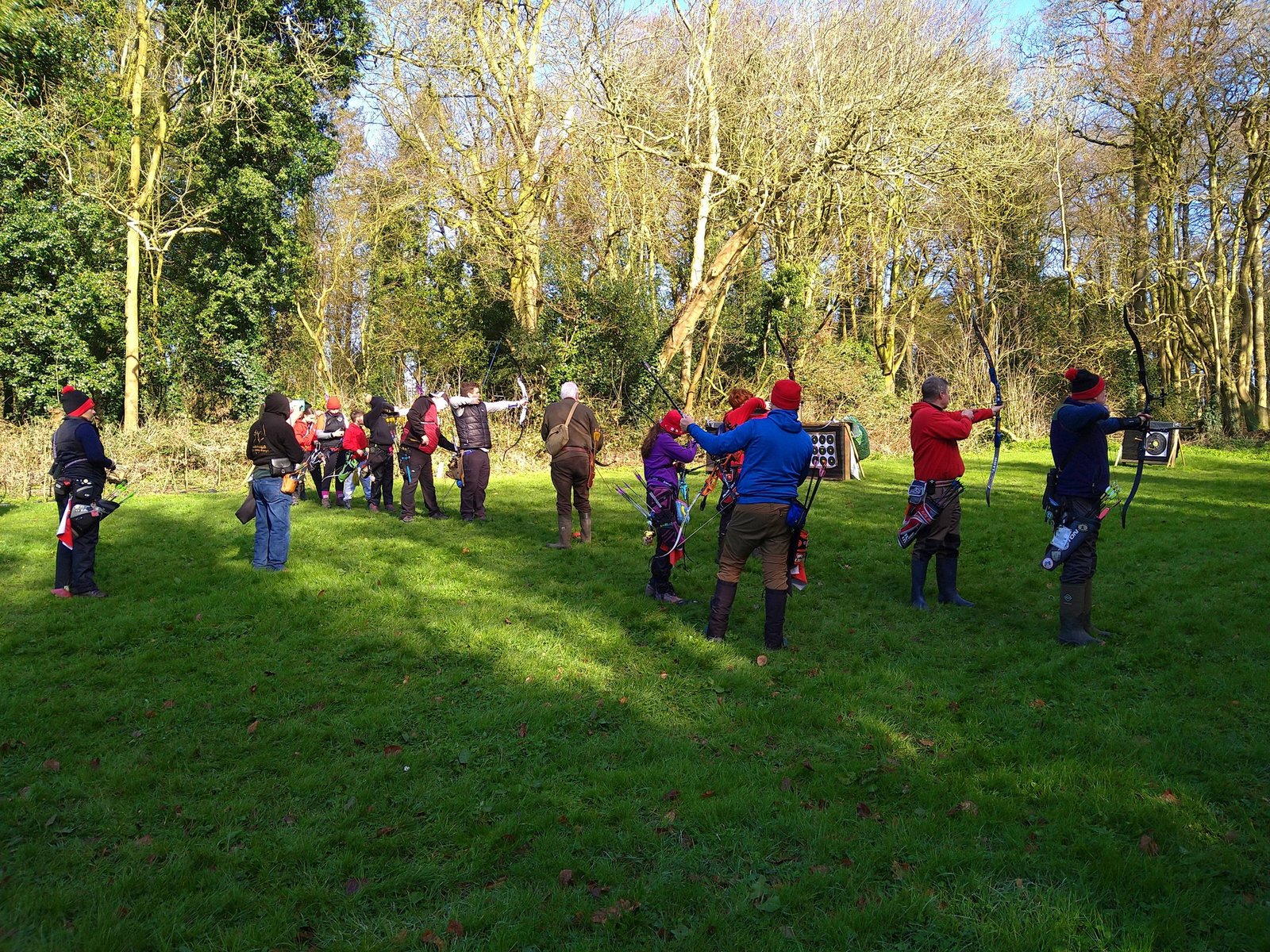
A guaranteed gold does not feel like much however, when you have the likes of Alan Callister present. He may be – somewhat – older, but this makes no difference. I have shot with him numerous times before, and seen the scores be puts down at the end of the day. From this weekend I was given the impression that he had run the course with no misses on his scorecard, shooting nothing less that 4 points per arrows.
As a younger, timid archer, Alan Callister’s jovial, approachable nature welcomed me into shooting more often in the south. Whilst I will talk up the benefits of autism, I do not – like many of my fine neuro-atypical kindred – travel well. New places, countless strangers, and being removed from any sense of personal routine can initially make somewhere like Dargle Valley a place of trepidation and anxiety. When you have archers like Alan Callister present their positivity and friendliness breaks into these barriers of anxiety and helps ground you.
To add to the longbow contingent, Steven Wall Morris. I’ve shot with him a few times before and know him as an instinctive archer. But here he was with a longbow, and wooden arrows. It made be sweat, and I wasn’t even in the same category. Though I imagine Alan Callister was more concerned with Steven’s move to longbow than I would need to be.
Either way, both archers give me something to aspire to. I’m not nearly a competitive individual, but I look to the likes of Alan Callister and Steven Wall Morris as measures of sorts. The way I see it, to reach the scores they produce is a goal, and if I can do that, I must be doing very well.
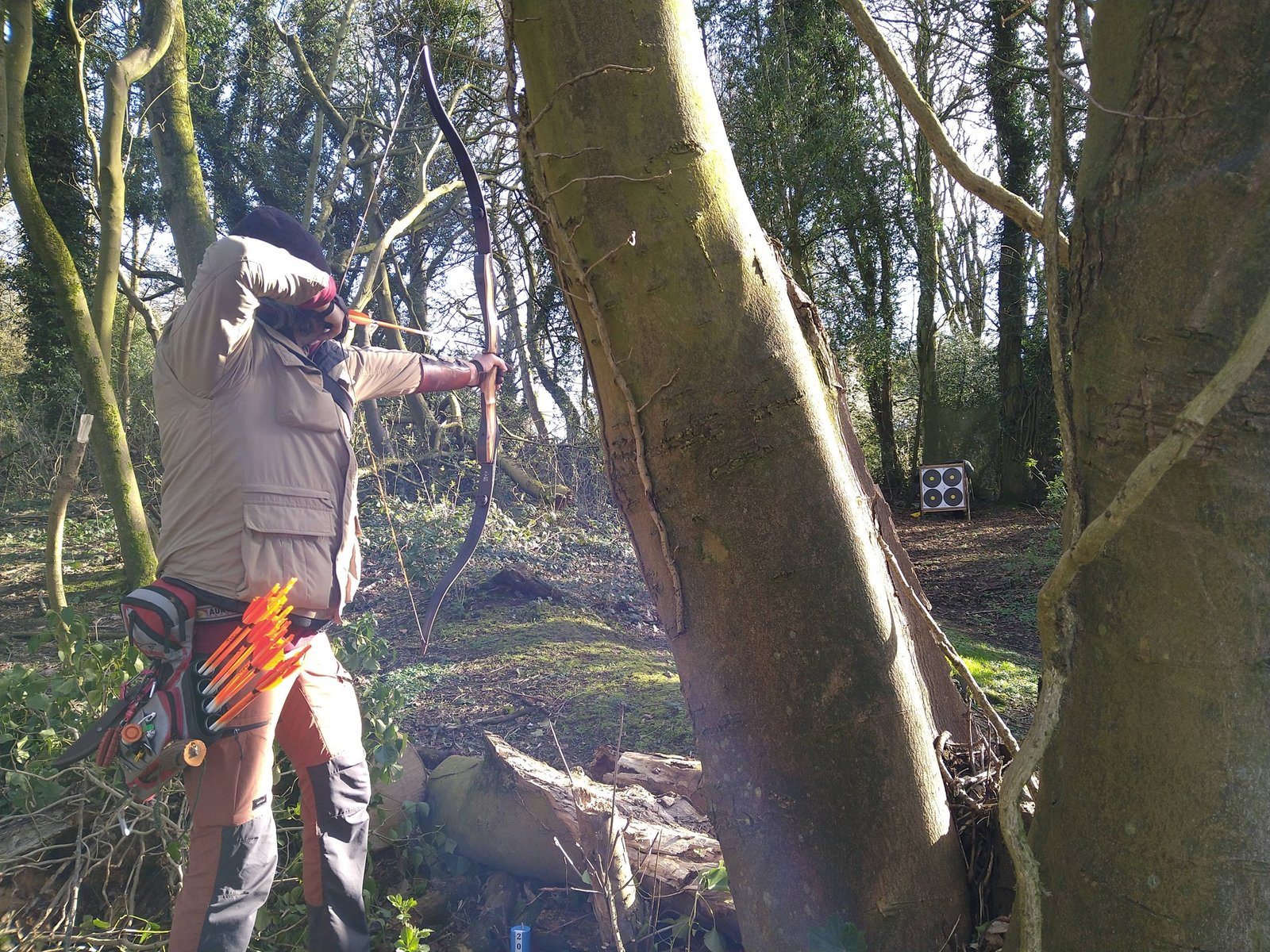
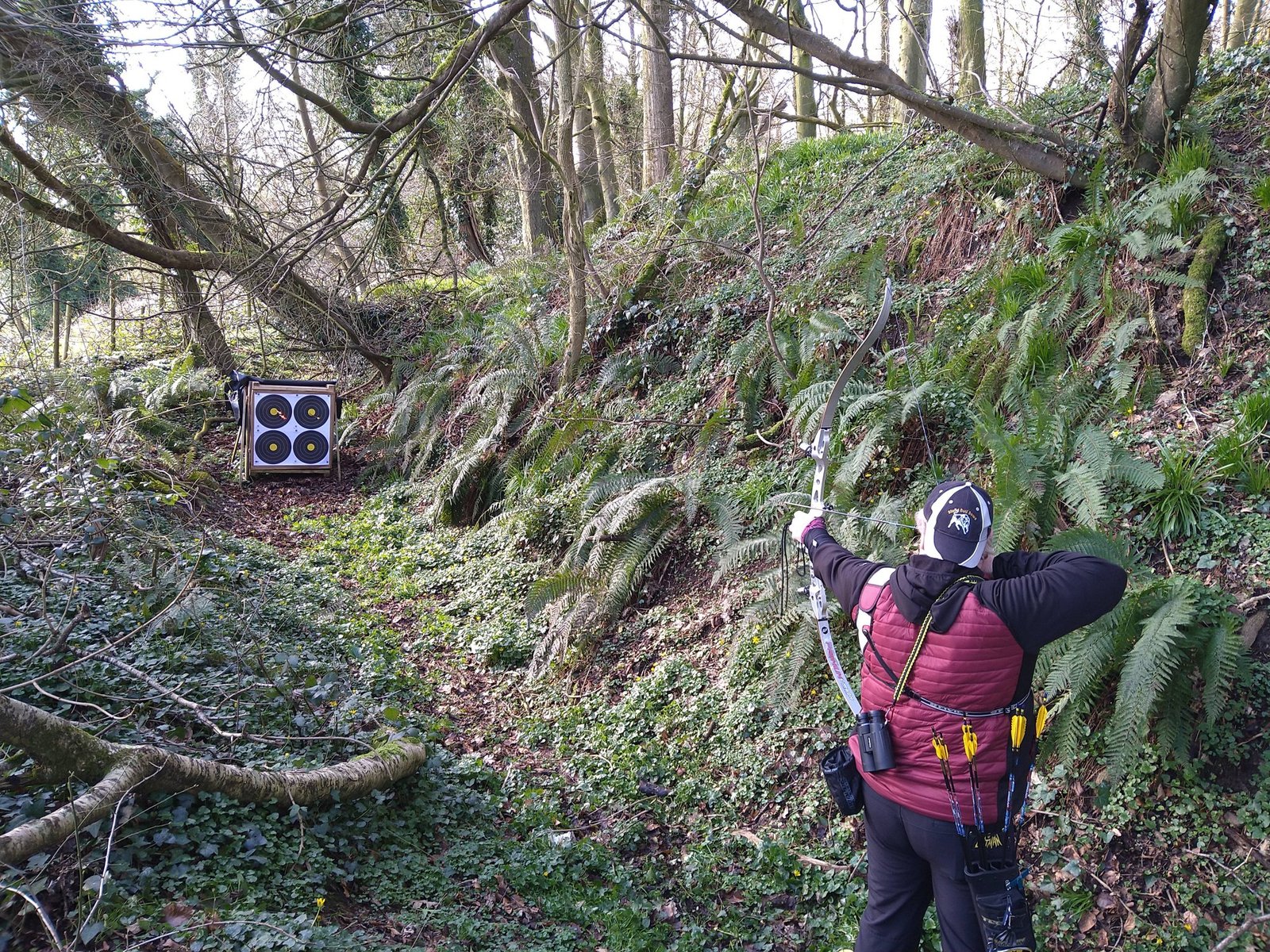
With a new registration point, there was no welcoming chorus from the rooks. It was sparser in terms of animal life, with the odd wood pigeon and jackdaw. Their beaks held large twigs as nest building and refitting was clearly a priority.
The soft call of the wood pigeon is a soothing, meditative sound I find. It seems to be a calm, easy going call, completely unintrusive, unlike most birds’ calls. Jackdaws on the other hand make a sharp squeak, more a high-pitched caw in short bursts.
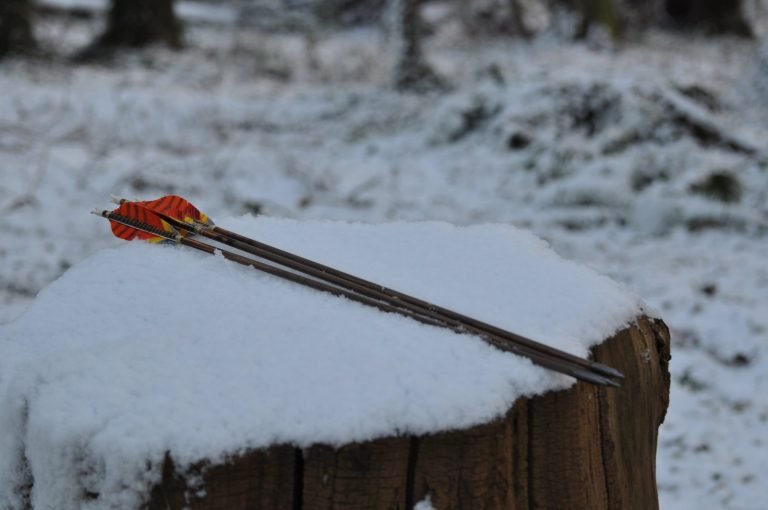
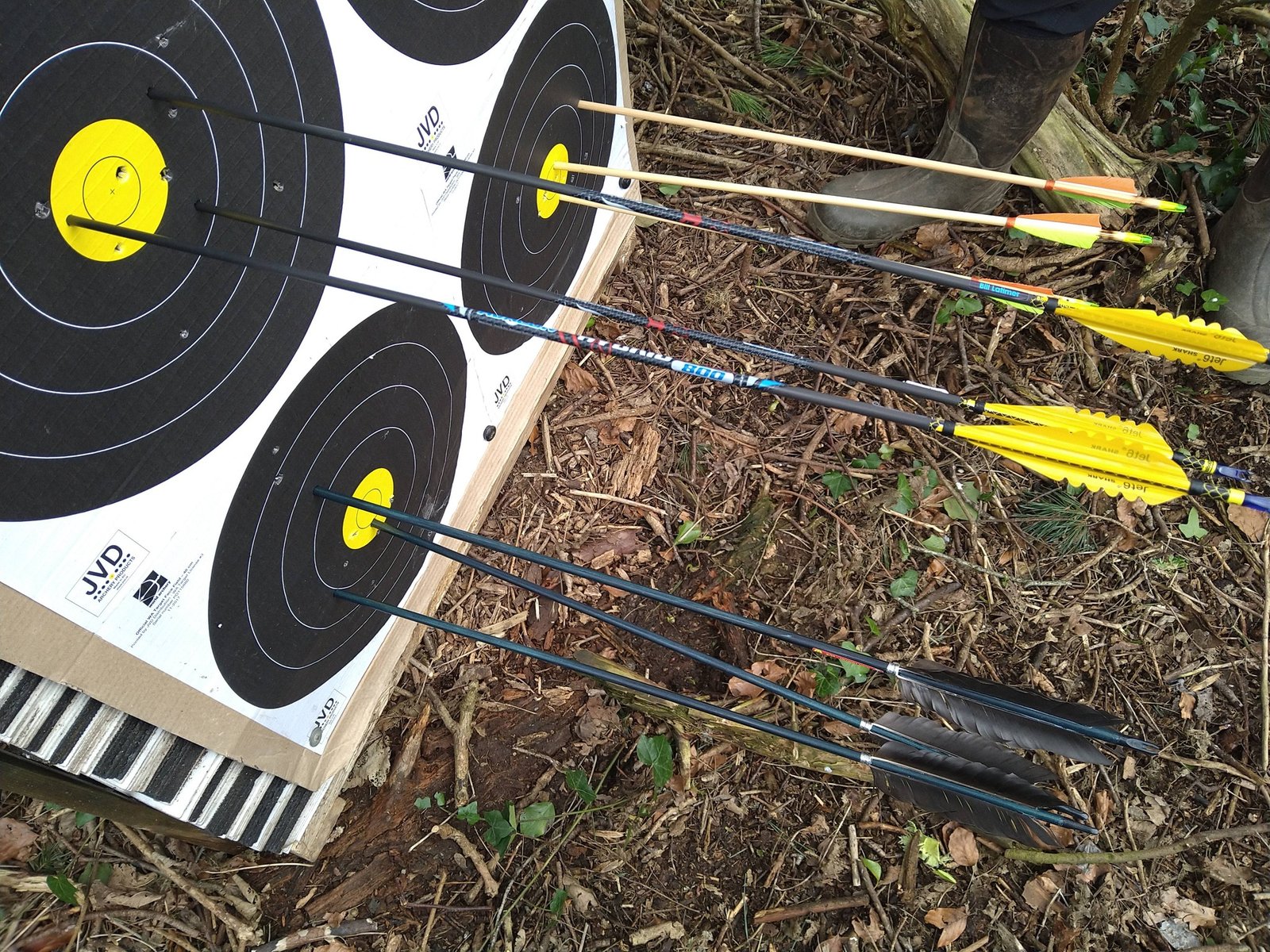
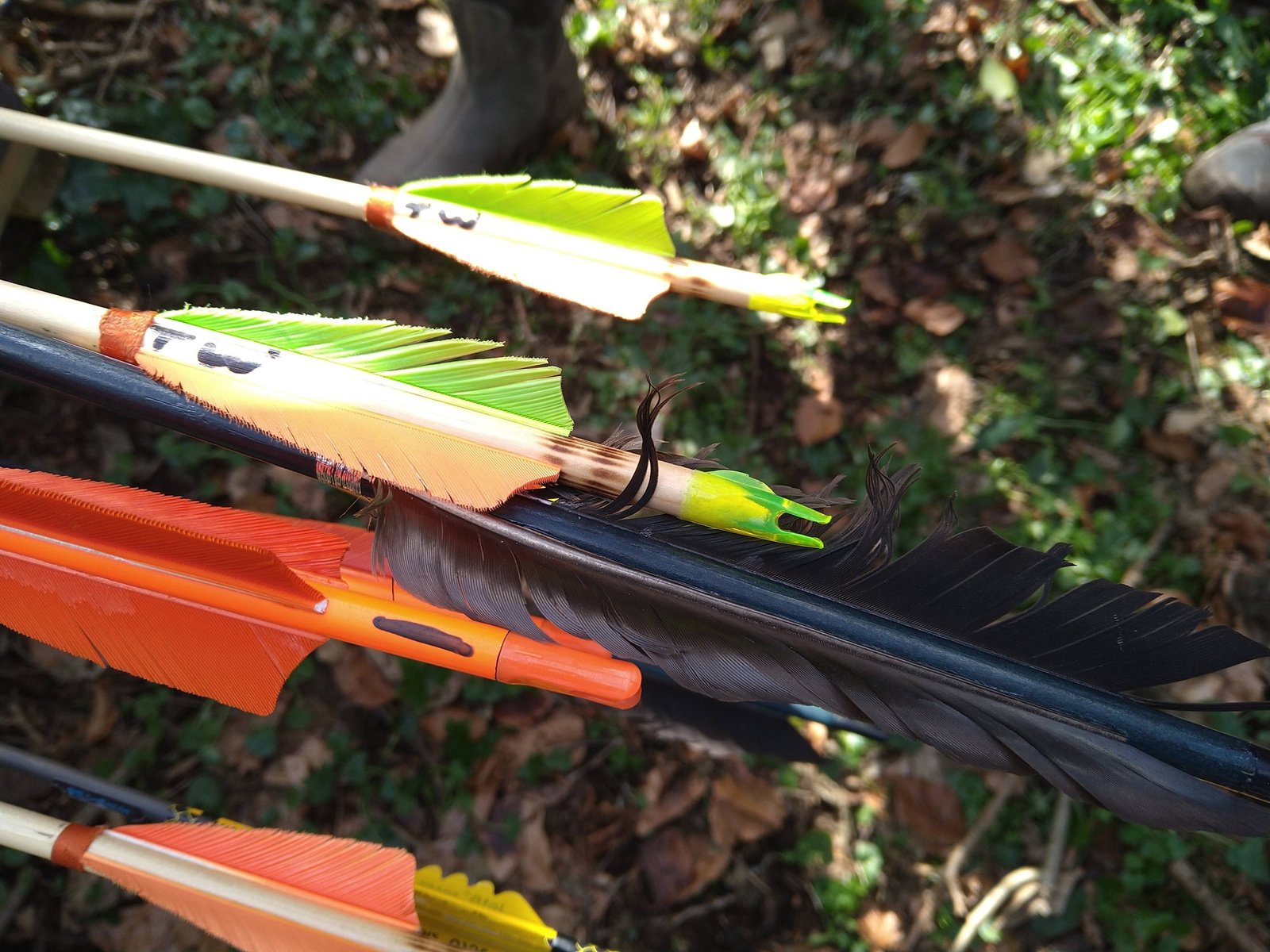
Naturally I was using my rook-feathered arrows for this one. Originally, I had never planned to use them for field rounds, through a fear of losing them given the darker colours. Yet, with a move to the yellow peg I didn’t need to worry about overshooting nearly as much, and frankly they flew well across the longer distances than in other arrows I had made.
Unfortunately, the elegance of the feathers has long since been beaten away through use. Bedraggled is the word I would use to describe them now. But despite this, they still hold up in practical terms.
Whilst the course had seen changes, not only due to storm damage, some of the old palm-sweating classics were still present. At the back of the course was a longer shot, an easy place to lose arrows, even if they fall short. Then there is the trench shot, bunnies at 10m this time. Perhaps it is the narrowness of the ditch, but 10m here looked closer to 15m, and if those small 20cm targets could grin they would have, knowing full well how safe they were. As always there was the swamp shot, in which shooting short would guarantee a loss of arrows, unless you are willing to go swimming – but no ACC is worth it, surely, unless you’re Peter Gilmore who would probably risk it.
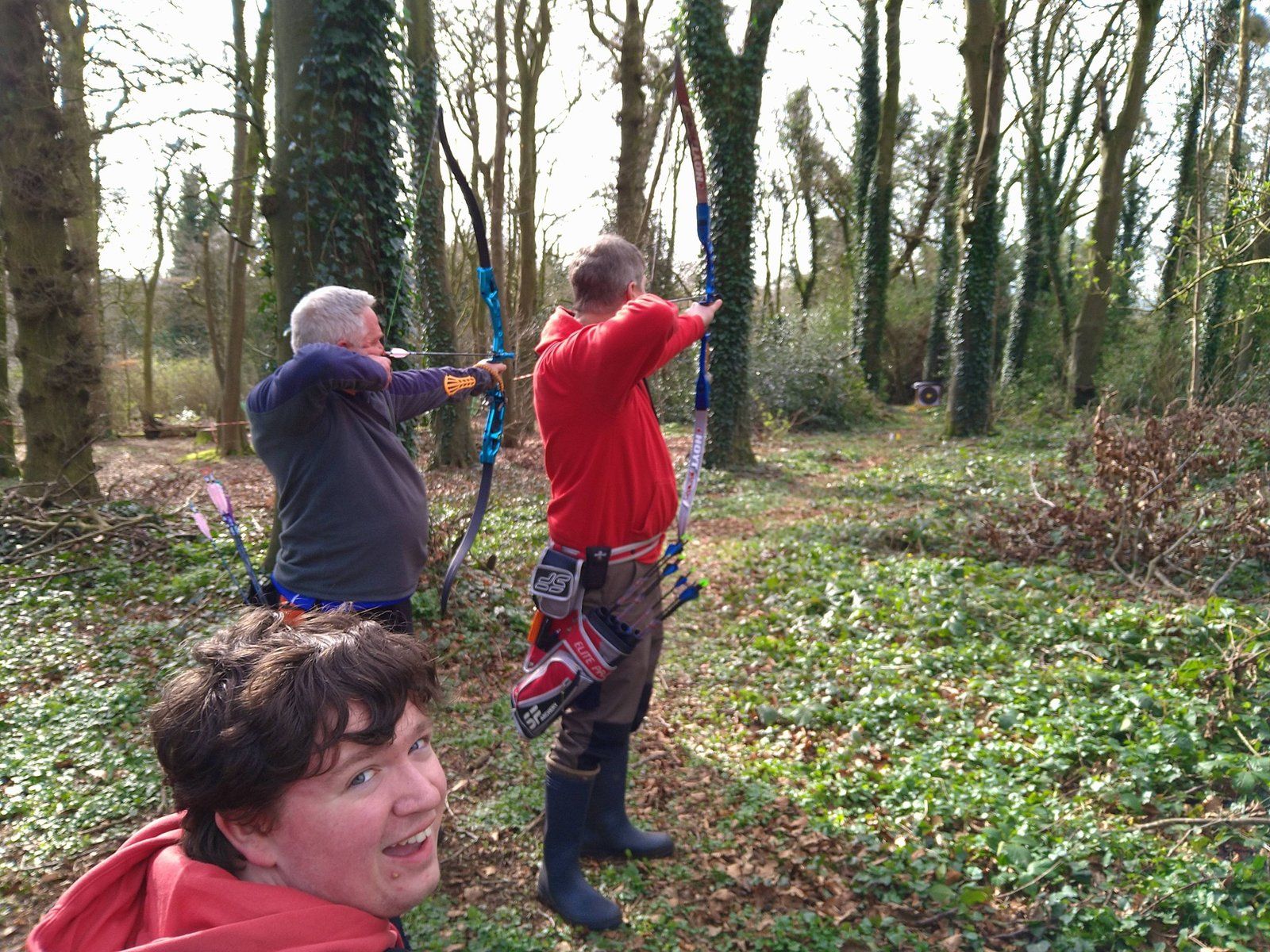
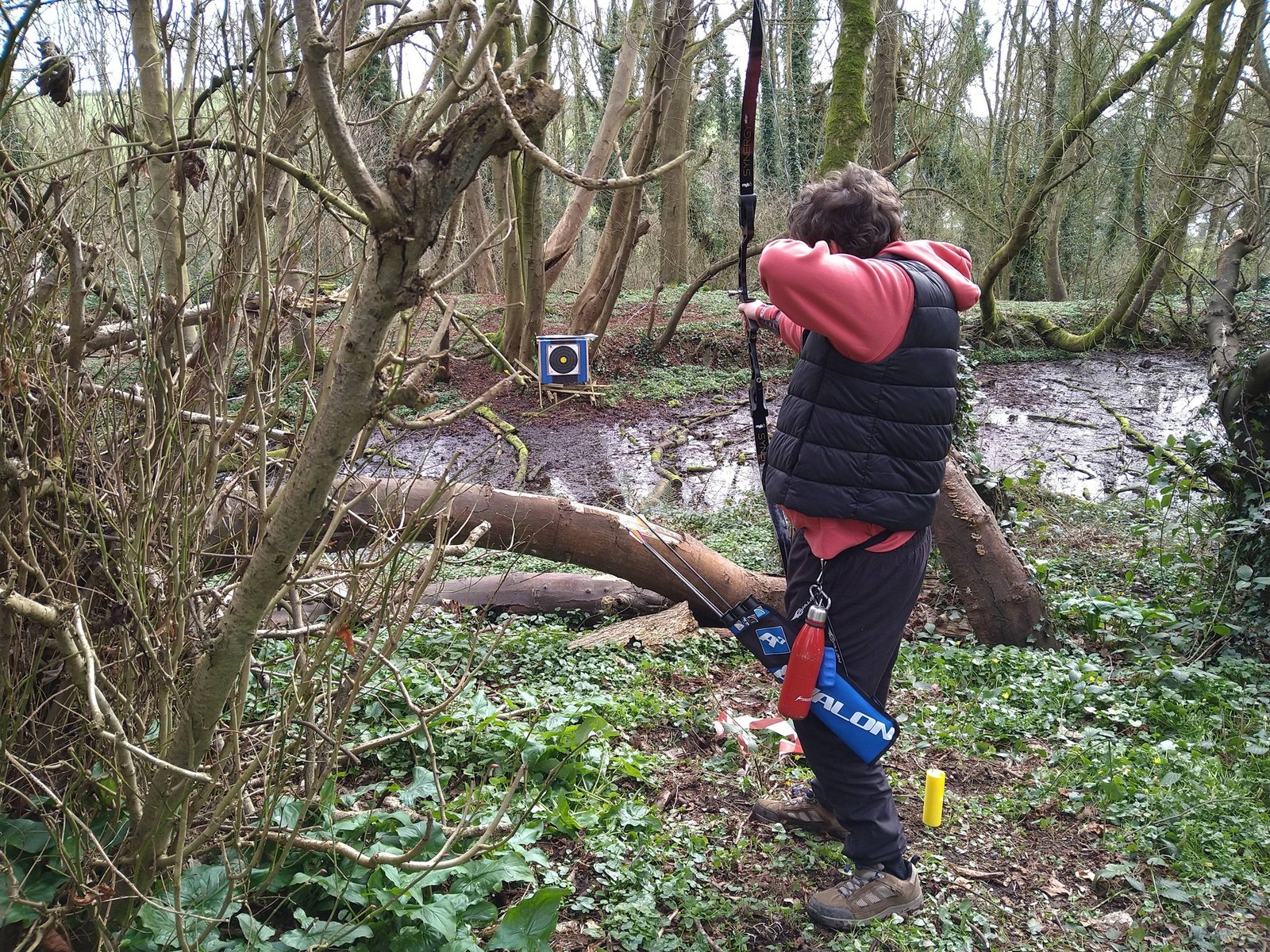
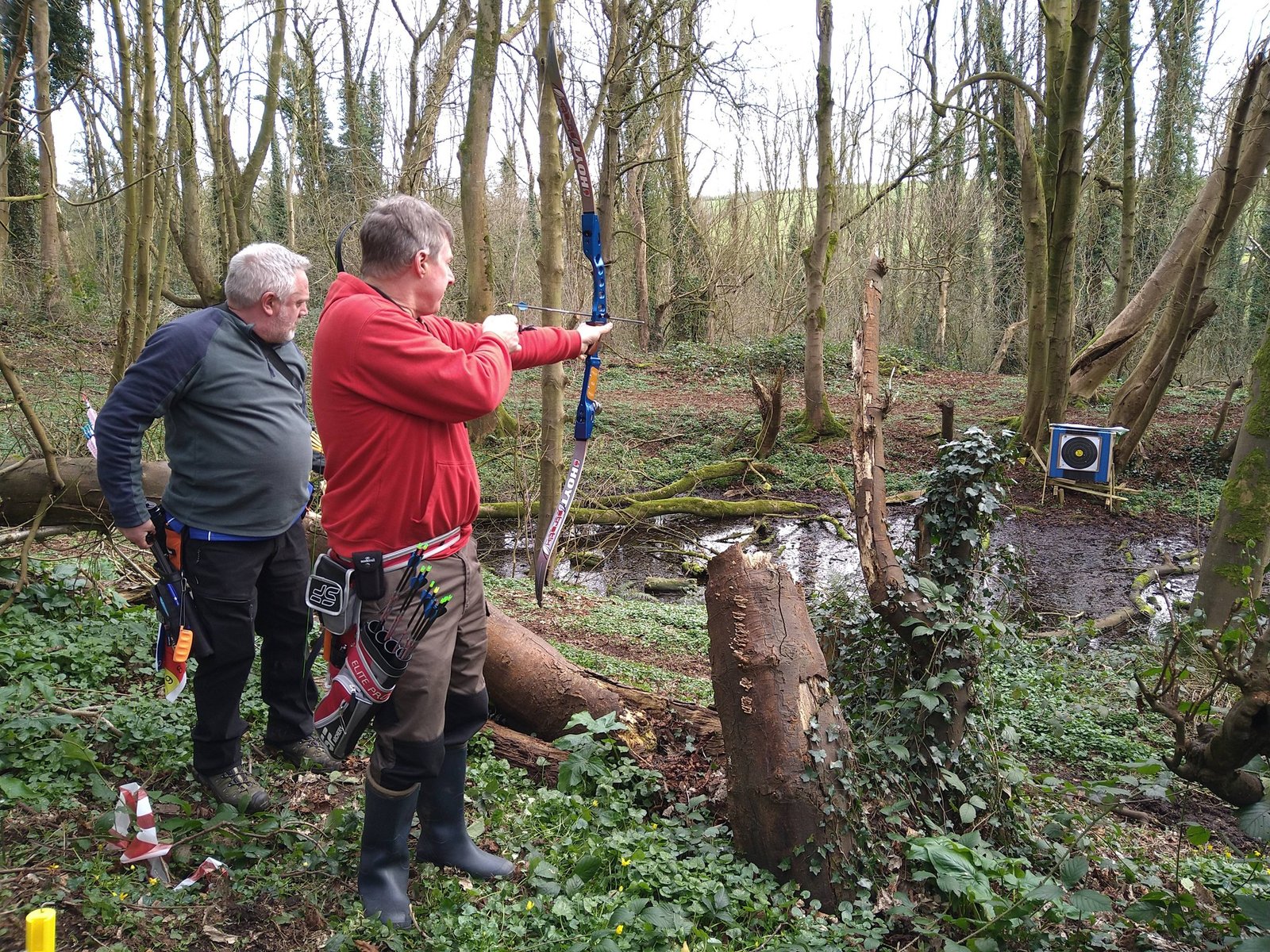
Problematically, I like so many in my club had been shooting Portsmouth faces for so long and been indoors for so long – the Valentine cancelled due to storms – that when I stood before something like a 60cm face at twenty odd meters, I was at a loss.
On the outset of day one, I suffered greatly. I’m familiar with slow starts, when you know you aren’t shooting your best after the whistle has been blown, but the targets before me were alien. I say this, but I still shot one of my better mixed scores on day one.
On day two, with Keith Henderson we discussed this issue, concluding that we’d spent too much time on target rounds during the colder seasons. Naturally I shoot in an intuitive manner, and whilst knowing little about the target works as an advantage, any frame of reference my subconscious held had been worn down over time by a lack of engagement.
In a way it was exciting. I really was relaying on my intuitive abilities this time. And such circumstances forced me to be more confident in my abilities, bringing about a sense of steadfastness I had not engaged with since I began archery twelve years ago.
It paid off, as on the second day I shot a personal best for a mixed round with a flatbow. There is something to be said for our innate intuitive abilities when supported by a sense of self-confidence and resoluteness.
Views: 18
This article is part of our free content space, where everyone can find something worth reading. If it resonates with you and you’d like to support us, please consider purchasing an online membership.